
Reviewed · AUDIO TOURS
30-Minute Mdina Experience Audio-Visual Show Ticket (Open Ticket)
Mdina’s long story is packed into a 30-minute audio-visual show, from prehistoric worship and Roman Melita to St. Paul’s shipwreck and the earthquake that wrecked half the city. It gives you a useful historical frame before or after you walk Mdina’s quiet stone streets.
I like the open ticket, since you can fit the show around your day rather than race across Malta for one fixed start. I also like the 12-language headset system, which makes this a practical choice for families and mixed-language groups. The main drawback is that this is a theater presentation, not a live walk through Mdina, so it works best as a history primer rather than a replacement for seeing the city itself.
Key points to know
- Seven millennia in 30 minutes: The show covers Mdina’s story from the mother goddess cult to its modern identity.
- 12-language audio: Headset commentary lets you follow the presentation in your chosen language.
- Open-date admission: Use the ticket on any day during opening hours and available show times.
- Hourly shows: Presentations run from 11:00 a.m. through the 5:00 p.m. final show.
- Good value at $6.95: The price is modest for a clear introduction to Malta’s former capital.
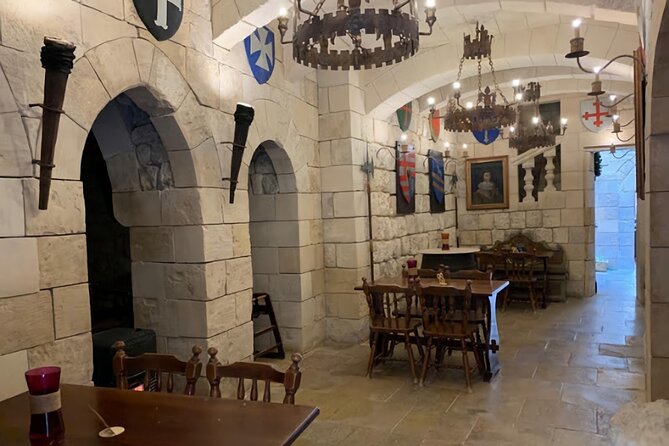
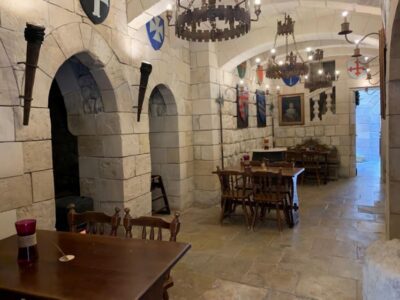
- Medieval tavern on site: Food and drinks are available after the show, but cost extra.
A fast historical start in Mdina
The Mdina Experience is designed to answer a basic question: how did this compact hilltop city become one of Malta’s most important places?
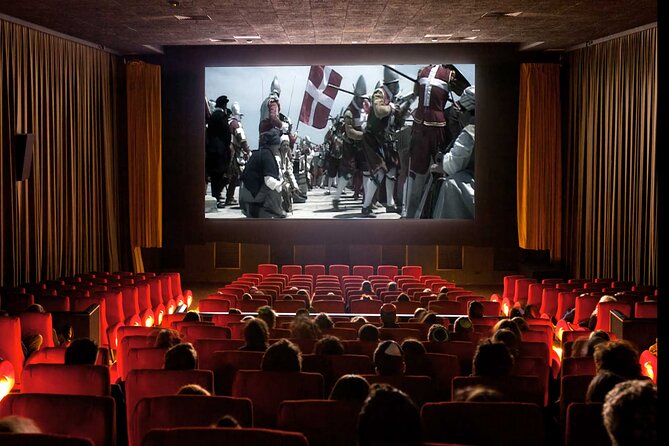
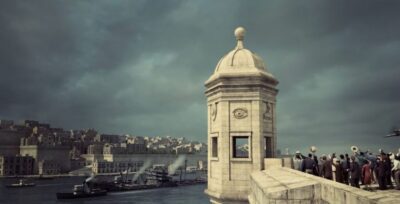
You begin with a 30-minute audio-visual presentation built around large-screen panoramic images and surround sound. The story reaches back roughly 7,000 years, then moves through the events and people that shaped Mdina’s identity.
That broad time span is the attraction’s strongest idea. You are not shown only a medieval city or a Baroque city. You are given a quick account of the settlement’s many identities, including Melita, Civitas, Citta Notabile, Citta Vecchia, and finally Mdina.
The result is a useful introduction if Malta’s past feels like a pile of disconnected names. The show links the city’s older religious traditions, Roman period, Christian associations, medieval disasters, and later rebuilding into one clear sequence.
A French-language assessment described the presentation as a good summary of Malta’s eras and troubles from its foundation to the present. That is a fair way to think about it. The show is not meant to explore every detail, but it gives you the outline you need before exploring the city on foot.
More Shows in Mdina:
- Valletta, Mdina, and Mosta Night Tour with 5D Show
★ 3.9 · 90 reviews - Mdina: The Mdina Experience Audio-Visual Show (Open Ticket)
★ 4.3 · 22 reviews - Malta: Folklore Dinner Show at a Traditional Restaurant
★ 4.4 · 613 reviews
The mother goddess and Mdina’s earliest past
The opening material reaches into Malta’s prehistoric period and the cult of the mother goddess. This is an important choice because it reminds you that Mdina’s story began long before the city received its medieval walls and noble titles.
You may know Malta mainly for its churches, fortifications, and Knights of St. John. The early section gives you a wider view. It points to the island’s very old religious and social traditions, helping you place Mdina within Malta’s much earlier past.
At the same time, this part moves quickly. The show has only half an hour to cover thousands of years, so you should not expect a detailed archaeological lecture. Instead, you get a visual introduction to the earliest chapter, followed by the later events that shaped the city you see today.
I find this approach especially useful for first-time visitors. If you walk into Mdina without context, the limestone streets and grand buildings can feel beautiful but somewhat separate from one another. The presentation gives those surroundings a longer timeline.
From Melita to the city of Mdina
The changing names of the city reflect changing rulers, cultures, and purposes. The show follows Mdina through its earlier names, including Melita and Civitas, then through Citta Notabile and Citta Vecchia before arriving at the name used today.
You do not need to memorize every name. The useful point is that Mdina was not a frozen medieval settlement. It changed with Malta’s political and religious life, and its identity shifted along with the island.
This is where the audio commentary helps. The headset lets you follow the narration without relying on a live guide who must speak one language to the whole room. With 12 language options, you can choose the version that makes the historical sequence easiest to follow.
The system also uses simultaneous multi-language soundtracks and a modern surround-sound setup. That matters because a historical show can become tiring when you spend more time reading subtitles than watching the screen. Here, you can listen and keep your attention on the panoramic images.
No individual guide is named for this experience. The narration and production carry the presentation, so book it if you prefer a self-contained format rather than a personal exchange with a local guide.
St. Paul’s shipwreck and Malta’s Christian story

The shipwreck of St. Paul is one of the key events included in the presentation. It connects Malta to a story familiar to many Christian visitors and helps explain the island’s strong religious identity.
The show places this event within Mdina’s wider development instead of treating it as an isolated religious story. That broad framing is helpful if you want to understand how major events affected the island’s cities and people over time.
You should keep your expectations sensible. The available details do not promise a reconstructed theater set, live actors, or a detailed account of every stop in St. Paul’s journey. What you get is a visual and narrated segment within a larger historical presentation.
For families, this variety can help hold attention. The show moves between ancient belief, dramatic disaster, religion, and rebuilding rather than staying with one dry list of dates. Children may not follow every name, but the changing images and sound give the story more shape than a simple information panel.
More Audio Tours in Mdina:
- Valletta: “The Malta Experience” Audio-Visual Show Ticket
★ 4.4 · 468 reviews - Maltese Islands History Audio-Visual Show and La Sacra Infermeria Tour
★ 4.0 · 344 reviews - Valletta: Self-Guided Historical Walking Tour (Audio Guide)
★ 3.7 · 251 reviews - Malta: 3-City Self-Drive Exploration with GPS Audio Guide
★ 4.4 · 126 reviews
The earthquake that changed the city

One of the most dramatic chapters covers the earthquake that destroyed half of Mdina. The city was later rebuilt, and that recovery is central to understanding the appearance and character of Mdina today.
This is one of the clearest reasons to see the show before walking around. When you look at Mdina’s stone buildings afterward, you have a better sense that the city is the result of damage, repair, and reinvention. It was not simply preserved unchanged across the centuries.
The earthquake story also gives the presentation a strong dramatic center. The show moves from ancient origins to catastrophe, then to the city’s return. That pattern of loss and rebuilding makes the history easy to follow, even if you have limited background knowledge.
A drawback is that a 30-minute format can only sketch the disaster and its consequences. If you want dates, architectural details, or a close study of the rebuilding, you will need to continue with Mdina’s streets and other local sights. Think of the theater show as your starting map, not the complete picture.
How the audio-visual format works

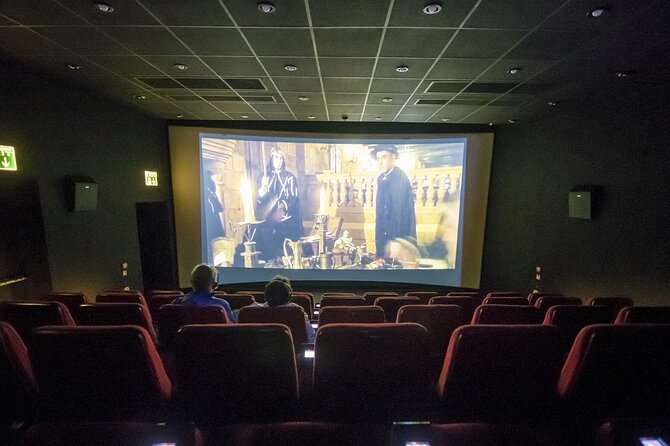
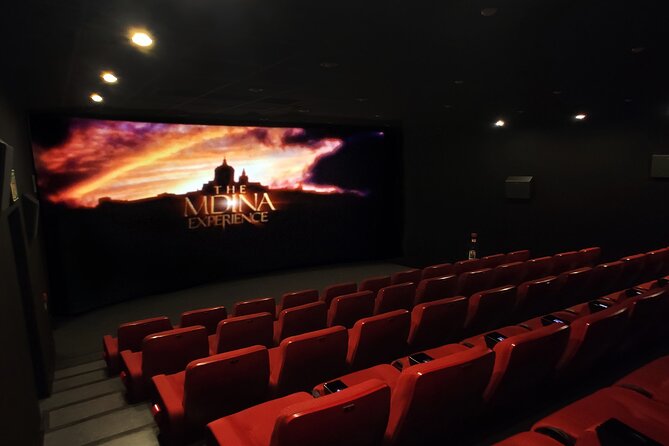
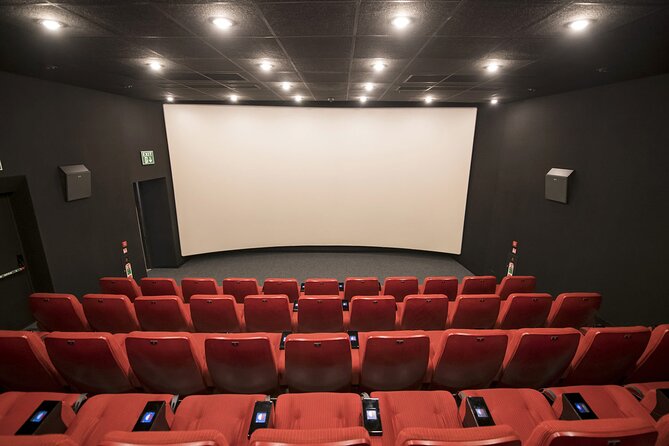
The presentation uses high-resolution projection systems, a large screen, panoramic visuals, and headset-based surround sound. This is more polished than a basic museum video, but it remains a seated theater presentation.
The large screen is useful for showing the city at different points in its past. You are given a broad visual sense of Mdina rather than a close look at one artifact or building. The sound system adds narration and atmosphere without requiring you to read along.
The 12-language choice is one of the most practical features. It removes a common problem with short historical shows, where the information may be interesting but hard to follow in a second language. You should check in at the theater reception when you arrive, then follow the staff’s instructions for the available presentation.
The advertised show length is 30 minutes, while the overall experience is listed as approximately 45 minutes. Allow that extra time when planning your day. Shows are scheduled every hour, from 11:00 a.m. until the 5:00 p.m. final show, so the open ticket gives you several possible slots.
Fitting the theater into your Mdina visit
The attraction is open every day from Monday through Sunday, all year except December 25. Current listed hours are 11:00 a.m. to 5:00 p.m., with hourly shows.
That schedule works well with a day in Mdina. You can choose a late-morning presentation, then spend the rest of the day seeing the city. Or you can walk first, use the show as a midday pause, and return to the streets with a better understanding of what you have seen.
Because the ticket is open dated, you can use it on any day during the opening hours and available time slots. This is more flexible than a timed tour booked for one exact moment. You still need to account for available seats when you arrive, since the ticket does not mean unlimited entry to any presentation.
The ticket permits one entry only, with no re-entry. Once you check in and attend the show, you cannot use the same admission again later. That is easy to manage, but it is worth knowing before you plan to split the presentation across two visits.
The theater is near public transportation. Hotel pickup and drop-off are not included, so you arrange your own way to Mdina and the theater. The experience is suitable for most people, and its indoor format can provide a useful break from Malta’s hot or windy days.
What $6.95 buys you
At $6.95 per person, this is a modest-cost attraction. The value depends on what you want from Mdina.
If you want a guided walking tour with personal questions and detailed local stories, this is not the same product. You are paying for a produced show, headset commentary, and access to a 12-language presentation.
If you want a clear overview before exploring the old capital, the price is easier to justify. A short orientation can save you from seeing Mdina as only a pretty collection of limestone lanes. It explains why the city matters and gives the major events a sensible order.
The ticket also works well for a group with different interests. One person can enjoy the visual production, another can focus on the historical sequence, and children can follow the more dramatic parts. The low price reduces the risk if you are unsure how much your group will enjoy a theater show.
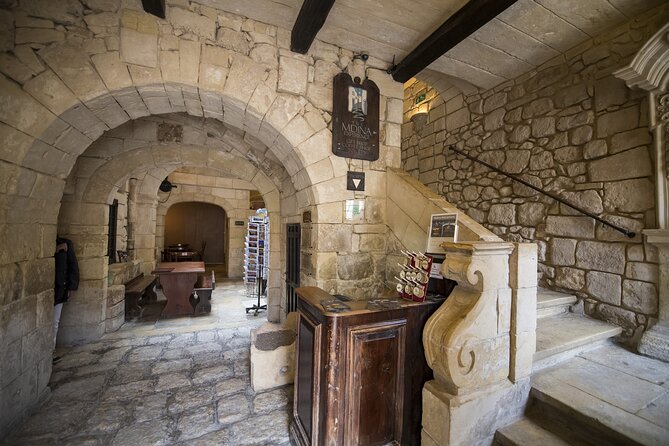
Food and drinks are not included. Afterward, you can visit the medieval tavern for freshly prepared food and drinks, but treat that as a separate purchase. This is useful if you want to turn the visit into a longer stop, though you should budget for it separately.
Who will get the most from this show
I would suggest this experience to first-time visitors who want a quick introduction to Mdina before exploring it on foot. It is also a sensible choice for families, older visitors, and anyone who prefers sitting through a presentation rather than joining a long walking tour.
The show suits you if you enjoy history in broad strokes. Its scope is wide, moving from prehistoric worship to modern Mdina, so you get a strong outline rather than specialist detail.
It may be less suitable if you want a live guide, a small-group conversation, or access to areas beyond the theater. It also will not replace time inside Mdina itself. The city’s streets, buildings, and views remain the main reason to visit.
For the best use of your ticket, pair the show with a walk through Mdina on the same day. Watch the presentation early enough that you can recognize some of its themes as you explore. If you have already spent time studying Malta’s past, the show may feel more like a recap than a discovery.
Booking, cancellation, and small practical details
Confirmation is provided when you book, and the ticket is mobile, so you do not need a printed voucher. Check in at the reception area of the theater when you arrive.
Opening hours can change, so confirm the schedule during your stay if the exact timing matters. The listed operating period runs from March 1, 2023, through June 17, 2026, with daily hours from 11:00 a.m. to 5:00 p.m.
You can cancel for a full refund up to 24 hours before the experience start time. Cancellations or changes made within 24 hours are not accepted for a refund, and the cut-off follows local Malta time.
Should you book The Mdina Experience?
Book it if you want an inexpensive, flexible introduction to Malta’s former capital. The combination of a 30-minute presentation, panoramic projection, surround sound, and 12 language options gives you more context than a quick walk through the streets alone.
Skip it if you are looking for a live historian, detailed architectural commentary, or a full tour of Mdina. For most first-time visitors, though, $6.95 is a reasonable price for a concise historical orientation, especially when you use it as a companion to exploring the city itself.
FAQ
How long does the Mdina Experience show last?
The audio-visual show lasts approximately 30 minutes. The overall experience is listed as approximately 45 minutes.
What languages are available?
The audio guide commentary is available in 12 different languages through the headset system.
Is the ticket valid on a specific date?
No. It is an open ticket that can be used on any day during the theater’s opening hours and available show times.
When are the shows scheduled?
Shows are scheduled every hour from 11:00 a.m. through the 5:00 p.m. final show.
Can I enter the theater more than once?
No. The ticket is valid for one-time entry only, and re-entry is not allowed.
Are food and drinks included?
No. Food and drinks are not included in the ticket price. They are available separately at the medieval tavern.
Can I cancel for a refund?
Yes. You can receive a full refund if you cancel at least 24 hours before the experience start time. Cancellations within 24 hours are not refundable.
More Self-Guided Tours in Mdina
- Valletta: Malta 5D Audio-Visual Show
★ 4.0 · 91 reviews - 30 minute, Jet Ski Rental Malta – Self guided – No Licence Needed
★ 4.5 · 26 reviews - Valletta: Self-Guided Audio Tour, Map and Directions
★ 4.5 · 26 reviews - Gozo Day Pass Ferry and Hop-on Hop-off buses with audio Tour
★ 3.0 · 19 reviews
Just added around Mdina
- Malta: 5 hr Vintage Bus Tour – Mdina & Blue Grotto inc. food★ 5.0 · 22 reviews
- Valletta & Mdina: Private Tour★ 4.5 · 16 reviews
- Shore Excursion: Private Full-Day Tour of Valletta & Mdina★ 5.0 · 4 reviews
- Private Tour in Malta Prehistoric Temples & Mdina★ 5.0 · 4 reviews
- Rabat Mdina and San Anton Gardens Group Tour with St. Paul’s Catacombs★ 3.5 · 16 reviews
- Malta Shore Excursion: Private tour of Valletta and Mdina★ 4.5 · 8 reviews
- Valletta, Mosta and Mdina Night Tour★ 3.5 · 15 reviews
- Malta Private tour: 5hr Mosta Dome, Mdina, Dingli Cliff’s & Blue Grotto★ 4.5 · 36 reviews
Audio Tours, compared.
“The Malta Experience” Audio-Visual Show Ticket
Read our review →
Maltese Islands History Audio-Visual Show and La Sacra Infermeria Tour
Read our review →
Self-Guided Historical Walking Tour (Audio Guide)
Read our review →

The Mdina Experience Audio-Visual Show (Open Ticket)
Read our review →
Gozo Day Pass Ferry and Hop-on Hop-off buses with audio Tour
Read our review →Browse the lists this tour appears in