
Reviewed · WALKING TOURS IN VALLETTA
The Original Valletta Walking Tour
Valletta is small enough to cross on foot, but its compact streets hold an outsized story. This three-hour walking tour links the city’s grand Baroque buildings, war memorials, gardens, and harbor views into one useful first look, with guides such as Matthew, Mario, Carmel, and Giulia bringing different knowledge and personalities to the route.
I like the small-group limit of 25 people, which gives you a better chance to hear the guide and ask questions. I also like the gentle pace, with frequent stops and a break during the walk. The main consideration is that the tour is talk-heavy. If you prefer a quick stroll with little commentary, three hours of standing and listening may feel long.
Key points to know before booking
- Three hours of Valletta in one sweep: See the main streets, squares, gardens, churches, palaces, and siege memorials without arranging separate visits.
- A strong first-day orientation: The route helps you understand Valletta before you return to explore St John’s Co-Cathedral, museums, or Fort St Elmo on your own.
- Guides with different strengths: Matthew is praised for clear explanations and practical tips, while Mario is especially detailed on art, architecture, geography, and Malta’s past.
- Barrakka Gardens provide the visual reward: Set aside time for the views across the Grand Harbour, one of the tour’s finest pauses.
- Admission is not included: Entry to St John’s Co-Cathedral, Grand Master’s Palace, and the museum at Auberge d’Italie costs extra if you want to go inside.
- Meeting-point care matters: The New Parliament Building can be confusing to find, especially from the cruise port, so allow time and check your route before setting out.
Why Valletta works so well on foot
Valletta was built by the Knights of St John after the Great Siege of 1565. That origin gives the city a clear shape and purpose. Its streets lead between defensive walls, formal squares, churches, palaces, and lookout points, so you are rarely walking without a story attached to the place in front of you.
The tour begins at the New Parliament Building on Republic Street. This modern structure marks the entrance to the old city and gives the guide a useful opening contrast: contemporary Malta beside a fortified capital built in the 16th century.
From there, the route covers many of Valletta’s main sights without trying to force a long-distance march. You will spend much of the time stopping for explanations, looking up at façades, and hearing how Malta’s location in the Mediterranean shaped its politics, faith, and military past.
That format is especially useful if you have only a morning in Valletta or are arriving by cruise ship. You get a working map of the city, then can decide which interiors deserve your remaining time.
More Walking Tours in Valletta
- Valletta: 3-Hour Walking Tour
★ 4.7 · 1,605 reviews - Valletta: Guided City Walking Tour
★ 4.8 · 1,256 reviews - Valletta: Street Food and Culture Walking Tour
★ 4.8 · 1,251 reviews
From the City Gate to the Royal Opera House ruins
At Valletta City Gate, the guide meets the group and sets the scene. This is a short opening stop, but it helps you understand that the modern entrance is not simply a gateway into an old town. Valletta has been rebuilt and reshaped over time, and its entrance now combines a contemporary design with the city’s heavy defensive character.
The New Parliament is the first proper talking point. The building is modern and visually spare, making it a useful starting place for a tour that moves between old and new Malta. You will also see Pjazza Teatru Rjal, the open-air theater area formed from the ruins of the former Royal Opera House.
The theater ruins are a good reminder that Valletta is not frozen in one historical period. The site was damaged during the Second World War and later given a new public use. Your guide explains what happened here and why the remains still matter, rather than treating the ruins as a quick photo stop.
Next comes Our Lady of Victories Church. The stop asks you to connect the building with one of Malta’s famous historical figures and gives the guide another chance to explain how religion and military history overlap in Valletta.
Expect several minutes of commentary at each site rather than a long interior visit. This is important: the tour is mainly an outdoor overview. You should not book it expecting a full guided visit inside every church and palace.
Castille, Barrakka Gardens, and the Grand Harbour
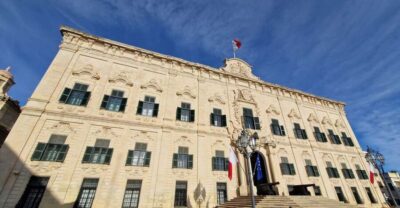
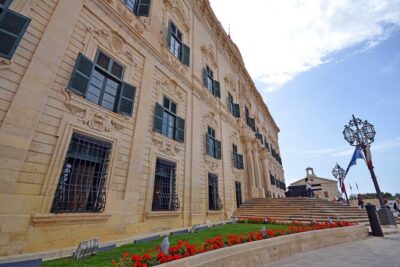
Il-Berga ta’ Kastilja, commonly known as the Auberge de Castille, is one of Valletta’s grandest façades. It was once associated with the Knights of St John and now serves as the office of Malta’s prime minister. The building’s scale and formal design show how the city’s auberges were both homes and centers of power.
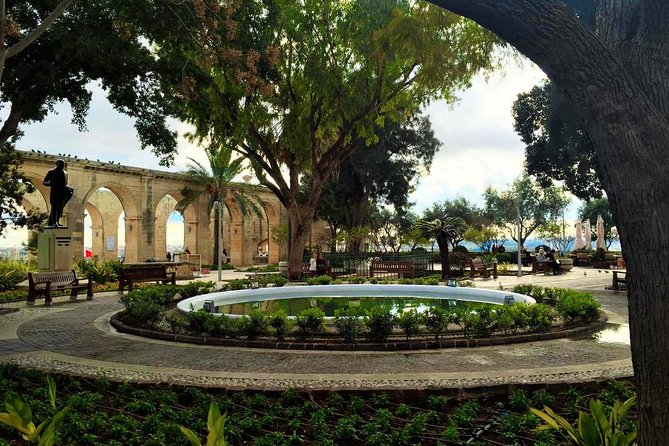
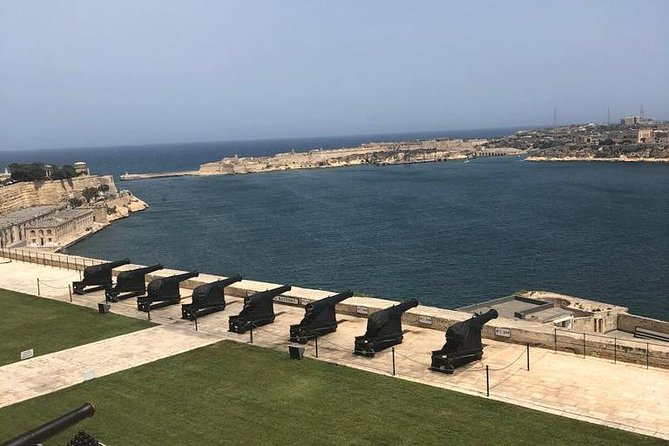
The Upper Barrakka Gardens are given about 30 minutes, making them one of the tour’s most worthwhile pauses. From here, you look over the Grand Harbour, with the water and fortified cities beyond forming one of Valletta’s defining views.
This is also the point where the tour can feel less like a list of buildings and more like an explanation of Malta’s location. The harbor helped make the island valuable, vulnerable, and strategically important. Your guide connects the view with Malta’s military past and with Valletta’s role as the 2018 European Capital of Culture.
I would treat the gardens as a chance to slow down. The rest of Valletta’s streets can feel tightly packed with stone walls and façades. Here, you get open space, greenery, and a broad view that helps you picture the city as a port and fortress.
The tour also refers to the Lower Barrakka Gardens and the city’s harbor outlooks, although the scheduled stop gives the Upper Barrakka Gardens the longest visit. If you want more time in either garden, return after the tour.
Auberge d’Italie, Palazzo Parisio, and the art of the city
Auberge d’Italie is connected with the new Museum of Fine Arts. The stop is brief and entry is not included, so you should see it as an orientation point rather than a museum visit.
That can be useful if you are trying to choose between Valletta’s many interiors. The guide can point out why the building matters, while you decide later if the museum deserves a separate visit. The same applies to many stops on this route: you get enough context to make better choices with your own time.
Palazzo Parisio adds another layer to the city’s story. The guide asks which famous historical figure once lived there, then uses the building to bring Valletta’s residential and political past into the walk. This kind of question-led commentary can help the tour stay lively during stretches that might otherwise become a parade of façades.
The strongest guides on this route appear to be those who can move between broad history and small details. Mario, for example, is especially suited to people who want extended discussion of art, architecture, geography, and dates. His style is very detailed, and some people may enjoy three hours of it while others may wish for shorter explanations.
That difference in guiding style matters more here than on a simple photo walk. The route itself is fixed, but the feel of the morning depends heavily on how your guide tells the story. Matthew is noted for answering questions and offering practical advice about attractions, while Carmel is praised for combining facts with anecdotes. Giulia is described as clear, warm, and passionate about Malta.
Guides can change, so you should not book on the assumption that one named guide will lead your group. Still, the range of comments suggests that the experience is built around live explanation, not a script delivered with no room for questions.
Same islands, a completely different kind of day:
- Valletta: City Walking Tour in a Small Group
★ 4.9 · 957 reviews - From Sliema: Valletta and the Three Cities Scenic Cruise
★ 4.3 · 763 reviews - Valletta: Guided Walking Tour with Optional Cathedral Tour
★ 4.3 · 758 reviews - The Valletta Street Food and Culture Walking Tour
★ 5.0 · 711 reviews
St John’s Co-Cathedral and the Grand Master’s Palace
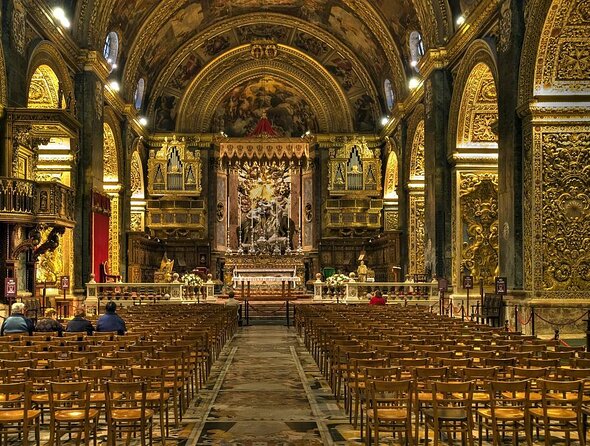
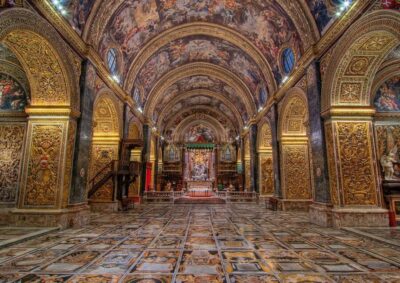
St John’s Co-Cathedral is one of the tour’s most important stops. The guide discusses the artists whose work appears inside, including the artistic traditions tied to the Knights of St John. The scheduled visit is short, and admission is not included.
You should decide in advance if you want to return for a proper interior visit. The cathedral is one of the places where a brief explanation can make a later visit much more rewarding. You will recognize the names, themes, and artistic connections instead of walking in without context.
One useful example from the tour experience is the advice to try entering even when access is uncertain. A guide strongly encouraged one group to visit St John’s, and the church later opened for a service after initially being closed for a holiday. That sort of practical nudge can matter, especially when opening arrangements change.
St George’s Square follows, giving you one of Valletta’s main civic spaces. It is a good place to reset after the tighter streets and detailed explanations. The square also leads naturally into the Grand Master’s Palace, a building that has played an important role across several centuries.
The palace stop focuses on its political and historical importance. Again, admission is not part of the $26.60 tour price. If you want to tour the interior, budget separately and allow time beyond the three-hour walk.
The tour ends in St George’s Square on Republic Street. That is convenient for continuing around central Valletta, finding a café, or returning to an attraction that caught your attention during the walk.
The siege monuments and Fort St Elmo
The route also covers the Great Siege Monument, the Siege Bell Memorial, and Fort St Elmo. These stops give the walk a more serious tone. Valletta is beautiful, but its beauty is tied to conflict, defense, and the struggle to control the harbor.
The Great Siege Monument recalls the 1565 struggle that helped shape the city’s identity. The Siege Bell Memorial looks toward the losses of the Second World War and Malta’s role during that conflict. Fort St Elmo adds another defensive landmark to the picture.
You may not spend a long time at each location, but the sequence matters. It shows that Malta’s story is not limited to grand churches and palace façades. The city was built to resist attack, and the harbor views make that purpose easier to understand.
The route also passes the new Parliament building and the Royal Opera House ruins, so you see how Malta’s capital has moved from medieval and early modern power to a present-day national center. That mix gives the tour more range than a walk focused only on Baroque architecture.
What the pace and group size feel like
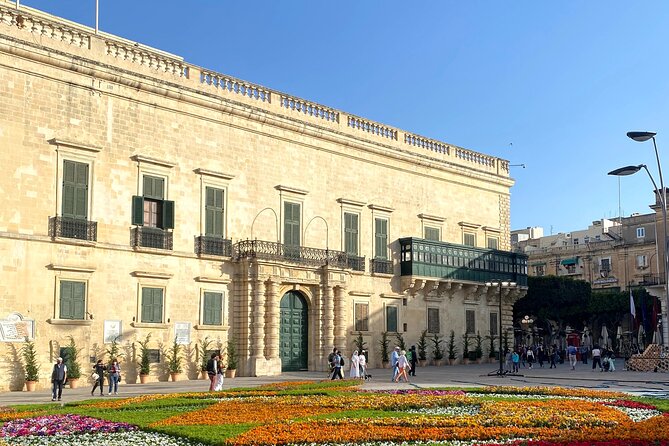
The stated maximum is 25 people. That is not a private tour, but it is small enough to be more manageable than a large city group. You should still expect some standing while the guide speaks, especially at major squares and monuments.
The walking itself is generally gentle. One guide was described as keeping a comfortable pace with plenty of stops, and another group had a 15-minute break halfway through. The route is not presented as physically demanding, but comfortable shoes remain sensible because you are on foot for about three hours.
The main physical issue is not distance. It is the stop-and-listen pattern. One detailed guide can spend considerable time explaining who, what, and where. I would choose this tour if you enjoy learning in place. I would skip it if you become restless during long historical talks.
The English-language guiding is generally clear, and several guides are praised for being easy to follow. Service animals are allowed, and most people can take part. Hotel pickup and drop-off are not included, so you need to reach central Valletta yourself.
Reaching the New Parliament meeting point
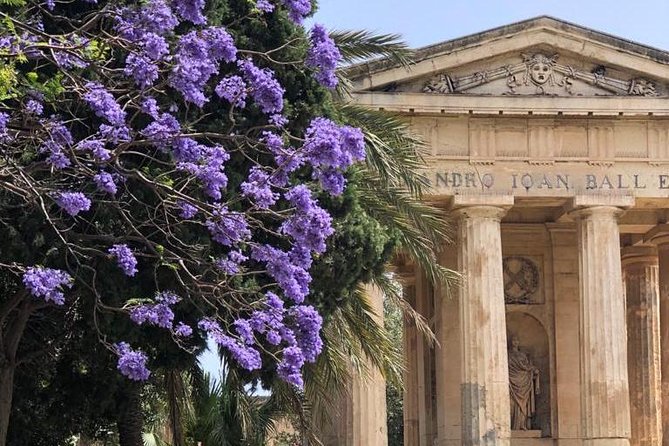
The meeting point is at the New Parliament Building on Republic Street. This sounds simple, but it deserves care because map applications have sent some people to the wrong place.
If you are coming from the cruise port, take the elevator up, walk through the gardens, and continue toward the square. The elevator costs €1 for a return trip. After leaving the port, turn right and walk roughly 200 meters to the crossing, where you will find the elevator.
Once in the upper city, go through the arched gate and turn left, then veer right. Look for the modern Parliament building before the bridge. If you reach the bridge, you have gone too far.
The tour uses a yellow shirt and yellow umbrella as identifying signs. There has been some confusion when two walks operated around the same time from the same area, so check the start time and confirm that you are with the correct group. If you need to contact the operator, WhatsApp may be useful, but it is wise to have it loaded before you set out.
Is $26.60 good value?
At $26.60 per person, the tour is reasonably priced for a three-hour guided introduction to Valletta. You are paying for a professional guide, a planned route, and the ability to connect separate buildings and monuments into one story.
The value is strongest if you are new to Malta, have limited time, or want help deciding which interiors to visit. A guide can point out details you would likely pass without noticing, then give you enough background to explore independently.
The price is less attractive if you plan to walk Valletta on your own and only want exterior photographs. Most stops are viewed from outside, and the admission fees for St John’s Co-Cathedral, Grand Master’s Palace, and the Museum of Fine Arts are separate.
Free cancellation is available until 24 hours before the start time. Changes or cancellations within 24 hours are not refundable, and the tour requires a minimum number of people to operate.
Who should book this Valletta walk?
I would recommend it most strongly for first-time visitors, cruise passengers, and anyone who wants a clear introduction before spending a second day in the city. It also suits people who enjoy art, architecture, military history, and stories about the people who shaped Malta.
It works well for a mixed group because the walking is gentle and there are regular stops. The small-group format is also better suited to questions than a very large sightseeing crowd.
You should think twice if you have already explored Valletta in detail or dislike long explanations. The guide may spend a lot of time on dates, artists, buildings, and political changes. That is a strength for an attentive listener, but it can feel slow if you mainly want to move from one sight to the next.
Final verdict
Book this tour if you want a solid first map of Valletta, clear historical context, and a guide who can make sense of the city’s churches, palaces, monuments, and harbor views. The Barrakka Gardens, siege sites, and St John’s Co-Cathedral discussion give the morning real range.
Before booking, plan your route to the New Parliament carefully and decide which paid interiors you may want to visit afterward. For $26.60, this is a sensible way to get your bearings, especially when your time in Malta is short. Just come ready to listen, stand, and let the guide set a thoughtful pace.
FAQ
How long does the Valletta walking tour last?
The tour lasts approximately three hours, including stops at major buildings, squares, gardens, monuments, and viewpoints.
Where does the tour begin?
It begins at the New Parliament Building on Republic Street in central Valletta.
Where does the tour end?
The tour ends in St George’s Square on Republic Street, also in central Valletta.
Are admission fees included?
No. Entry to St John’s Co-Cathedral, Grand Master’s Palace, and the Museum of Fine Arts at Auberge d’Italie is not included.
How large is the group?
The tour has a maximum of 25 participants.
Can I cancel for a full refund?
Yes. You can cancel at least 24 hours before the local start time for a full refund. Cancellations or changes made within 24 hours are not refunded.
Just added around Valletta
- Valletta: Private Maltese Cuisine Walking Tour★ 4.8 · 8 reviews
- Valletta: Private Massage from a world renowned masseuse★ 4.6 · 9 reviews
- Valletta: Guided Walking Tour★ 3.8 · 5 reviews
- Valletta : Highlights & Hidden Gems Walking Tour★ 3.1 · 5 reviews
- Valletta Aperol Spritz Aperitivo Experience★ 4.6 · 27 reviews
- Valletta: Express Walk with a Local in 60 minutes★ 4.9 · 4 reviews
- Valletta: Food and Culture Private Tour★ 4.9 · 10 reviews
- Valletta (UNESCO) guided tour, Malta Experience (included), Cathedral (optional)★ 4.0 · 9 reviews
Walking Tours in Valletta, compared.
Guided Walking Tour with Optional Cathedral Tour
Read our review →
The Valletta Street Food and Culture Walking Tour
Read our review →
Browse the lists this tour appears in