

Reviewed · GUIDED
Malta: Mdina and Rabat Tour with Local Guide
Mdina and Rabat make the most sense when someone explains the people, politics, and old customs behind the stone streets. This tour gives you that context, with local guide Chris leading the walk from Mdina’s gate through the old capital and into his home area of Rabat. I like the clear storytelling and the chance to see both grand palaces and ordinary neighborhood life in one outing.
I also like the bastion views and the stop at St. Paul’s Basilica, where the apostle is said to have stayed during his three months in Malta. The main drawback is time: two and a half hours gives you a strong introduction, but not enough time to tour museums, cathedral interiors, or the Rabat catacombs.
Key points to know before booking
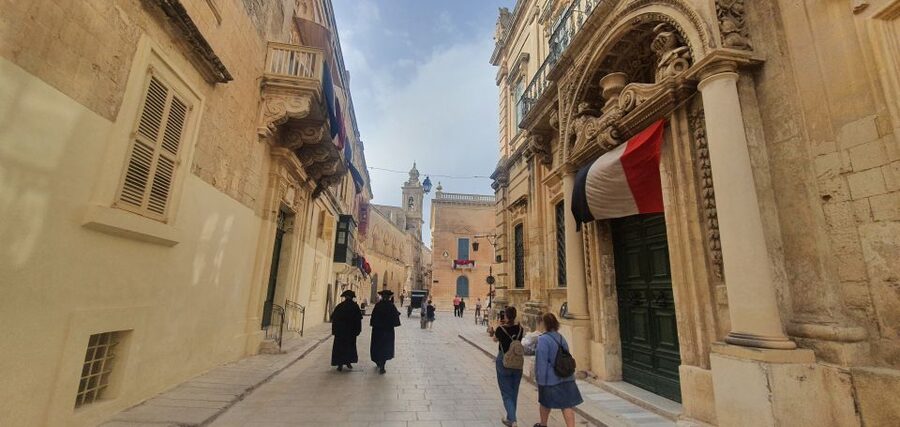
- Chris brings local insight: He lives in Rabat and adds family stories, local customs, food suggestions, and personal connections to the historical walk.
- Mdina is the main event: Expect winding streets, noble palaces, St. Paul’s Cathedral, the main gate, and broad views from the fortified walls.
- Rabat adds everyday Malta: The second half moves beyond monuments into streets, residents, local shops, and the town’s main square.
- St. Paul’s Basilica is a key finish: You see the church linked to the apostle’s stay in Malta, but interior sightseeing is not the focus.
- The walk is manageable: One booking described the streets as flat and easy to handle, though comfortable shoes still matter.
- The price is fair: At $24 per person, the tour offers a useful historical framework and local orientation without taking up a full day.
Why Mdina and Rabat work well together
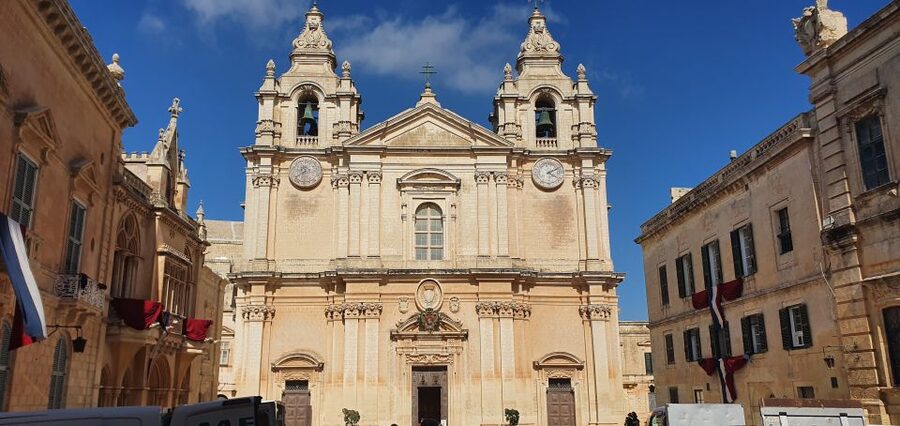
Mdina and Rabat sit side by side, but they give you two different views of Malta. Mdina is the enclosed old capital, with quiet lanes, formal palaces, fortified walls, and an almost theatrical sense of place. Rabat feels more like a lived-in town, with local streets, residents, shops, and a working community.
That contrast is the reason I prefer this combination to a Mdina visit alone. You begin with Malta’s rulers and old capital, then walk into the neighboring town where daily life continues. The change helps you understand that Mdina is not just a pretty collection of honey-colored buildings. It is part of a larger urban story.
Chris is particularly well suited to this route because he lives in Rabat. His local connection gives the second half a personal tone, and several bookings describe him as funny, welcoming, and good at explaining complicated Maltese history in plain language. That matters here. Without a guide, you can admire the architecture, but you may miss why the two towns developed as they did.
A few more Mdina half days worth comparing
- Malta: Highlights of Malta & Mdina Full Day Tour with Lunch
★ 4.4 · 2,688 reviews - Malta: Mdina and Rabat Walking Tour with Catacombs
★ 4.8 · 1,126 reviews - Malta: Mdina, Dingli Cliffs and San Anton Botanical Gardens
★ 4.3 · 991 reviews
Starting outside Mdina’s main gate
The meeting point is just outside Mdina’s main gate, on the side of the playground. This is a practical place to begin because the gate immediately gives you a sense of the city’s character. Have your water ready and arrive with comfortable shoes already on, since the tour starts on foot.
The opening section is brief, about 20 minutes at Mdina Gate, but it sets up the rest of the visit. Your guide introduces the city and points out architectural details that are easy to overlook when you rush through the entrance for photographs.
Mdina’s streets are quiet and winding. That calm is part of the appeal. You are not simply crossing a busy modern town to reach a monument. The road narrows, the buildings close in, and the old capital reveals itself in small pieces.
The tour is in English, and Chris’s approach is conversational rather than dry. He uses jokes, questions, and short stories to keep the history moving. That style works well for mixed groups, including families and younger adults who may not want a formal lecture.
Palaces, cathedral, and the old capital

The walk through Mdina lasts about 75 minutes, with a separate 15-minute stop at Mdina Cathedral. This is the part of the tour most focused on architecture, power, and Malta’s long past.
You pass the grand palaces associated with the Maltese nobility. These buildings give Mdina its refined look, but a guide helps you read them as more than handsome façades. Chris explains the role of the noble families and places their homes within Malta’s wider political story.
The cathedral stop adds another layer. You learn about St. Paul’s Cathedral and its place in the old city, though the tour is not designed as an extended interior visit. If you want to study religious art, attend a service, or spend time inside every major building, you will need to return on your own.
That limitation is worth keeping in mind. The walk gives you orientation and meaning rather than a museum-style inspection of every room. I see this as a strength if you want to cover Mdina and Rabat in one morning or afternoon, but less so if your main aim is detailed interior sightseeing.
The streets themselves are a major part of the experience. Mdina rewards a slower pace, and the guide regularly pauses for photographs and explanations. One booking described the route as flat and manageable, which makes it a reasonable choice for many visitors who prefer a gentle walking tour. Still, Malta can be hot, and stone streets can be uneven in places, so good footwear and water are sensible.
The Belvedere and Mdina’s wide views
The Belvedere stop lasts about 15 minutes and is one of the tour’s best visual pauses. From Mdina’s raised fortifications, you can look across Malta and get a clearer sense of the island beyond the old city.
This viewpoint helps connect the history to the geography. Mdina’s position was not chosen by accident, and the view makes its defensive importance easier to understand. You also get a useful orientation point for the rest of your Malta visit.
Bring a camera, but do not let the photo stop become the entire purpose. The guide’s explanation is what gives the view value. You are not just looking across rooftops and fields. You are seeing the setting that shaped Mdina’s role as an old capital.
Weather matters here. On a clear day, the views can be the visual high point of the walk. On a hot afternoon, the open battlements may feel exposed, so a hat, water, and weather-appropriate clothing will make the stop more comfortable.
Same islands, a completely different kind of day:
- Mdina and Rabat: Guided City Walking Tour
★ 4.8 · 549 reviews - Mdina and Rabat Insider’s Tour
★ 5.0 · 528 reviews - Valletta: Vintage Bus to Valletta, Sliema, Rabat & Mdina
★ 4.1 · 433 reviews - Mdina and Rabat Walking Tour inc. Catacombs and St. Paul’s Grotto
★ 5.0 · 341 reviews
Leaving through Greek’s Gate for Rabat
After Mdina, the group exits through Greek’s Gate and heads into Rabat. This transition is important because the tour changes character. You leave the formal, walled old city and enter a town that feels more connected to present-day Maltese life.
The Rabat portion lasts about 45 minutes. It includes a walk toward the main square and an introduction to local people and the neighborhood. Since Chris lives in Rabat, he can speak about the area as a resident, not only as a guide repeating dates and names.
That local angle is one of the tour’s strongest features. Chris has been praised for knowing people in the area, sharing family connections, and explaining local food and customs. You may also get suggestions for restaurants, bars, and Maltese pastries, which is useful if you plan to stay for lunch or return later.
Do not expect a long food tasting or a shopping stop built into the tour. The useful part is the orientation. You learn where to look and what to try, then you can make your own choices after the walk.
The Rabat section also makes the tour feel less staged. Mdina is exceptionally polished and scenic, while Rabat offers a closer look at an ordinary Maltese town. That balance is valuable if you want more than a checklist of famous buildings.
St. Paul’s Basilica and the story of the apostle
The walk ends near Rabat’s main square, where you see St. Paul’s Basilica. The church is linked to the apostle’s three-month stay in Malta, making it one of the tour’s key historical stops.
This is not a full church tour with a long interior examination. Instead, the basilica serves as a strong ending point for the Rabat story. Your guide connects the site to Malta’s Christian traditions and to the town’s place in the island’s past.
The basilica is also a good marker for what this experience does best. It gives you the backstory and helps you understand why a place matters. If you want to visit the basilica at length or explore the catacombs, plan extra time before or after the guided walk.
One booking specifically noted that there was not enough time to visit museums or catacombs inside. That is not a flaw so much as a matter of scope. The tour covers two towns, several major sights, viewpoints, and local streets in 2.5 hours. A longer interior visit would require dropping something else.
How Chris shapes the experience
The strongest praise centers on Chris’s delivery. He is repeatedly described as funny, friendly, passionate, and able to explain complex history clearly. That combination is useful in Mdina, where a long sequence of rulers, religious events, noble families, and changing traditions can become hard to follow.
He also appears to make an effort to involve the whole group. One booking described a round of introductions that helped strangers relax, while another noted that he connected well with both children and adults. That small touch can make a walking tour feel more personal.
His local background adds practical value. You may hear about family ties, current residents, restaurants, bars, pastries, and the customs that still shape life in Rabat. These details turn the tour from a history lesson into a short introduction to the area.
No guide can guarantee the same personality or route on every departure, but the supplied information repeatedly names Chris and describes his role in similar terms. If he is leading your departure, expect an energetic and personal style rather than a quiet, formal presentation.
Is $24 good value for 2.5 hours?
At $24 per person, I consider this a good-value introduction to Mdina and Rabat. You are paying for an English-speaking guide, not entrance tickets, meals, transport, or a long attraction visit. The value rests in the explanations, route planning, and local perspective.
A self-guided walk costs less, of course. You can enter Mdina, stroll through the streets, admire the palaces, and reach Rabat without a paid guide. But you will need to do your own research, work out what you are seeing, and decide how to fit the two towns together.
For $24, the tour saves that preparation and gives you a useful framework. It also helps you avoid treating Mdina as a quick photo stop. The guide shows how the cathedral, palaces, bastions, gates, and Rabat streets fit together.
The price is especially sensible if you are in Malta for a short stay. Two and a half hours leaves time for lunch, another attraction, or a relaxed return to Mdina for photographs. If you want a full-day historical program with extensive indoor visits, this is not that product.
The tour includes free cancellation up to 24 hours before the start and allows you to reserve while paying later. Those terms are helpful if your Malta plans are still shifting, but the main booking decision should be based on the walking format and limited interior time.
Who should take this walking tour?
I would recommend it to first-time visitors who want a clear introduction to central Malta’s old capital and neighboring Rabat. It suits people who enjoy stories, architecture, local observations, and a steady walk more than people who want several hours inside museums.
It is also a good choice for families and mixed-age groups. The route is short enough to be manageable, and Chris’s humor helps keep the historical material moving. Younger adults may appreciate the informal tone, while older visitors can benefit from the well-paced route and frequent stops.
Food-focused visitors should pay attention to the local suggestions at the end. The tour does not appear to be a food tour, but advice about restaurants, bars, and Maltese pastries can help you plan the rest of your day.
You should think twice if you dislike group walking tours, need a long time at each monument, or want guaranteed access to interiors. The tour is about context and coverage. It gives you a strong first look, then leaves you free to return to the places that catch your interest.
Wear comfortable shoes, bring water, and dress for the weather. The walk includes open battlements and outdoor streets, and the experience depends on being comfortable on foot.
Should you book Mdina and Rabat with a guide?
Book this tour if you want Mdina to make sense rather than simply look beautiful. The combination of noble palaces, cathedral, bastion views, Greek’s Gate, Rabat streets, and St. Paul’s Basilica gives you a well-shaped introduction to the area.
The best reason to choose it is the local connection. Chris’s humor, personal stories, and knowledge of Rabat add something a guidebook cannot easily provide. The main tradeoff is that you will see many sights from outside and will not have time for museums or catacombs.
For $24 and 2.5 hours, this is a practical first visit. Take the walk early in your Malta stay, use Chris’s food and neighborhood suggestions afterward, and return on your own if a cathedral, basilica, or catacomb deserves more time.
FAQ
How long is the Mdina and Rabat tour?
The tour lasts 2.5 hours. The planned sections include Mdina Gate, Mdina Cathedral, the Belvedere, Mdina’s streets, and Rabat.
Where does the tour meet?
Meet just outside Mdina’s main gate, on the side of the playground. The listed starting location is City Walking Tours Malta.
What language is the tour in?
The live tour guide conducts the experience in English.
Does the tour enter Mdina Cathedral or St. Paul’s Basilica?
The tour includes guided stops at Mdina Cathedral and St. Paul’s Basilica, but the supplied details do not promise extended interior visits. The focus is the guided walk and historical explanation.
Is the tour suitable for people who want to visit museums or catacombs?
The tour does not leave much time for those visits. One booking specifically noted that there was no time to visit the museums or catacombs inside, so plan a separate visit if those are priorities.
What should I bring?
Bring comfortable shoes, water, and clothing suited to the weather. The experience is an outdoor walking tour through Mdina and Rabat.
Just added around Mdina
- Malta: 5 hr Vintage Bus Tour – Mdina & Blue Grotto inc. food★ 5.0 · 22 reviews
- Valletta & Mdina: Private Tour★ 4.5 · 16 reviews
- Shore Excursion: Private Full-Day Tour of Valletta & Mdina★ 5.0 · 4 reviews
- Private Tour in Malta Prehistoric Temples & Mdina★ 5.0 · 4 reviews
- Rabat Mdina and San Anton Gardens Group Tour with St. Paul’s Catacombs★ 3.5 · 16 reviews
- Malta Shore Excursion: Private tour of Valletta and Mdina★ 4.5 · 8 reviews
- Valletta, Mosta and Mdina Night Tour★ 3.5 · 15 reviews
- Malta Private tour: 5hr Mosta Dome, Mdina, Dingli Cliff’s & Blue Grotto★ 4.5 · 36 reviews
Guided, compared.
Guided Walking Tour with Optional Cathedral Tour
Read our review →

Gozo Full-Day Tour with Guide, Temples, & Train
Read our review →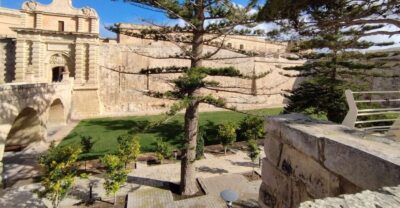

Marsaxlokk, Blue Grotto, and Qrendi Guided Tour
Read our review →
Gozo Guided Day Trip Incl. Ggantija Temples and Lunch
Read our review →
Browse the lists this tour appears in