
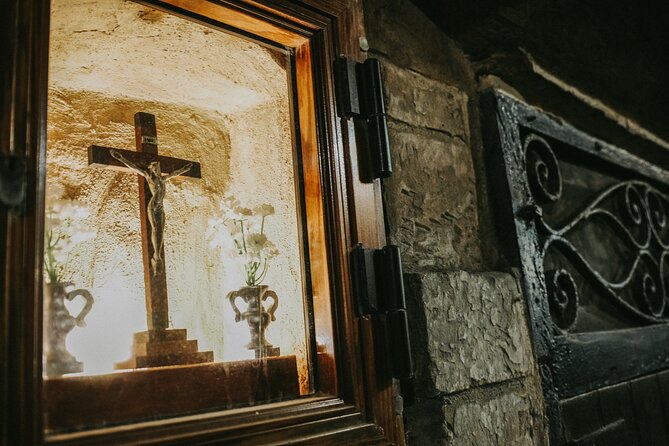
Reviewed · WALKING TOURS IN VALLETTA
The Dark History of Valletta – Walking Tour
Valletta’s dark side is not locked in a museum. It hangs over the street, lurks in old churches, and sometimes returns as a ghost who throws parties. This two-hour night walking tour links murder, mystery, religion, and local legend as you move through Malta’s capital.
I like the sharp mix of stories, especially the letter sent by a lovesick man just before he murdered his lover and the tale of more than a hundred boys who entered a church but never came out. I also like the guide-led storytelling: Mario is praised for keeping a late-arriving family connected and holding the group with cliffhanger endings. The main drawback is Valletta itself, which means steep streets, a walk down to the bottom, and a climb back up.
Key points to know before you book
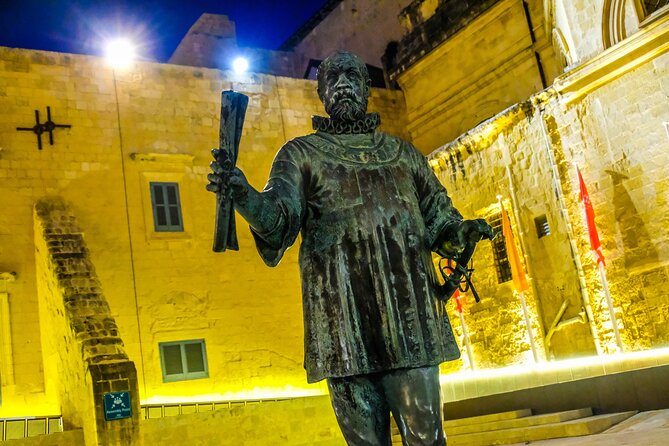
- A ghost with noisy habits: Hear how the spirit of 16th-century knight Oliver Starkey held parties in the 1990s before being persuaded to quiet down.
- Dark stories with real places: The tour connects crime, religion, and old Valletta landmarks rather than simply listing spooky tales.
- A strong storytelling style: The guide can stretch one story from stop to stop, using cliffhangers to keep the group listening.
- A hilly two-hour walk: You need to be mobile and reasonably fit for the descent and climb through Valletta.
- A useful evening finish: The route ends at the Grand Master’s Palace, close to bars and restaurants.
- Small enough to stay personal: The group can reach a maximum of 35 people, and the tour is offered in English.
Why Valletta works so well after dark
Valletta can look formal by day. Its stone streets, grand buildings, and churches tell the public story of Malta: knights, sieges, faith, and power. This tour shifts your attention to what usually sits behind that polished image.
You hear about people who made bad choices, strange events that refuse to disappear, and symbols that carry a message most passersby miss. The effect is less like a standard sightseeing walk and more like hearing the city gossip about itself.
That makes this a useful choice if you have already seen Valletta’s main sights. Even repeat visitors can find a new angle. One person who visits Malta often still learned new material here, which is a good sign for anyone who thinks the capital has nothing left to reveal.
The stories are also tied to the streets around you. The tour does not ask you to sit in a dark room while someone recites legends. You walk from place to place, and the buildings give each tale a physical setting. A church is not just a church. A statue is not just decoration. A palace is part of a city where power, faith, and private lives often collided.
More History Tours in Valletta
- Valletta: Self-Guided Historical Walking Tour (Audio Guide)
★ 3.7 · 251 reviews - Wonderful Valletta, gastronomy, art, and history in the Mediterranean
★ 4.5 · 72 reviews - Valletta Street Food & History Tour With Private Transfers
★ 4.5 · 15 reviews
Starting at Tritons’ Fountain
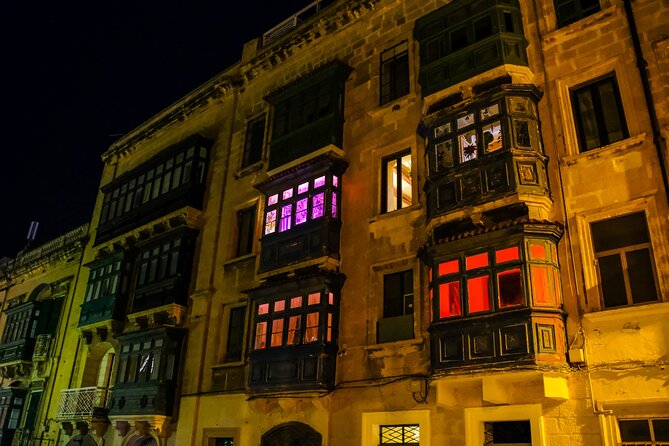
The meeting point is Tritons’ Fountain at Vjal Nelson in Floriana, just outside Valletta. This gives the tour a clear starting point near one of the city’s best-known approach points, rather than asking you to find a small side street inside the old city.
From there, you head toward Valletta and its streets. The tour lasts about two hours, so the pace has to balance walking with storytelling. You should expect the guide to stop at selected spots, explain what happened there or nearby, and then lead you onward before the next part of the story.
The route is not presented as a list of unrelated ghost stories. The guide builds suspense. A detail introduced at one point may be held back until you reach another location. That technique worked especially well for Mario, who was able to keep a late family involved while telling the rest of the group other stories. If you enjoy a clear narrative thread, this is one of the tour’s best features.
The maximum group size is 35 people. That is not an intimate private walk, but it is still limited enough for a guide to address a defined group rather than a huge crowd. If you arrive late, call the tour provider as soon as possible. The guide has shown flexibility in that situation, but you should not assume the group can always wait.
Oliver Starkey and Valletta’s ghostly nightlife
The Oliver Starkey story is a fine opening example of what this walk does well. Starkey was a 16th-century knight, yet the tale reaches into the 1990s, when his ghost was said to throw parties and disturb neighbours.
That time jump gives the story its bite. This is not simply a medieval legend safely sealed in the past. The tale suggests that old Valletta stories can remain part of modern life, complete with irritated neighbours and the need for someone to ask the ghost to stop.
You do not need to decide if the ghost was real to enjoy the story. The fun is in hearing how an old knight’s reputation took on a new life and how the disturbance was eventually brought under control. It also sets the mood without relying only on horror. The tour has a sly sense of humour, and that helps keep the darker material from becoming grim.
Expect the guide to use the surroundings as part of the tale. The exact stopping points can vary, but the experience is built around walking through Valletta rather than hearing the same story in a fixed venue.
The murder letter and the tour’s darker turn
The most serious story concerns a lovesick man who sent a shocking letter to his lover shortly before murdering her. It is the kind of tale that changes the tone of the walk. Valletta’s dark history is not all ghosts and amusing superstition. Human jealousy and violence are part of the picture too.
This story gives the tour an important balance. If every stop involved a monster, a ghost, or a strange symbol, the evening could feel like a collection of campfire tales. A crime story rooted in a personal relationship makes the past more unsettling because the motive is recognisable.
You should know that the tour deals with murder. The material may not suit young children or anyone looking for a gentle introduction to Valletta. The supplied information does not give an age limit or a detailed content warning, so use your own judgment if your group is sensitive to crime stories.
The guide’s style matters here. A good storyteller can give the event context without turning it into cheap shock. Mario’s reported habit of pausing at a cliffhanger suggests the tour uses suspense rather than racing through gruesome details.
More Walking Tours in Valletta
- The Original Valletta Walking Tour
★ 5.0 · 2,719 reviews - Valletta: 3-Hour Walking Tour
★ 4.7 · 1,605 reviews - Valletta: Guided City Walking Tour
★ 4.8 · 1,256 reviews - Valletta: Street Food and Culture Walking Tour
★ 4.8 · 1,251 reviews
The church where boys disappeared
One of the most arresting questions on the route is why more than a hundred boys entered a church but never came out. The story promises a strong sense of mystery, and the physical setting gives it extra force.
Churches in Valletta are imposing places, often designed to direct your eyes upward and make you feel small. A story involving a large group of boys entering one creates an immediate contrast between the building’s public purpose and the troubling question at its centre.
The information provided does not explain the answer, and that is part of the tour’s design. You are meant to follow the story from one location to the next rather than receive every conclusion in advance. I would not book this walk expecting a detailed academic lecture on each event. It is built around suspense, atmosphere, and the guide’s delivery.
This stop also shows why walking adds value. You are not only hearing a strange event. You are standing in the kind of place that makes the question feel heavier. The building becomes part of your memory of the story.
Jean de Valette beyond the founder’s name
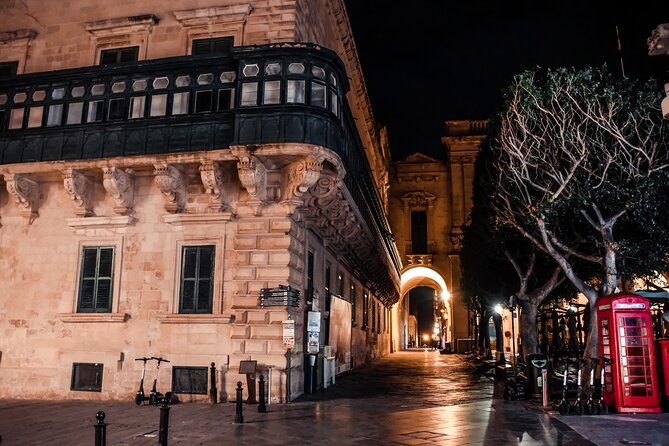
The tour also examines the truth about Jean de Valette, the man who gave Valletta its name and helped establish the city. Many visitors meet his name through streets, monuments, and guidebooks, then move on. This walk promises a closer look at the person behind the official story.
That is useful because city founders are often presented in neat, heroic terms. A dark-history walk can test that version, showing where the familiar public image leaves out difficult or less comfortable details. The supplied details do not spell out the tour’s conclusions about de Valette, so you should expect interpretation rather than a full biography.
This part may appeal most if you already know the basic story of Malta’s capital. The guide can connect the city’s official identity with its less polished past, helping you see why Valletta’s name and monuments carry more weight than a simple tourist label.
The grotesque statue above your head
One of the tour’s more unusual subjects is a grotesque statue watching over the people of Valletta. The guide explains its hidden meanings, turning something easy to overlook into a clue.
This is the sort of detail I value on a walking tour. You do not need another stop that merely points out a famous façade. You want to learn how to look at the city. A strange face or disturbing figure may have a purpose, a warning, or a cultural meaning that is invisible until someone explains it.
The statue also fits the tour’s theme without requiring a supernatural explanation. Dark history can involve fear, morality, power, and symbolism, not only ghosts. The best moments here seem to come when the guide makes ordinary street details feel newly important.
Keep your eyes up during the walk. The statue is described as being above the people of Valletta, so this is not an experience that rewards staring only at your phone or at street level.
Valletta’s hills are part of the experience
The walk is not flat. You go down toward the bottom of Valletta and then back up, and the hills are the main practical issue to consider before booking.
You should wear comfortable shoes and be ready for a steady urban walk. The tour is about two hours, and one person found it manageable rather than tiring, but that does not erase the physical work of the route. People with limited mobility may find the descent and climb difficult.
The activity information says most people can participate, and service animals are allowed. It is also near public transportation. Those points make the tour broadly accessible, but they do not change the need for good balance and enough stamina for the hills.
The weather matters too. The experience requires good weather. If poor conditions cancel the tour, you are offered another date or a full refund. Malta’s evening conditions can make a walking tour pleasant or uncomfortable, so check the forecast before you set out.
What the $24.03 price gets you
At $24.03 per person, this is priced as an affordable guided evening activity rather than a major sightseeing admission. There is no separate admission fee for the walk itself, and the value comes from the guide’s research, story structure, and ability to connect locations.
I think the price works best if you enjoy guided storytelling. You are not paying to enter a collection of famous interiors. You are paying for a human guide to explain events and meanings you could easily miss while walking alone.
The value is also stronger for repeat visitors. If you have already covered Valletta’s main landmarks, a fresh set of stories can make a familiar route feel new. First-time visitors can use it as an introduction to the capital’s mood, though you may want to leave the major daytime sights for another visit.
The group maximum is 35. That keeps the cost well below a private walk, but your experience may depend on where you stand when the guide stops. Stay close enough to hear clearly, especially in busy streets.
Ending near the Grand Master’s Palace
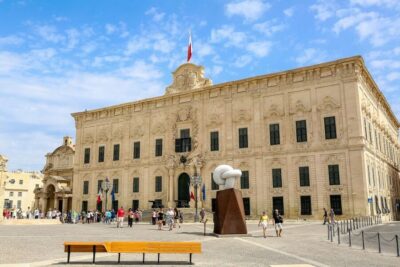
The tour ends at the Grand Master’s Palace, right in the centre of Valletta. This is a practical finish because you are not left at an isolated meeting point after dark.
You can continue with a drink or a meal nearby. That makes the timing useful for an evening plan: start at Tritons’ Fountain, follow the stories through the city, then finish near places to eat. The tour does not include a meal, so plan your own after-tour stop.
Ending at the palace also gives the route a strong final setting. The walk moves from the city’s approach into its historic core, then finishes near one of Valletta’s most important landmarks. Even if the final story is the main memory, the location helps tie the evening together.
Who should book this walking tour?
I would recommend it to you if you enjoy local legends, crime stories, unusual details, and guides who make you wait for the next part. It suits couples, families with older children, and repeat visitors who want a different side of Valletta.
It is less suitable if you want a standard overview of Malta’s capital, a flat route, or a detailed visit inside historic buildings. The tour’s strength is storytelling in the streets, not formal monument interpretation.
English is the only listed language. Most people can participate, and service animals are allowed, but the hills still require reasonable mobility. With a maximum of 35 people, the walk is not private, yet it should be easier to follow than a very large city tour.
You can cancel for a full refund up to 24 hours before the start time. Changes or cancellations made less than 24 hours ahead are not accepted for a refund. Cut-off times use local time, so check carefully if you are booking from abroad.
Should you book the Dark History of Valletta?
Book this tour if you want Valletta to feel less like a set of grand stone buildings and more like a city with secrets, crimes, beliefs, and awkward ghosts. The Oliver Starkey tale, the murder letter, the missing boys, and the grotesque statue give the walk a strong range of subjects.
The best reason to go is the storytelling. A guide such as Mario can keep the evening moving with cliffhangers and a clear thread between stops. Just allow for steep streets, wear good shoes, and remember that the subject matter includes murder. At $24.03, it is a fair buy for an entertaining and unusual two hours in the heart of Malta’s capital.
FAQ
Where does the Dark History of Valletta tour start?
It starts at Tritons’ Fountain, at Vjal Nelson in Floriana, Malta.
Where does the tour end?
The tour ends at the Grand Master’s Palace in Valletta, close to bars and restaurants.
How long does the walking tour last?
The tour lasts approximately two hours.
What language is the tour offered in?
The tour is offered in English.
How much does the tour cost?
The listed price is $24.03 per person.
Can I cancel for a full refund?
Yes. You can cancel at least 24 hours before the local start time for a full refund. Cancellations or changes made less than 24 hours before the start time are not accepted for a refund. If poor weather cancels the experience, you are offered another date or a full refund.
Just added around Valletta
- Valletta: Private Maltese Cuisine Walking Tour★ 4.8 · 8 reviews
- Valletta: Private Massage from a world renowned masseuse★ 4.6 · 9 reviews
- Valletta: Guided Walking Tour★ 3.8 · 5 reviews
- Valletta : Highlights & Hidden Gems Walking Tour★ 3.1 · 5 reviews
- Valletta: Food and Culture Private Tour★ 4.9 · 10 reviews
- Valletta Aperol Spritz Aperitivo Experience★ 4.6 · 27 reviews
- Valletta: Express Walk with a Local in 60 minutes★ 4.9 · 4 reviews
- Valletta (UNESCO) guided tour, Malta Experience (included), Cathedral (optional)★ 4.0 · 9 reviews
Walking Tours in Valletta, compared.
Guided Walking Tour with Optional Cathedral Tour
Read our review →
The Valletta Street Food and Culture Walking Tour
Read our review →
Browse the lists this tour appears in