
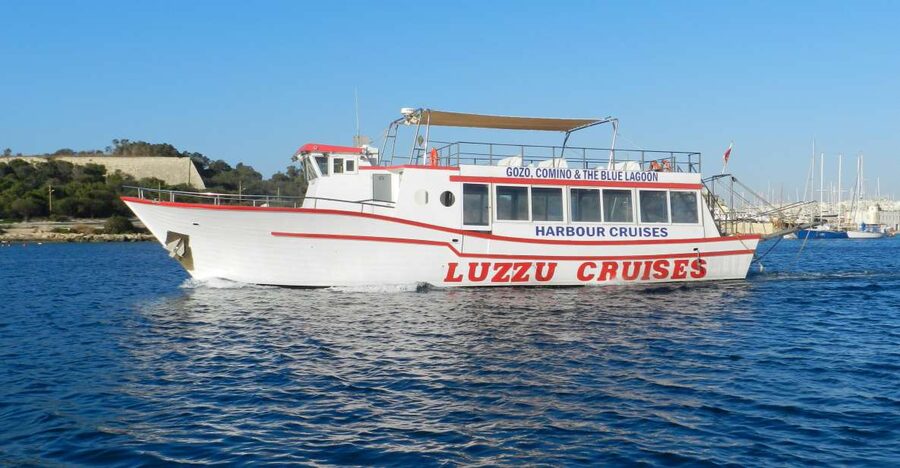
Reviewed · HARBOUR CRUISES
Malta: Panoramic Cruise around Malta’s Harbours and Creeks
Malta’s best history lesson may come from the water. This 75-minute harbour cruise leaves Sliema and threads through Marsamxett Harbour and Grand Harbour, putting forts, shipyards, marinas, and the Three Cities in one wide view. I like the easy pace and the way the boat reaches creeks that are hard to understand from land.
I also like the English commentary, which covers both old fortifications and working docks, and the low $24 price for a broad introduction to central Malta. The main drawback is that the first part can spend plenty of time on cranes, cargo areas, and dock history, so anyone wanting only postcard views may find it a little technical.
Key points to know before you go
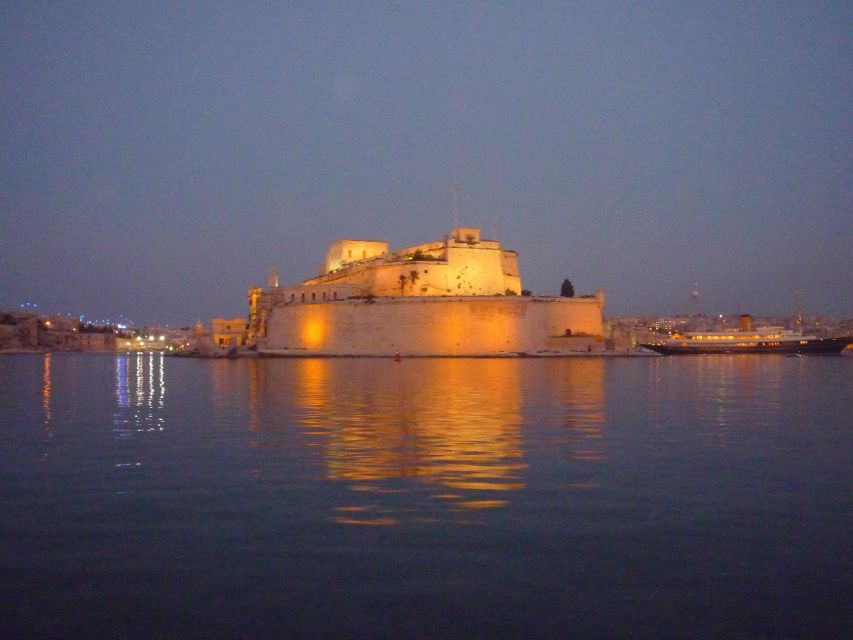
- Two major harbours in 75 minutes: Marsamxett Harbour and Grand Harbour both feature on the route.
- A water-level view of Valletta: Forts, gardens, the waterfront, and St. Paul’s Cathedral appear from an angle you cannot get on foot.
- The Three Cities included: You pass Senglea, Cospicua, and Vittoriosa, also known as Birgu.
- Commentary is part of the experience: English narration explains the harbours’ history, including modern docks and shipyards.
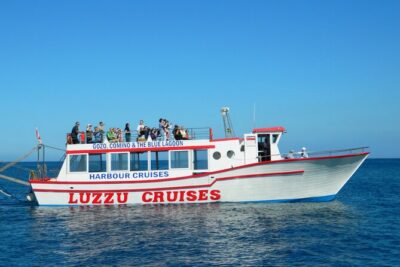
- Simple departure from Sliema: Find the Luzzu Cruises boat at Ferries 4, and arrive at least 15 minutes early.
- Good value for a first look: At $24, this is a sensible orientation ride, especially if you have limited time in Malta.
Why Malta’s harbours are worth seeing from the water
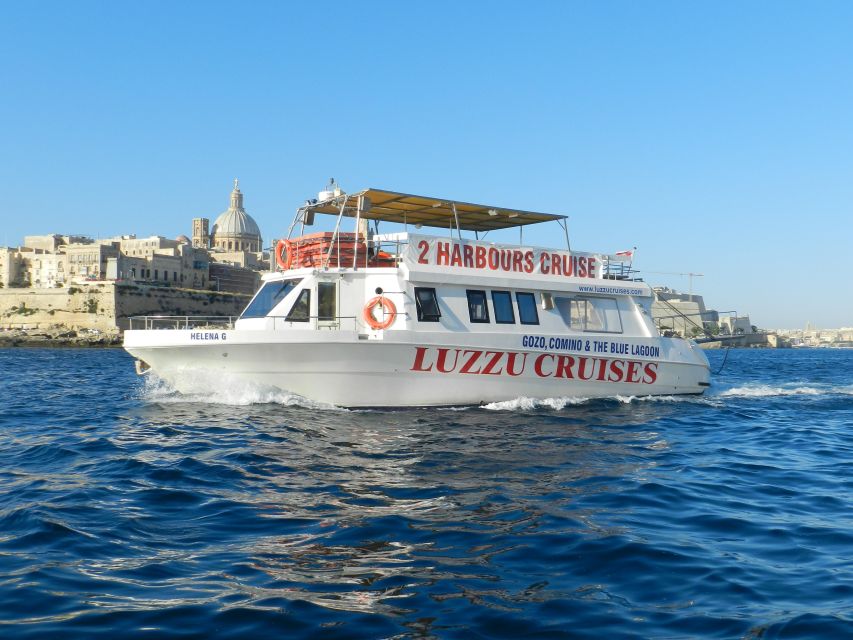
Valletta is impressive from land, but the harbour tells a larger story. From the boat, you can see how peninsulas, creeks, fort walls, shipyards, and waterfront buildings fit together. The high bastions are easier to appreciate from below, where their scale becomes clear.
Marsamxett Harbour and Valletta Grand Harbour are the heart of the route. They are not just scenic backdrops. These waterways connect Sliema, Valletta, Floriana, the Three Cities, and several working parts of Malta’s waterfront.
I find this useful early in a Malta visit because it gives you a quick sense of direction. After 75 minutes, you will have seen the waterfront from several angles and can decide which places deserve a later visit on foot.
This is a sightseeing cruise, not a stop-and-explore boat trip. The listed sights are passed from the water, so you should not expect to get off at Fort St. Angelo, the Maritime Museum, or the Three Cities. The reward is breadth: many landmarks, no uphill walks, and no need to plan separate transport between them.
More Harbour Cruises in Malta:
- From Sliema: Cruise Around Malta’s Harbours & Creeks
★ 4.5 · 2,292 reviews - The Best Traditional 2 Harbours Day Cruise of Malta
★ 4.2 · 432 reviews - Malta: Marsamxett Harbour and Grand Harbour Cruise by Night
★ 4.3 · 282 reviews
Starting at Sliema Ferries 4
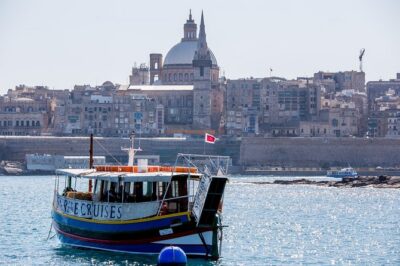
The meeting point is Sliema Ferries 4, where you should look for the Luzzu Cruises boat. The vessel may be named Antonia, Helena G, or Sansone, so do not rely on one boat name alone.
Arrive at least 15 minutes before departure. That small buffer matters because the cruise has a fixed route and a set departure point. The supplied information does not give a precise boarding procedure beyond finding the Luzzu Cruises boat, so arriving early is the sensible way to avoid a rushed start.
Sliema is a practical departure point for anyone staying nearby, and it also works for a short port visit. One booking party reached the ferry dock easily by Uber from a cruise ship, making this a useful option if you have several hours in Malta but not enough time for a full land tour.
Bring sunglasses, a sun hat, sunscreen, and a camera. The water reflects a lot of light, and much of the appeal is outside rather than inside the boat. The ride is listed in English, with English commentary onboard.
Marsamxett Harbour: forts, marinas, and working Malta
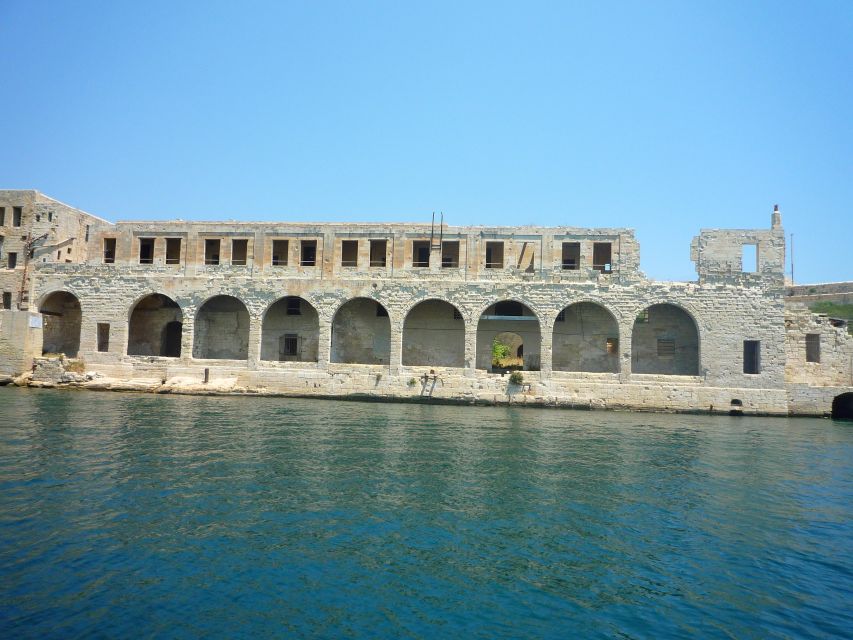
The first part takes you around the Sliema side of the harbour and through areas such as Fort Manoel, Ta’ Xbiex, and Msida. These places give you a mix of military Malta, yacht marinas, and everyday waterfront activity.
Fort Manoel is passed from the water. Its position helps show how Malta used harbour islands and shorelines for defence. From a boat, you can see the fort as part of the wider harbour system rather than as a separate building.
At Ta’ Xbiex and Msida, the scene shifts. Yacht marinas and working waterfront areas replace the stern stone walls. The change is useful because Malta’s harbours are still active places, not open-air museum pieces.
The route also passes the Black Pearl, a distinctive vessel that adds a different note to the dockside views. The commentary covers modern harbour features as well as older sites, so you may hear about cranes, cargo work, and shipyard activity along with forts and bastions.
This is the portion to keep in mind if you prefer pure scenery. One detailed account found the dock explanations fascinating but noted that the first half included considerable discussion of docks, cranes, and cargo. I think that is a strength if you want to understand how the harbour works. If you want a short cruise devoted only to Valletta’s walls, it may feel less focused than expected.
Valletta from the sea, from Floriana to Fort St. Elmo
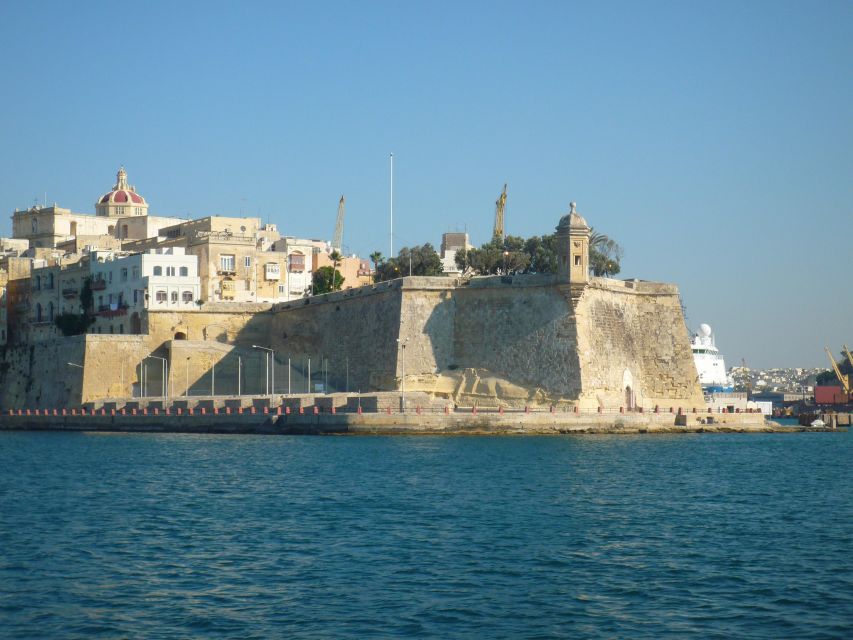
As the boat moves toward Valletta and Floriana, the views become more recognisably Maltese: pale stone walls, defensive structures, gardens, and buildings gathered above the water.
The route passes Valletta itself, including St. Paul’s Cathedral, the Cavalier of Fort St. Elmo, and the Mediterranean Conference Centre. Seeing these landmarks from the harbour gives you a useful change of scale. On foot, you notice streets and facades. From the boat, you notice the city’s position on the peninsula and its layered fortifications.
The Cavalier of Fort St. Elmo is especially meaningful from this angle because the route lets you connect it with the larger defensive line around the harbour. The boat does not stop for a close inspection, but the commentary helps place the site within the wider story.
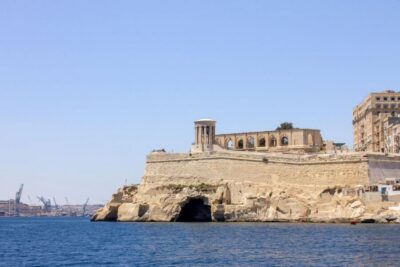
You also pass the Lower Barrakka Gardens and Upper Barrakka Gardens. From the water, you will not have the same garden views as you would from inside, but you can see how these elevated terraces sit above the harbour. The upper and lower levels are easier to understand when viewed from below.
The Mediterranean Conference Centre adds a later architectural note beside the older stone defences. This mix of military buildings, civic spaces, gardens, and port facilities is one reason the cruise feels broader than a simple fort tour.
More Boat Tours in Malta:
- Malta: Blue Lagoon, Beaches & Bays Trip by Catamaran
★ 4.7 · 5,496 reviews - Malta: Gozo, Comino, Blue & Crystal Lagoon, & Caves Cruise
★ 4.6 · 5,092 reviews - From Malta: Full-Day Gozo UTV Tour with Lunch and Boat Ride
★ 4.6 · 4,408 reviews - From Sliema: Comino, Crystal Lagoon, and Blue Lagoon Cruise
★ 4.5 · 3,792 reviews
Valletta Waterfront and the entrance to Grand Harbour
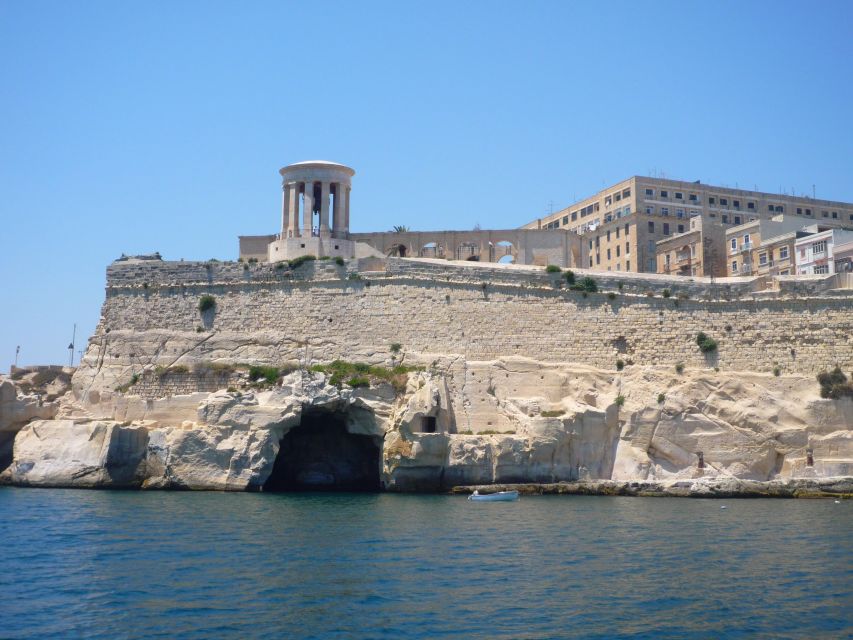
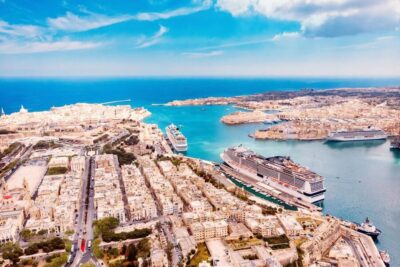
The boat continues past the Valletta Waterfront and Valletta Cruise Port. This section shows Malta as a live transport hub, with cruise facilities, waterfront buildings, and harbour traffic forming part of the view.
The waterfront is attractive from the sea because you see its long line of buildings as one continuous edge. The cruise port also helps explain why this part of Malta is often the first view many people have from a ship.
Next come Dock No. 6 and the Palumbo Malta shipyard. Here, the character changes again. You may see a less polished side of the harbour, but that is exactly what makes the route useful. The boat is not showing you only the pretty corners. It also explains the working areas that support Malta’s maritime life.
I would listen closely during this part. The commentary is not just a list of monuments. It can connect modern shipyards and dock work with the older purpose of the harbour. The exact amount of detail may depend on the captain and conditions, but English narration is included throughout the activity.
The Three Cities from the water
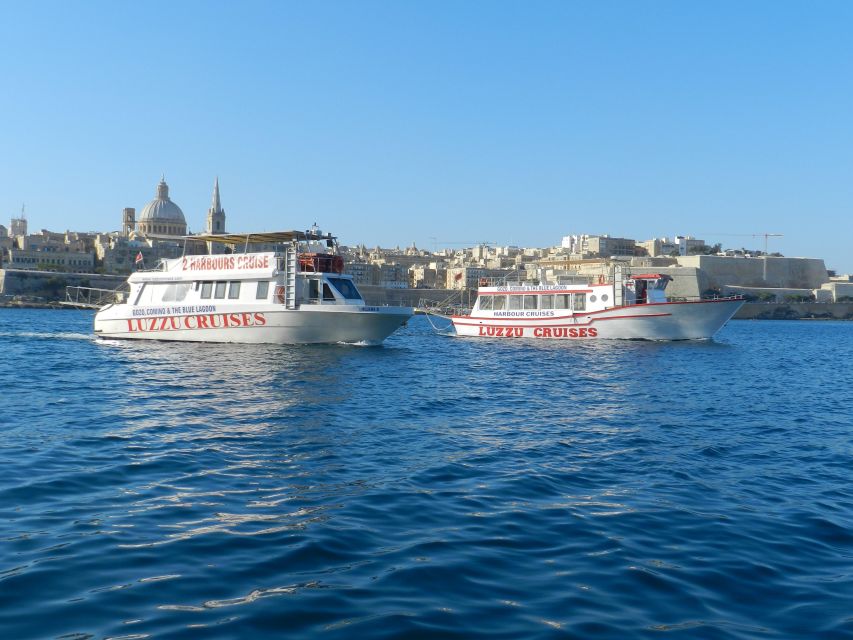
The cruise then reaches Senglea, Cospicua, and Vittoriosa, the three historic communities grouped around the inner harbour. From the boat, their close-set waterfronts and defensive walls make more sense than they often do from a road.
Senglea is seen along with the Gardjola Gardens. The gardens are known for their lookout position, and from the water you can appreciate that role even without going ashore. The boat gives you a clean view of the shoreline and the way the city projects into the harbour.
Cospicua follows, adding another waterfront perspective on the Three Cities. Since the boat passes rather than docks, you will not explore its streets or churches, but you will see how the settlement connects to the inner harbour.
The route also includes Camper & Nicholsons Grand Harbour Marina and the Birgu Waterfront. The marina brings polished yachts into the scene, while Birgu shows a more historic waterfront profile. This contrast is one of the better features of the cruise: Malta’s old harbour towns and current boating economy appear side by side.
Vittoriosa is also called Birgu, so you may hear both names in the commentary. That is useful when planning a later land visit, since maps and guidebooks may use either term.
Fort St. Angelo, Kalkara, and the outer harbour
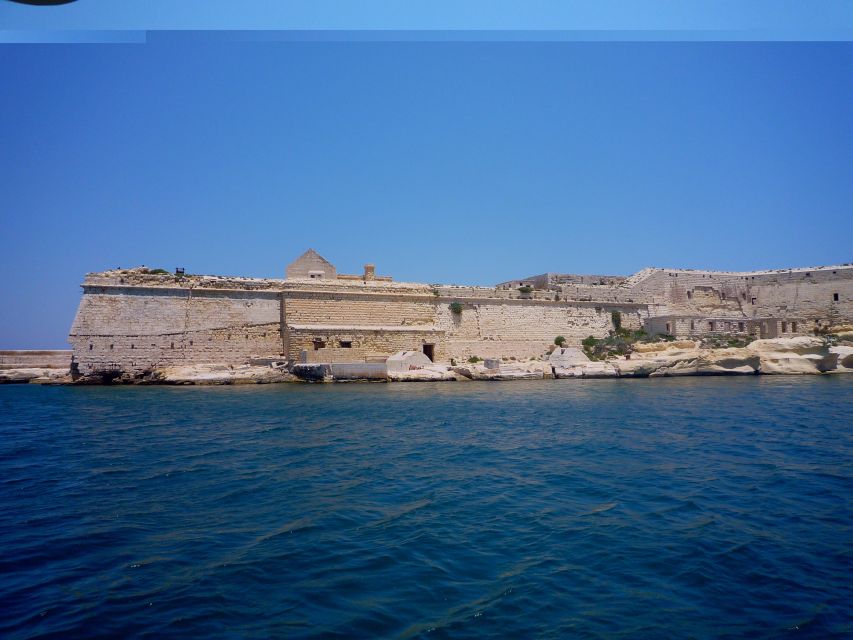
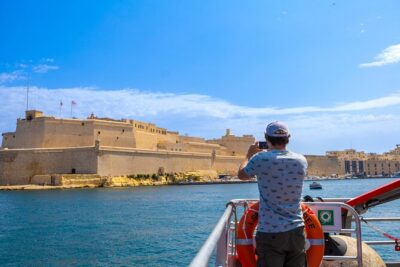
The boat passes the Malta Maritime Museum and Fort St. Angelo in Birgu. Fort St. Angelo is one of the most powerful-looking sites on the route, with a waterfront position that is hard to grasp from a street-level visit alone.
You will not receive an interior tour here. Instead, the cruise gives you the setting: the fort’s relationship to Birgu, the harbour entrance, and the surrounding defensive sites. For many people, that outside view is enough to decide if they want to return for a longer visit.
The boat continues to Kalkara, Villa Bighi, and Rinella Bay. These points widen the view beyond the dense centre of the harbour. Villa Bighi adds another notable building on the shore, while Rinella Bay gives the route a more open stretch of water.
Fort Ricasoli at Kalkara marks another strong military landmark. From the boat, you can study the fortifications as part of the harbour mouth rather than as an isolated wall. The sequence from Fort St. Angelo to Fort Ricasoli shows how many layers of defence surround these waters.
The route then turns back past Fort Tigne before returning to Luzzu Cruises in Sliema. Fort Tigne brings the cruise back toward the Marsamxett side and closes the loop without repeating only one narrow section of the harbour.
What the commentary adds
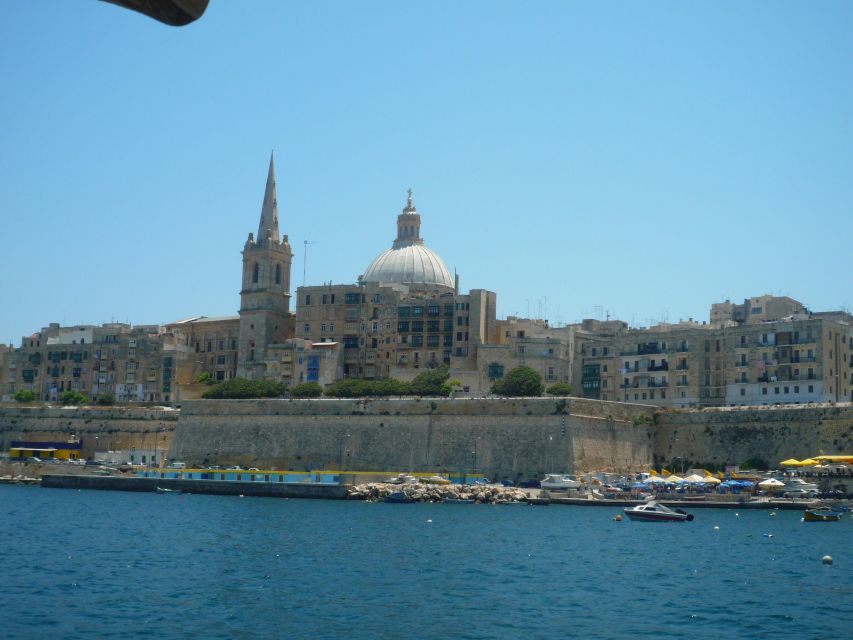
The commentary is important here. Without it, you would still get good views, but several sites would blur together: one fort, one bastion, one dock, one marina. The narration gives names and explains why the two harbours matter.
The strongest praise for this part of the experience is its clarity. The captain’s explanations have been described as easy to follow, with both historical and modern anecdotes. Another account specifically praised live commentary and the way it made the scenery more meaningful.
The tone may be more practical than theatrical. You should expect information about shipyards, cargo areas, forts, gardens, and city history rather than a staged performance. That suits me because the harbour is complicated, and plain explanations help you place what you are seeing.
There is one useful caveat: the commentary is in English. The supplied details list no other language option. If you do not follow English comfortably, the cruise may be more visual than informative.
Comfort, timing, and the $24 price
At $24 per person, this is good value for a 75-minute route that covers two major harbours and a long list of landmarks. You are paying for a broad overview rather than a stop at one major attraction, so the value is highest when you want orientation and scenery in one outing.
The relaxed pace is another advantage. One booking party with parents in their 80s found the cruise easy to enjoy, with enough time to take in the views. The boat also avoids the physical demands of climbing through forts or walking between separate harbour towns.
The tradeoff is depth. You will pass Fort Manoel, Fort St. Elmo, Fort St. Angelo, and Fort Ricasoli, but you will not enter them. You will see the Three Cities, but you will not walk their streets. I would treat this as a first look, then choose one or two places for a land visit if Malta gives you more time.
The operator offers free cancellation up to 24 hours before departure and allows you to reserve now and pay later. Starting times depend on availability, so check the schedule before building the cruise into a tight day.
Who should book this harbour cruise
I would recommend it to first-time visitors who want to understand central Malta quickly. It also suits cruise ship passengers, families, older adults, photographers, and anyone who prefers a seated overview before tackling Malta’s hills and fortifications on foot.
It is a good choice if you like a mixture of history and working waterfront detail. The route includes shipyards, marinas, cruise facilities, forts, gardens, and old city walls, so the scenery keeps changing.
I would think twice if you want a quiet boat ride with no narration or if you have little interest in docks and maritime infrastructure. The first half may give more attention to cranes, cargo areas, and shipyards than you expect. For a strictly Valletta-focused experience, a walking tour inside the city may be a better match.
Should you book it?
Book this cruise if you want strong value, wide coverage, and a clear introduction to Malta’s harbours. The 75-minute route packs in Sliema, Valletta, Floriana, the Three Cities, Kalkara, and the main forts without asking you to solve Malta’s transport puzzle.
I especially like it as a first or second-day activity. Take sunglasses and sunscreen, arrive early at Sliema Ferries 4, and listen to the commentary during the dock sections as well as the fort views. At $24, this is an easy recommendation for seeing how Malta fits together from the water, provided you understand that it is a pass-by sightseeing cruise, not a series of shore visits.
FAQ
Where does the cruise depart from?
It departs from Sliema Ferries 4. Look for the Luzzu Cruises boat at that location.
How early should I arrive?
You should arrive at least 15 minutes before departure.
Which boat will operate the cruise?
The boat may be named Antonia, Helena G, or Sansone.
How long is the cruise?
The cruise lasts 75 minutes.
What language is the commentary?
The included commentary is in English.
Which harbours does the route visit?
The cruise goes around Marsamxett Harbour and Valletta Grand Harbour.
Does the cruise include the Three Cities?
Yes. The route passes Senglea, Cospicua, and Vittoriosa, also called Birgu.
What should I bring?
Bring sunglasses, a sun hat, sunscreen, and a camera.
Can I cancel the booking?
You can cancel up to 24 hours in advance for a full refund. You can also reserve now and pay later.
Just added around Malta
- Gozo: Wine Tasting and Paired Dinner Experience★ 4.9 · 43 reviews
- World War II Malta Full-Day Walking Tour★ 4.3 · 18 reviews
- Victoria, Gozo: Sunset Walking Food and Drink Tour★ 5.0 · 6 reviews
- Malta: 5 hr Vintage Bus Tour – Mdina & Blue Grotto inc. food★ 5.0 · 22 reviews
- Wakeboarding Adventure in Malta: Learn to Ride★ 5.0 · 4 reviews
- Valletta: Private Maltese Cuisine Walking Tour★ 4.8 · 8 reviews
- Valletta: Private Massage from a world renowned masseuse★ 4.6 · 9 reviews
- Valletta & Mdina: Private Tour★ 4.5 · 16 reviews
Harbour Cruises, compared.
The Best Traditional 2 Harbours Day Cruise of Malta
Read our review →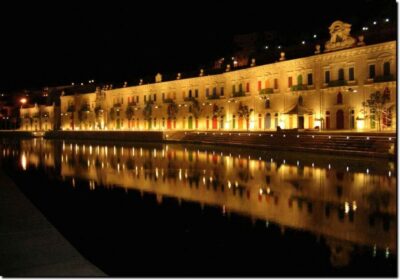
Marsamxett Harbour and Grand Harbour Cruise by Night
Read our review →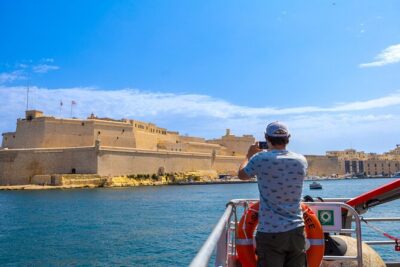
1-Day Hop-On Hop-Off Bus + Harbour Cruise Ticket
Read our review →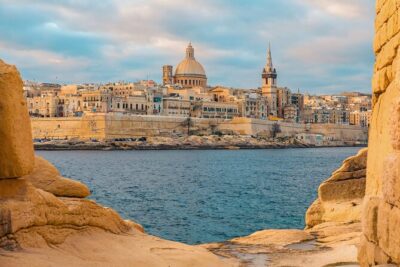
Cruise around Malta’s Harbours and Creeks from Sliema
Read our review →Browse the lists this tour appears in