
Reviewed · SCUBA DIVING
First scuba diving experience with instructor – Malta
Malta’s underwater world begins here with a calm, instructor-led introduction rather than a full certification course. At DiveBase Malta in St. Paul’s Bay, you learn the basics on land, practice in shallow water, then move into open water when you are ready. Antonio, Davide, and Georgia are among the instructors praised for clear, patient teaching.
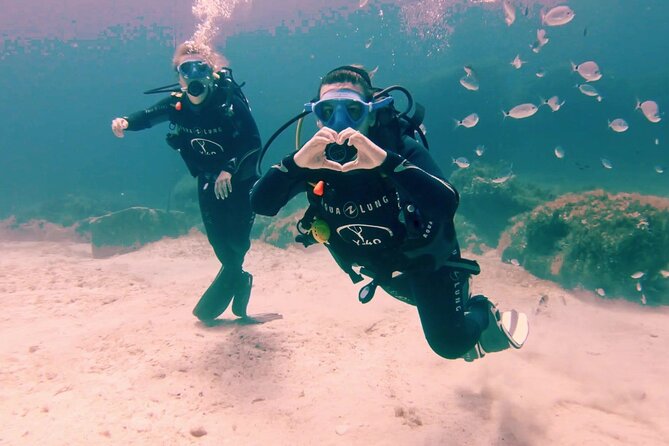
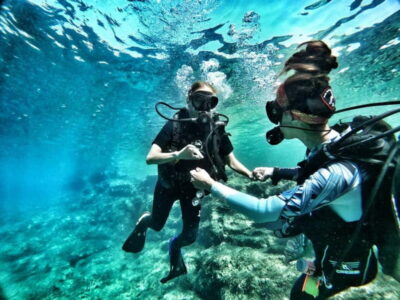
I like the small maximum group of eight, which gives a beginner a better chance of receiving help when breathing feels strange or ears refuse to equalize. I also like the practical scope: you learn to use the equipment, communicate with hand signals, swim with fins, and spot local sea life, with some participants reaching about seven meters and seeing an octopus.
The main caution is that comfort and communication matter. The teaching is offered in English and Italian, language barriers have caused problems, and the session is not suitable for people with certain medical conditions unless they provide clearance. Bring your own swimsuit and towel, arrive prepared, and allow at least 12 hours between the session and a flight.
Key points at a glance
- Three hours in St. Paul’s Bay: The session includes paperwork, instruction, equipment setup, and water time.
- Made for first-timers: No previous scuba experience is required, but you need adequate swimming ability and good health.
- Personal instruction: The group limit is eight, with instructors including Antonio, Davide, and Georgia.
- Shallow practice comes first: You learn breathing, equalization, fin movement, and hand signals before open-water practice.
- Marine life is part of the reward: You may see local fish and, with luck, an octopus at close range.
- Plan around health and flights: Some medical conditions require a doctor’s statement, and you should wait at least 12 hours before flying.
What the three-hour Malta session is really like
This is not a boat excursion or an advanced underwater outing. It is a first lesson, built for people who want to find out how scuba feels before committing to a full qualification.
You meet at DiveBase Malta, 25 Islet Promenade in St. Paul’s Bay. The experience ends at the same place. Since transportation to another part of Malta is not included, you should plan your own way to the meeting point and leave enough time for forms and preparation.
The advertised three hours cover more than time underwater. You can expect a briefing, medical paperwork, equipment fitting, instruction, a confined-water session, and open-water practice. Arriving late or without the forms ready can reduce the time available for the water portion, so complete the paperwork before you arrive if possible.
The setting is private in the sense that the experience is organized for a small party rather than a large commercial crowd. The maximum is eight people. That is still large enough for the pace to vary from person to person, but it is a far better arrangement than being one beginner among a packed class.
More Diving Trips in Malta:
- Malta: First Experience Scuba Diving Lesson
★ 4.6 · 415 reviews - St Julians: Discover Scuba Diving Experience
★ 4.8 · 93 reviews - Two Morning Dives in Gozo for Certified Diver
★ 5.0 · 66 reviews
Learning to breathe underwater in St. Paul’s Bay
The first challenge is usually not seeing fish. It is breathing through a regulator while wearing a mask and a fitted wetsuit.
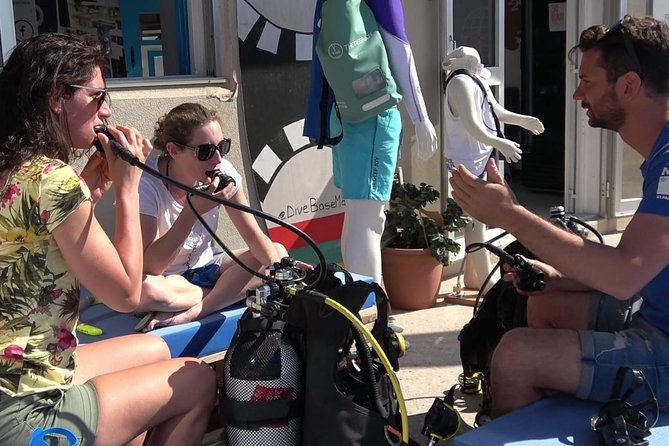
Your instructor introduces the scuba equipment and explains how each part works. You practice breathing underwater, getting used to the sensation, and staying calm. This step deserves time. A participant who is confident on land may still need several attempts before breathing feels natural below the surface.
The instructors’ teaching style is one of the strongest reasons to consider this experience. Antonio is repeatedly described as clear and encouraging, while Georgia helped one beginner reach roughly seven meters. Davide has also been praised for explaining each stage carefully and keeping nervous beginners moving at a comfortable pace.
That said, the experience is not equally easy for everyone. One parent and child group found the shore-side instruction too hurried, especially after the child struggled to breathe underwater. The provider’s response indicated that the instructor spent more than an hour on the confined-water portion, but the account still points to an important truth: if you need extra time, tell the instructor plainly and early.
A good beginner session should never be a test of pride. If your breathing feels wrong, signal, stop, and reset. The instructor’s job is to help you become comfortable, not to push you into deeper water simply because the clock is moving.
The skills you will practice before open water
The lesson covers the basic skills required for a controlled first session:
- Using the mask, fins, wetsuit, tank, and regulator
- Equalizing pressure in your ears
- Breathing steadily underwater
- Moving with fins without wasting effort
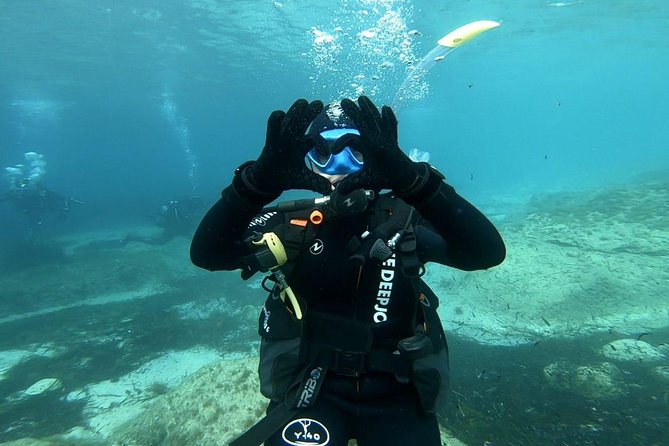
- Communicating with simple underwater hand signals
Equalization is especially important. As you descend, pressure changes can affect your ears. You need to equalize early and often, and you should never force it if you feel pain. The session gives you a chance to learn this with an instructor close by rather than trying to work it out alone.
Fin movement is another small skill that makes a large difference. Beginners often kick too hard, tire quickly, or stir up the water. Your instructor shows you how to move with less effort. The goal is not speed. It is to stay relaxed and conserve energy.
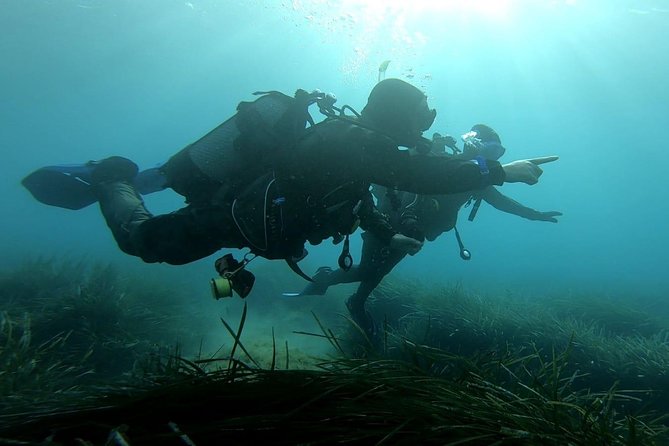
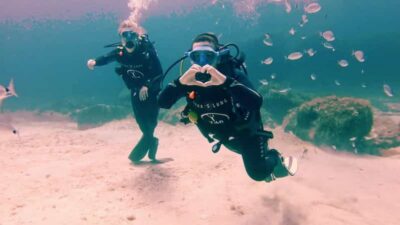
Hand signals give the activity its own quiet language. You cannot speak normally underwater, so signals help you indicate that you are fine, need to stop, or have a problem. This is useful beyond Malta. These are basic habits you will need if you continue your scuba education.
Shallow water first, then a look below the surface
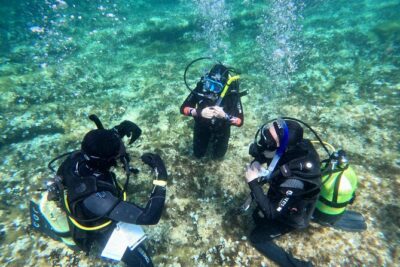
The water sessions begin in a shallow area, where the instructor can focus on breathing, equipment, and basic control. This is the most important part for a first-timer because it lets you solve small problems before they become stressful.
Once the group meets the required standards and feels comfortable, the session continues into open water. The exact depth and conditions depend on the day, the sea, and the ability of the participants. One beginner reached about seven meters, while another described spending around an hour underwater.
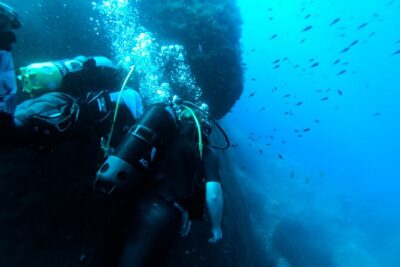
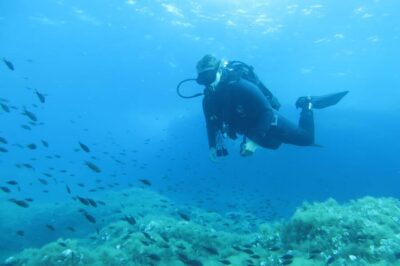
That underwater time is the heart of the experience. You may see Malta’s local fish and other marine life close to the seabed. One participant reported seeing an octopus at close range, which is the kind of encounter that can turn a lesson into a memorable holiday moment.
Keep your expectations sensible. This is not sold as a specialist marine-life trip, and sightings cannot be guaranteed. The attraction is learning to move through the sea while noticing what lives there. Even a short look at fish passing nearby can feel remarkable when it is your first time breathing underwater.
The open-water part also tests whether you are ready to continue. Some people discover an immediate new interest. Others decide that scuba is not for them. Either result is useful, especially when the session gives you a safe way to find out.
Same islands, a completely different kind of day:
- Malta: Gozo & Comino Islands, Blue Lagoon & Seacaves Tour
★ 4.5 · 15,672 reviews - Comino: Blue Lagoon, Crystal Lagoon, and Seacaves Tour
★ 4.6 · 5,673 reviews - Malta: Blue Lagoon, Beaches & Bays Trip by Catamaran
★ 4.7 · 5,496 reviews - Malta: Gozo, Comino, Blue & Crystal Lagoon, & Caves Cruise
★ 4.6 · 5,092 reviews
Why the instructors make such a difference
A beginner does not need a dramatic personality from an instructor. You need someone who explains clearly, watches closely, and takes fear seriously.
The strongest feedback centers on those qualities. Antonio is singled out for patience, clear explanations, and making the first experience feel manageable. Georgia is praised for making each step easy to understand. Davide is noted for encouragement and detailed preparation. The team is also described as friendly, humorous, and professional.
That pattern matters because scuba is technical even at the introductory level. You are managing equipment, breathing, pressure, movement, and communication at the same time. A relaxed instructor can prevent a small concern from becoming a reason to quit.
The experience is not flawless for every group. The less favorable accounts describe impatience, limited attention after the water session, and difficulty communicating across languages. English and Italian are the stated languages, and one French-language account specifically advised having a good command of English. If you are not comfortable with either language, contact DiveBase Malta before booking and ask what support is available.
You should also tell the instructor if you are nervous. A first session works best when the instructor knows whether you need a slower explanation, another attempt at breathing, or a short pause.
Equipment, clothing, and the small practical details
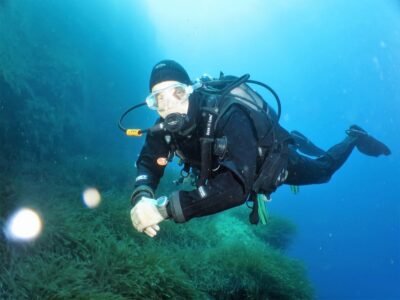
Scuba equipment, diving insurance, and a PADI instructor are included. You must bring your own swimsuit, bikini, or shorts, along with a towel. A wetsuit, fins, mask, and the rest of the required scuba equipment are supplied.
Fit matters. One negative account described a wetsuit that felt too large and led to a participant leaving the water. The provider said the suit appeared to fit and that the participant had chosen to exit because it was uncomfortable. The useful lesson for you is simple: check the fit before entering the water, and speak up immediately if the suit, mask, or fins do not feel right.
You may also be asked to rinse the wetsuit, fins, and mask after use. That is a normal hygiene step and part of caring for shared equipment, though it may surprise you if you expect the staff to handle every task. Ask what needs to be rinsed and where before you leave the water.
No photo service is included. If you want underwater pictures, ask before booking. The provider explains that an additional instructor is needed for a pre-booked photo service, so do not assume a staff member will be free to carry a camera during your session.
What the certificate means
After meeting the requirements of the experience, you receive a PADI Discover Scuba Diving Certificate of Achievement. It is recognized worldwide and can help you continue your scuba education.
This certificate is not the same as completing a full open-water certification. Think of it as a record that you completed an introductory experience, not as permission to scuba independently. If you enjoy the session, speak with the instructor about the next step toward certification.
That distinction is important when you compare this activity with a multi-day training course. The Malta experience is a low-commitment introduction. It gives you a taste of the equipment, the breathing technique, and the underwater environment without asking you to enroll in a longer course first.
Health rules and the flight warning
You need sufficient swimming skills and good health. The activity is not suitable for people with respiratory problems, including active asthma, or blood and heart conditions. It is also not suitable for people who have had any kind of surgery in the previous year unless the provider accepts appropriate medical clearance.
A doctor’s statement may be required in particular cases. Read the medical form before booking, not after arriving in Malta. If you know you have a chronic condition, ask DiveBase Malta what documentation is needed and whether you can participate before making a nonrefundable late booking.
The flight rule is easy to overlook. You should wait at least 12 hours after the session before taking a flight. Build that gap into your Malta plans. Do not schedule the activity immediately before an early departure.
The provider offers free cancellation up to 24 hours before the start time. Inside that window, the payment is not refunded. Poor weather can also cancel the session, in which case you are offered another date or a full refund.
Is the price good value?
The supplied tour details show a price of $0.00, which is almost certainly a placeholder or a booking-display issue rather than a promise of a free scuba session. Check the live price before paying or planning around it.
For a normal paid price, value depends on what you want. You receive equipment, insurance, a PADI instructor, a three-hour introduction, and both shallow and open-water practice. That is useful value if you want a safe first look at scuba and may continue toward certification.
It is less suitable if you mainly want a long marine-life outing, underwater photography, or a relaxed beach activity with no paperwork. The session includes instruction and equipment handling, so part of your time is spent learning rather than simply sightseeing.
The private or small-group format also adds value for nervous beginners. You are not paying only for equipment rental. You are paying for supervision, help with equalization, and the chance to stop and ask questions.
Who should book this experience?
You should consider it if you can swim, are curious about scuba, and want a structured first attempt in Malta. It suits couples, friends, and solo participants who prefer personal instruction to a large class.
It is also a good choice if one person in your group is nervous. The shallow-water stage gives you a chance to decide how far you want to continue. You do not need previous scuba experience.
You should think twice if you dislike close-fitting equipment, have an untreated medical concern, cannot communicate comfortably in English or Italian, or need a guaranteed photo package. The activity depends on your ability to follow instructions and stay calm underwater.
FAQ
Do I need previous scuba experience?
No. The session is designed for first-time or inexperienced participants. You need sufficient swimming skills and good health.
How long does the experience last?
The full experience lasts about three hours. This includes the briefing, paperwork, equipment preparation, shallow-water practice, and open-water session.
Where does the activity start and finish?
You meet at DiveBase Malta, 25 Islet Promenade, St. Paul’s Bay, Malta. The activity ends back at the same meeting point.
What is included?
Scuba equipment, diving insurance, and a PADI instructor are included. You need to bring your own swimsuit, bikini, or shorts and a towel.
Can I fly immediately after the session?
No. You should wait at least 12 hours after the session before taking a flight.
Can a medical condition prevent me from participating?
Yes. The activity is not suitable for people with respiratory problems, including active asthma, blood or heart conditions, or surgery within the previous year. A doctor’s statement may be requested in some cases.
Should you book it?
Book this if you want a carefully guided first taste of Malta’s underwater world, not a full certification course or a dedicated photography trip. The strongest reasons are the small group limit, practical instruction, and the patient approach repeatedly associated with instructors such as Antonio, Davide, and Georgia.
Before paying, confirm the real price, language support, medical requirements, and wetsuit arrangements. Arrive on time with the forms completed, bring a towel, and leave 12 hours before any flight. If you do that preparation and feel ready to learn, this is a sensible, memorable introduction to scuba in Malta.
Just added around Malta
- Gozo: Wine Tasting and Paired Dinner Experience★ 4.9 · 43 reviews
- World War II Malta Full-Day Walking Tour★ 4.3 · 18 reviews
- Victoria, Gozo: Sunset Walking Food and Drink Tour★ 5.0 · 6 reviews
- Malta: 5 hr Vintage Bus Tour – Mdina & Blue Grotto inc. food★ 5.0 · 22 reviews
- Wakeboarding Adventure in Malta: Learn to Ride★ 5.0 · 4 reviews
- Valletta & Mdina: Private Tour★ 4.5 · 16 reviews
- Valletta: Private Maltese Cuisine Walking Tour★ 4.8 · 8 reviews
- Valletta: Private Massage from a world renowned masseuse★ 4.6 · 9 reviews
Scuba Diving, compared.
Browse the lists this tour appears in