
Reviewed · MUSEUMS
Mdina: The Knights of Malta Museum Entry Ticket
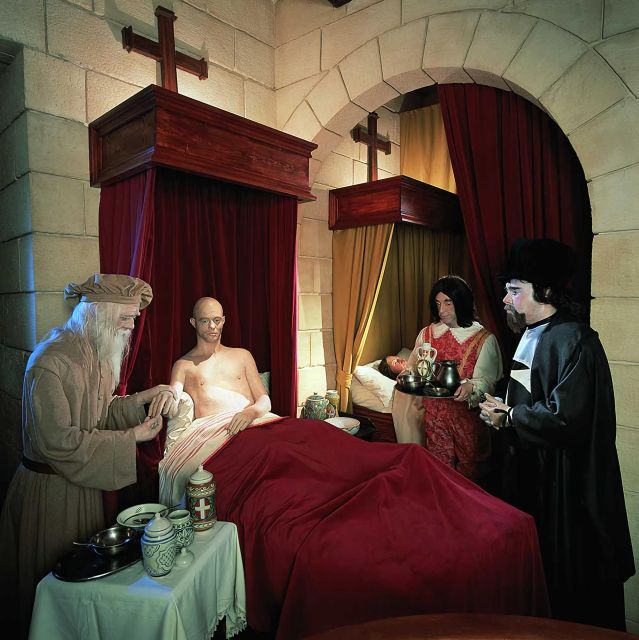
Mdina’s Knights of Malta Museum brings the island’s knightly past to life through 34 full-size tableaux, dramatic lighting, reconstructed interiors, and a 3D audio-visual introduction. You move from the arrival of Grand Master L’Isle Adam in 1530 through battles, hospital work, earthquakes, and the grand building projects that shaped Malta.
I like the short, self-contained format, especially if you have only one day in Mdina or need an indoor stop between the cathedral and the city walls. I also like the 13-language commentary, which lets you follow the story without hiring a private guide.
The main drawback is historical depth. The presentation uses vivid scenes and broad storytelling, but parts may feel approximate or repetitive if you already know the Knights of Malta well. The venue is not wheelchair accessible or stroller accessible, and the experience is not suitable for people with hearing impairments.
Key points to know before you go
- The visit lasts about 40 minutes, including the 3D introduction and museum walkthrough.
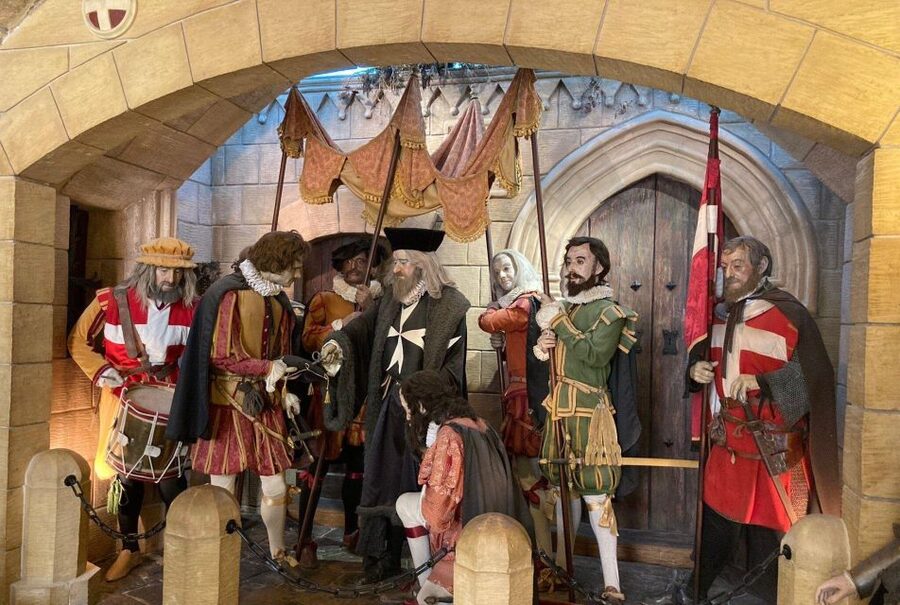
- Thirty-four historical scenes show the Knights, grand masters, local people, battles, the hospital, and the 1693 Mdina earthquake.
- Commentary comes in 13 languages, including English, Maltese, French, Italian, German, Spanish, Japanese, and Russian.
- The $8 ticket is good value for a compact indoor attraction, particularly for families and first-time visitors to Mdina.
- You can use the open ticket on any museum opening day, but it allows one entry only and does not include re-entry.
- Accessibility is limited: no wheelchairs or strollers, and the presentation depends heavily on sound.
Entering Casa Magazzini in Mdina
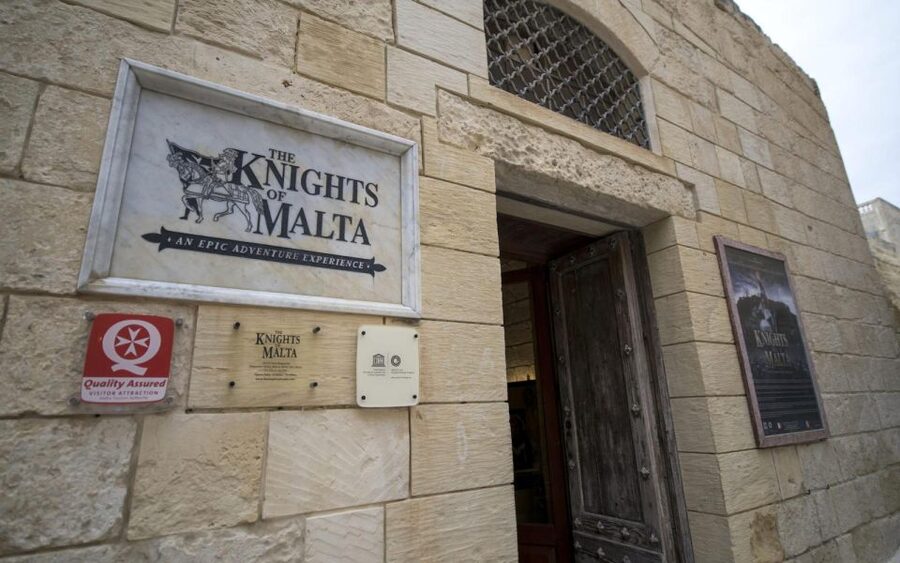
The museum is housed at Casa Magazzini, inside Mdina, the fortified hilltop city often called the Silent City. You check in at reception when you arrive, then begin with the introductory presentation before walking through the historical scenes.
This is not a conventional museum packed with glass cases and long labels. Instead, the attraction uses full-size figures, reconstructed settings, sound, lighting, and projected images to create a stage-like account of Malta under the Knights of St. John.
That approach makes the visit easy to follow. You do not need a detailed knowledge of Maltese history before entering. The basic story unfolds in order, moving from the Knights’ arrival and political role to their military conflicts, charitable work, architecture, and eventual troubles.
The setting also matters. Mdina itself is a former fortified capital, so the subject feels connected to the streets outside. After the visit, you can step back into narrow lanes and stone buildings with a better sense of the period the museum is presenting.
You should think of this as a theatrical history attraction rather than an academic museum. Its purpose is to give you a clear, visual introduction to the Knights of Malta in a short period.
More Museums in Mdina:
- Mdina: St. Paul’s Cathedral and Mdina Museum Entrance Ticket
★ 4.5 · 89 reviews - Aviation Museum, Mosta Church, WWII Shelters inc. Platter
★ 4.2 · 16 reviews - Malta Classic Car Collection Museum Entry Ticket
★ 4.9 · 247 reviews
The 3D introduction sets the tone
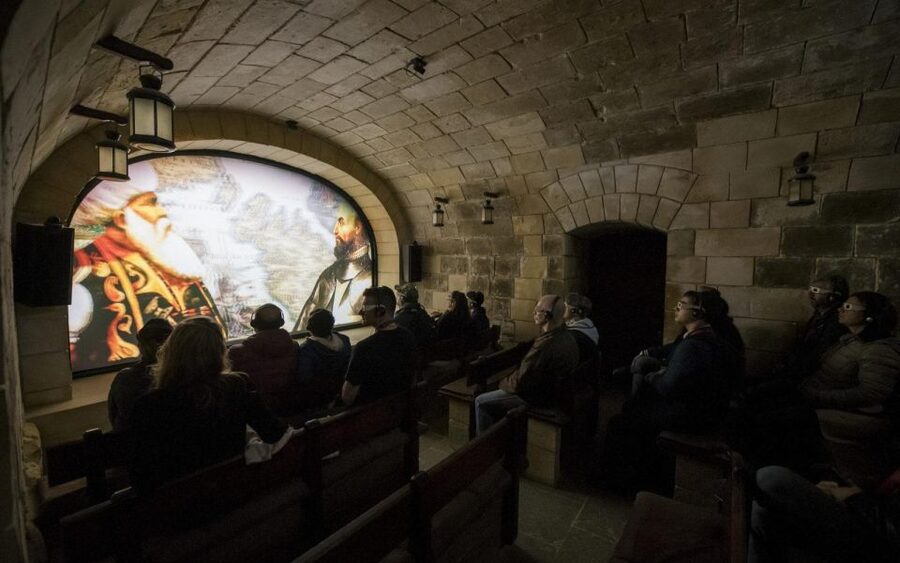
The first part is a 3D digital audio-visual presentation using light, sound, and narration. It introduces the long story of Malta, described here as a 7,000-year history of triumphs and hardships, before focusing on the roughly 200 years of rule by the Knights.
The presentation is available in 13 languages: English, German, French, Dutch, Spanish, Italian, Russian, Greek, Swedish, Danish, Norwegian, Japanese, and Maltese. That is a real advantage if you prefer to absorb historical details in your own language.
You select or receive the appropriate audio commentary at the venue. An English-speaking host or greeter is available at reception, but this is not a guided tour led through the museum by a named guide. The recorded narration does most of the explanatory work.
The 3D element gives the introduction a sense of movement and spectacle. It is designed to draw in children as well as adults, with the Knights, sieges, and disasters presented in a dramatic way.
I would keep your expectations sensible. This is a compact show, not a feature-length historical film. Its job is to establish the main characters and events before the walkthrough, not to explain every political dispute or military campaign in detail.
Thirty-four scenes from knightly Malta
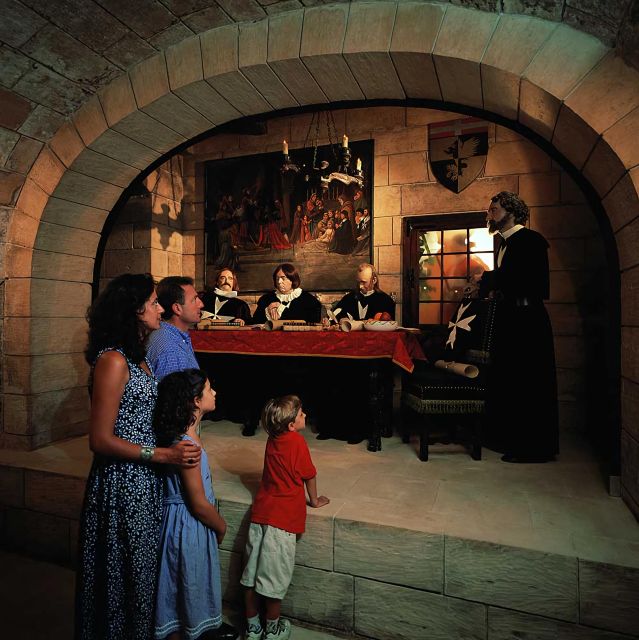
After the introduction, you continue through 34 tableaux covering different parts of life during the Knights’ rule. Full-size figures appear as Knights, grand masters, officials, workers, patients, and ordinary people.
Some scenes show the Knights in conference, giving you a glimpse of their leadership and internal decision-making. Others place them alongside local residents, which helps the story move beyond uniforms, titles, and battlefield drama.
The scenes also cover the harsher side of the period. Piracy, siege warfare, and the threat from the Ottoman enemy are part of the presentation. Malta’s strategic position in the Mediterranean made conflict a regular feature of life, and the museum does not treat the Knights only as builders and benefactors.
You also see the order’s hospital work. The Knights were a military and religious organization, but their responsibilities included caring for the sick. This section adds useful balance, showing why their legacy involves medicine and public service as well as war.
The 1693 earthquake in Mdina receives its own dramatic treatment. It is a good example of how the museum uses reconstructed scenes to show a disaster that shaped the city and its buildings.
The presentation can be particularly effective for younger visitors because the historical figures are easy to see and the scenes change the rhythm of the visit. Instead of asking children to read long panels, the museum gives them people, rooms, battles, and moments of crisis to look at.
Adults who already know the story may find the approach broad. A short series of tableaux cannot explain the full politics of the Order, its relationship with Malta, or the Ottoman wars in detail. If you want dates, documents, or original objects, you will need to add other museums and historic sites to your Mdina visit.
From Grand Master L’Isle Adam to Valletta
One of the central moments is the arrival of Grand Master L’Isle Adam through Mdina’s gates in 1530. This marks the beginning of the Knights’ period on the islands and gives the museum a clear starting point for its account.
The presentation then follows the Knights through their public and military roles. You see their involvement in defense, their encounters with enemies, and the disasters that affected the population.
The building program is another important theme. The Knights worked with architects and artists to create Valletta, described in the presentation as a city for gentlemen, along with churches, palaces, and other major monuments.
This part is valuable because it connects the museum to places you may visit elsewhere in Malta. If you are planning to see Valletta after Mdina, the scenes give you a little context for the order’s ambition and the scale of its building projects.
Still, the museum gives you the outline rather than the full explanation. You will see why the Knights mattered, but you will not leave with a detailed account of every grand master or a complete architectural history of Valletta.
For many people, that is enough. The attraction works best as a first introduction, or as a visual reminder before you visit the actual buildings associated with the Order.
A few more Mdina half days worth comparing
- Malta: Highlights of Malta & Mdina Full Day Tour with Lunch
★ 4.4 · 2,688 reviews - Malta: Mdina and Rabat Walking Tour with Catacombs
★ 4.8 · 1,126 reviews - Malta: Mdina, Dingli Cliffs and San Anton Botanical Gardens
★ 4.3 · 991 reviews - Mdina and Rabat: Guided City Walking Tour
★ 4.8 · 549 reviews
How the 40-minute format affects the visit
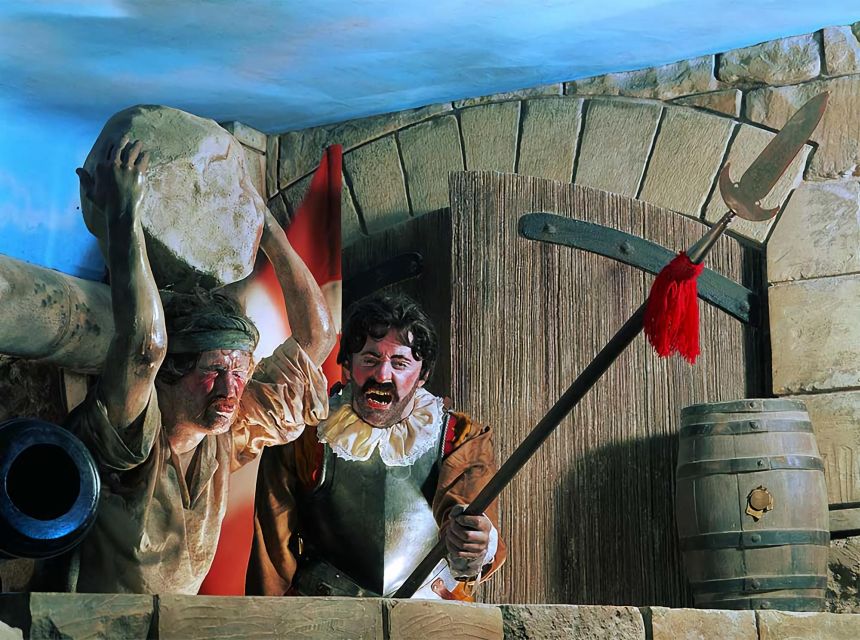
The entire experience takes about 40 minutes, including the introductory 3D presentation and the walkthrough. That timing makes it easy to fit into a day in Mdina without giving up several hours.
I see this short length as one of the ticket’s strongest features. Mdina has several major sights, and you can use the museum as a focused indoor stop rather than building your entire day around it.
The trade-off is that the experience moves quickly. You will not have unlimited time to study each scene, ask questions, or return to a section. The ticket is valid for one-time entry only, so plan to see the museum in one visit.
The ticket is open, meaning you can use it on any day within the museum’s opening hours. The museum is open Monday through Sunday throughout the year, except Christmas Day, December 25. Opening times can change, so confirm the hours during your stay before setting out.
There is no hotel pickup, transportation, food, drinks, or live guide included. You make your own way to Mdina, check in at reception, and follow the presentation and walkthrough.
Is the $8 ticket good value?
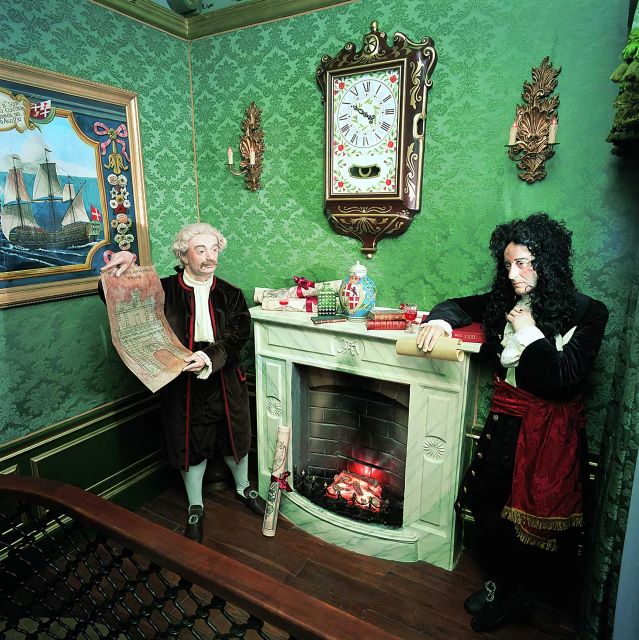
At $8 per person, this is a modestly priced attraction. I consider it good value if you want a short historical experience with a clear beginning, middle, and end.
The price works especially well for families. The full-size figures, battle scenes, lighting, and sound give children something concrete to focus on, while the multilingual narration allows adults to follow the main historical points.
It is also useful for a first visit to Malta. You receive a quick orientation to the Knights, the Ottoman threat, the hospital, the earthquake, and the building of Valletta without committing to a long lecture or formal tour.
The value is less certain if you already have detailed knowledge of the Order of Malta or prefer original artifacts. The museum’s strength is presentation, not a large collection of rare objects. Some visitors may find the history too general or repetitive, particularly if they expect a scholarly account.
I would compare the ticket with the rest of your Mdina plans. If you are already paying for several attractions and have little interest in staged historical displays, you may prefer to spend the money on a site with original architecture or collections. If you want an inexpensive indoor stop that makes the Knights easy to understand, $8 is reasonable.
Who will enjoy the museum most?
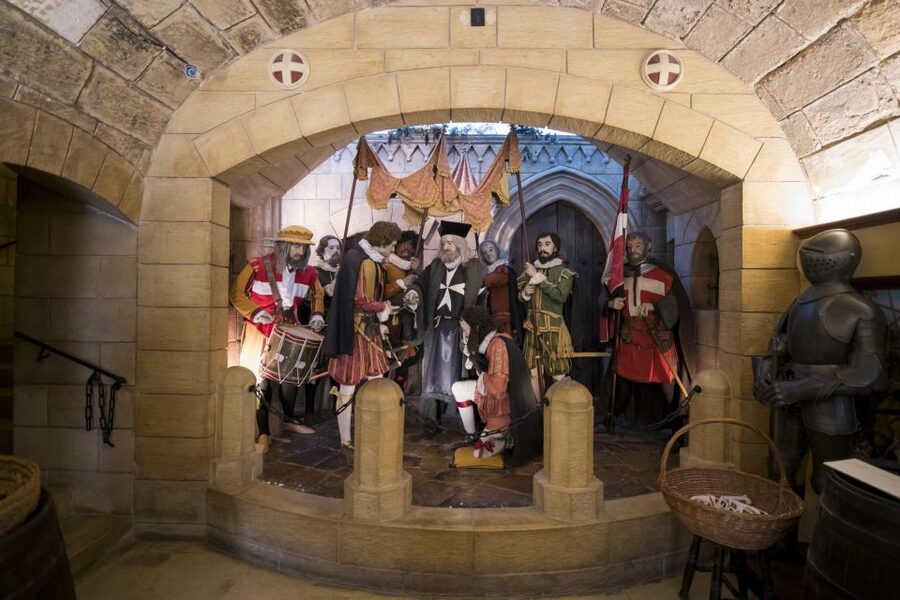
I would recommend this experience to families, first-time visitors to Malta, and anyone who wants an uncomplicated introduction to the Knights of Malta. The combination of sound, lighting, figures, and short scenes makes the subject easier to grasp than a room of written panels.
It also suits people with a tight schedule. Forty minutes is long enough to feel worthwhile but short enough to fit between other Mdina sights.
The museum may disappoint you if you want a quiet, object-focused collection or detailed historical debate. The tone is dramatic and accessible, not highly specialized.
The attraction is not suitable for people with hearing impairments because the audio presentation is a central part of the experience. The venue is not wheelchair accessible, and strollers are not allowed inside. A secure storage place is provided for strollers, but parents with very young children are advised to bring an infant harness.
Pets are not allowed. Infants may enter, but the lack of stroller access is worth planning around.
Practical advice for planning your visit
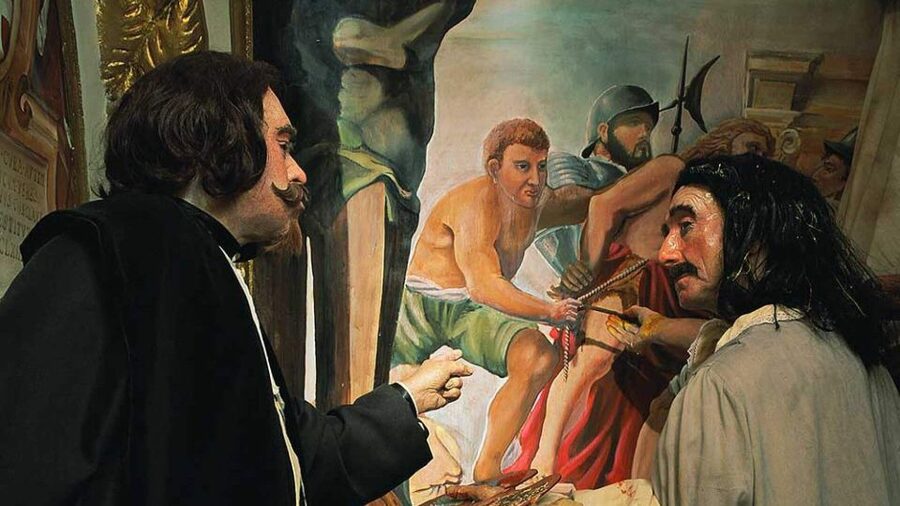
Use the museum as part of a wider Mdina walk. The ticket gives you a broad picture of the Knights, then the streets and buildings outside provide a sense of the fortified city itself.
Arrive with enough time to check in at reception. Because the opening hours may change, confirm them before visiting, even though the museum normally opens every day except Christmas Day.
Choose your audio language carefully. English is available, along with 12 other languages, so you should be able to follow the narration comfortably.
If you are visiting with children, explain that this is a staged historical presentation rather than a live show. The museum includes battles, piracy, sieges, illness, and disasters, so some scenes may feel intense for very young children.
Do not expect to re-enter after leaving. The ticket is valid for one admission only. Since the visit is short, it is easy to complete in a single stop.
The overall rating of 4.3 from 63 bookings fits the experience well: it is broadly appealing, clearly presented, and affordable, but its simplified treatment will not satisfy everyone. One particularly critical assessment found the content repetitive and approximate, while another described it as a small exhibit with a short 3D film followed by a walkthrough. Those two reactions capture the main choice you face.
Should you book the Knights of Malta Museum?
Book it if you want a low-cost, 40-minute introduction to Malta’s Knights, especially if you are traveling with children or want a break from outdoor sightseeing in Mdina.
Skip it if you are looking for original artifacts, a live historian, wheelchair access, or a detailed study of the Order’s politics and military campaigns. The museum tells a broad story through staged scenes and technology, and that format will suit some people far more than others.
For most first-time visitors, the ticket makes sense as a compact addition to a day in Mdina. Just treat it as an engaging overview, not the final word on Malta’s complicated past.
FAQ
How long does the Knights of Malta Museum visit last?
The full experience takes approximately 40 minutes, including the introductory 3D digital audio-visual presentation and the walkthrough of the historical scenes.
What does the admission ticket include?
The ticket includes admission to the Knights of Malta Museum and the audio-visual introduction with recorded commentary in 13 languages.
Which languages are available for the audio guide?
Commentary is available in English, German, French, Dutch, Spanish, Italian, Russian, Greek, Swedish, Danish, Norwegian, Japanese, and Maltese.
Is there a live tour guide?
No live guide is included. An English-speaking host or greeter is available at reception, while the historical explanation is provided through the audio-visual presentation and commentary.
Can I use the ticket on any day?
Yes. The ticket is open and can be used on any day within the museum’s opening hours. It is valid for one entry only, with no re-entry.
Is the museum open every day?
The museum is normally open Monday through Sunday all year, except Christmas Day on December 25. Opening hours can change, so confirm them during your stay.
Is the venue wheelchair accessible?
No. The venue is not wheelchair accessible. It is also not stroller accessible, although a secure storage place is available for strollers.
Can people with hearing impairments enjoy the experience?
The experience is not suitable for people with hearing impairments because the audio presentation and narration are central parts of the visit.
Just added around Mdina
- Malta: 5 hr Vintage Bus Tour – Mdina & Blue Grotto inc. food★ 5.0 · 22 reviews
- Valletta & Mdina: Private Tour★ 4.5 · 16 reviews
- Shore Excursion: Private Full-Day Tour of Valletta & Mdina★ 5.0 · 4 reviews
- Private Tour in Malta Prehistoric Temples & Mdina★ 5.0 · 4 reviews
- Rabat Mdina and San Anton Gardens Group Tour with St. Paul’s Catacombs★ 3.5 · 16 reviews
- Malta Shore Excursion: Private tour of Valletta and Mdina★ 4.5 · 8 reviews
- Valletta, Mosta and Mdina Night Tour★ 3.5 · 15 reviews
- Malta Private tour: 5hr Mosta Dome, Mdina, Dingli Cliff’s & Blue Grotto★ 4.5 · 36 reviews
Museums, compared.
Malta Classic Car Collection Museum Entry Ticket
Read our review →
Skip the Line: Malta Classic Car Museum Admission Ticket
Read our review →
Casa Rocca Piccola Palace and Museum Entrance Ticket
Read our review →
St. Paul’s Cathedral and Mdina Museum Entrance Ticket
Read our review →
Casa Rocca Piccola palace & museum entrance ticket
Read our review →
Palazzo Falson Historic House Museum entrance ticket
Read our review →
Aviation Museum, Mosta Church, WWII Shelters inc. Platter
Read our review →Browse the lists this tour appears in