
Reviewed · PREHISTORIC TEMPLE TOURS
Prehistoric Temples of Malta Tour
Malta’s prehistoric temples are not just old ruins. They are enormous stone buildings created around 3150 BC, long before the pyramids of Giza. I especially like the chance to see Hagar Qim and Mnajdra together, then connect the temple culture with animal bones and fossils at Ghar Dalam Cave and Museum. The views toward the Mediterranean and Filfla add drama without needing any special effects.
I also like the practical setup: hotel pickup, transport, an expert guide, and entry fees are all bundled into one half-day. Guides including Mark, Mario, Marco, and Marlon have been praised for clear explanations and multilingual commentary. The main drawback is time. Four and a half hours must cover several stops, pickup routes, and a fair amount of walking, so you may wish for another 20 minutes at the temples.
Key points to know before booking
- Hagar Qim and Mnajdra sit in a stark coastal Heritage Park, with open views and low Mediterranean scrub.
- Ghar Dalam adds a different side of Malta’s past, with a cave, museum, animal bones, and prehistoric fossils.
- The walk between the temples takes effort, and the return route is uphill in places.
- Guides often make the difference, with Mark, Mario, Marco, and others praised for archaeology, storytelling, and multilingual explanations.
- Pickup is available from many resort areas, Valletta, Attard, and Cirkewwa, but collecting passengers can lengthen the morning.
- The $59 price is reasonable for convenience, especially if you value transport, entry tickets, and interpretation more than independent flexibility.
Why Malta’s temples deserve a half-day
Malta’s Megalithic Temples are among the oldest free-standing stone structures in the world. They date back about 5,500 years, which makes them more than a collection of weathered stones. They show that people living on Malta had the organization, tools, beliefs, and labor force needed to build large ceremonial places long before written records explained what they were for.
I like this tour because it gives you a way into a difficult subject. Prehistory can feel vague when you read about it in a museum label. Here, you can look directly at the blocks, doorways, carved surfaces, and temple plans while a guide explains what archaeologists think they mean.
The evidence is incomplete, so a good guide should separate fact from theory. The stronger guides on this route, including Mark, Marco, Mario, and Marlon, have been praised for doing just that. Marco, described as an archaeologist, was especially good at explaining temple culture and answering questions about the people who built the sites.
This is not a small private walking tour. It is a shared excursion using a bus or coach, and the morning includes passenger pickups around Malta. That makes the experience easy to arrange, but it also means you should allow some patience at the start.
More Temple Tours in Malta:
- From Malta: Gozo Day Trip Including Ggantija Temples
★ 4.2 · 2,399 reviews - From Malta: Gozo Full-Day Tour with Guide, Temples, & Train
★ 4.1 · 567 reviews - Malta: Prehistoric Temples, Limestone Heritage & Blue Grotto
★ 4.2 · 412 reviews
Ghar Dalam Cave and Museum: Malta before the temples
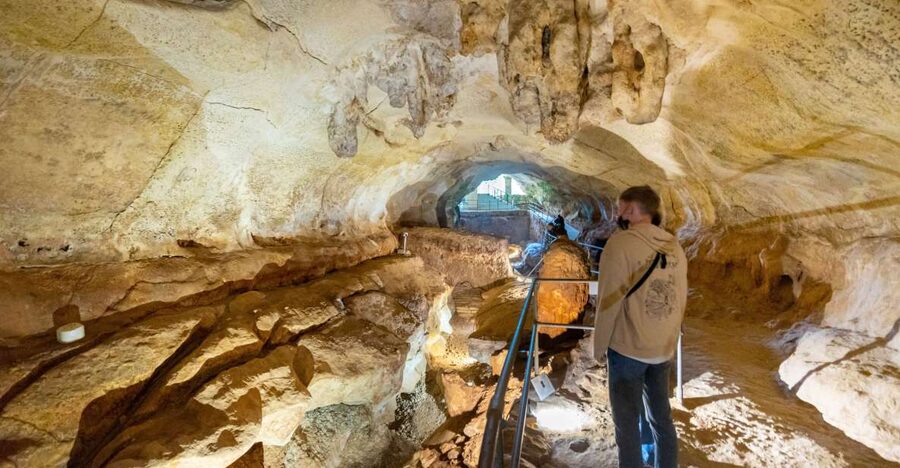
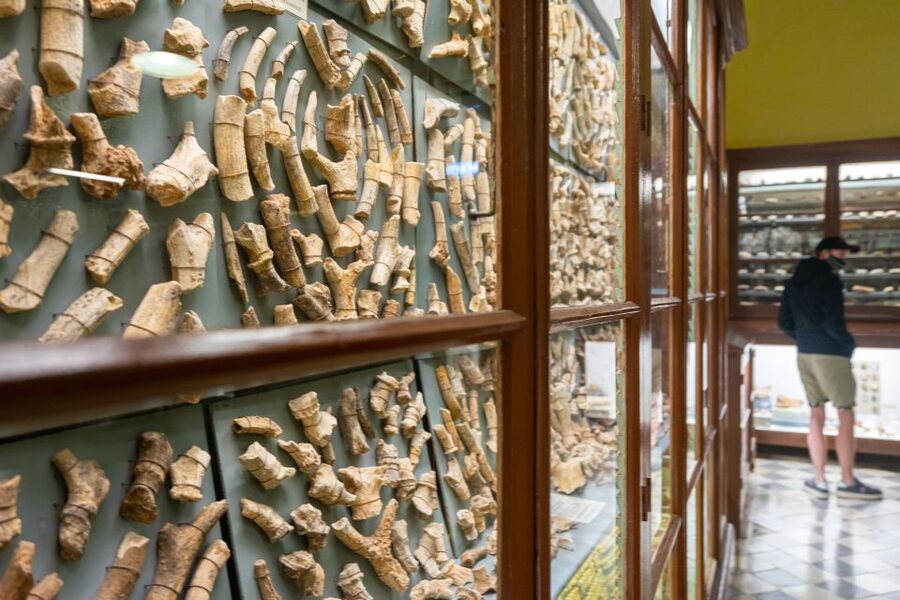
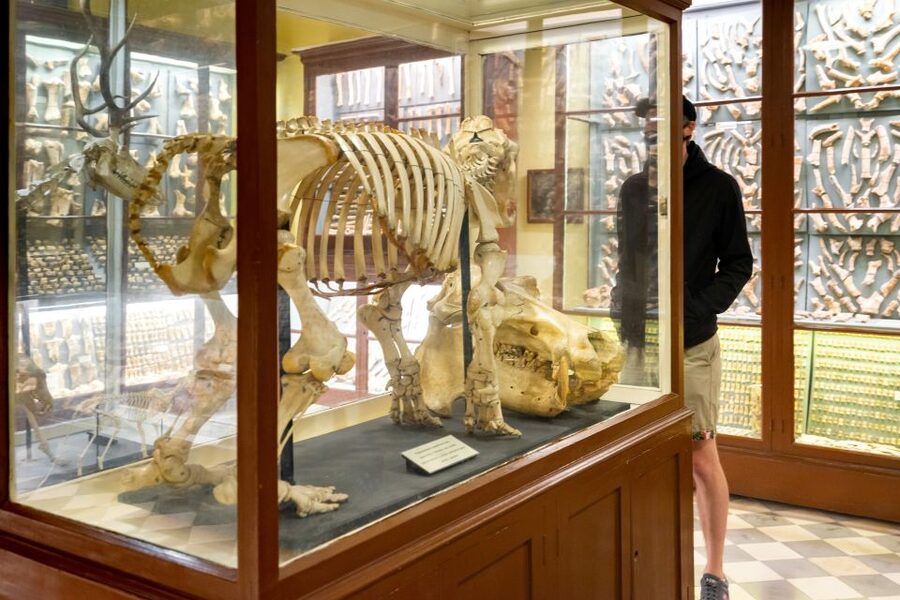
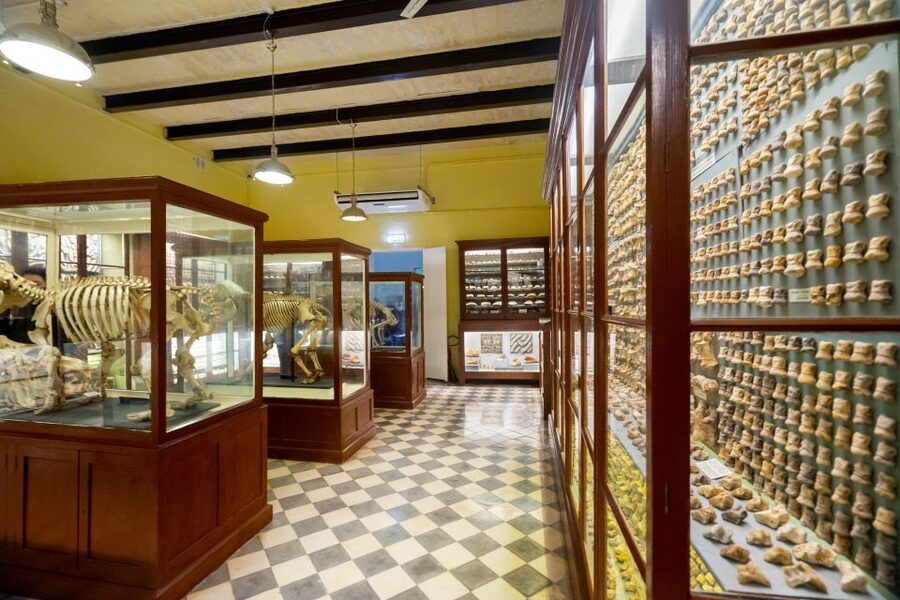
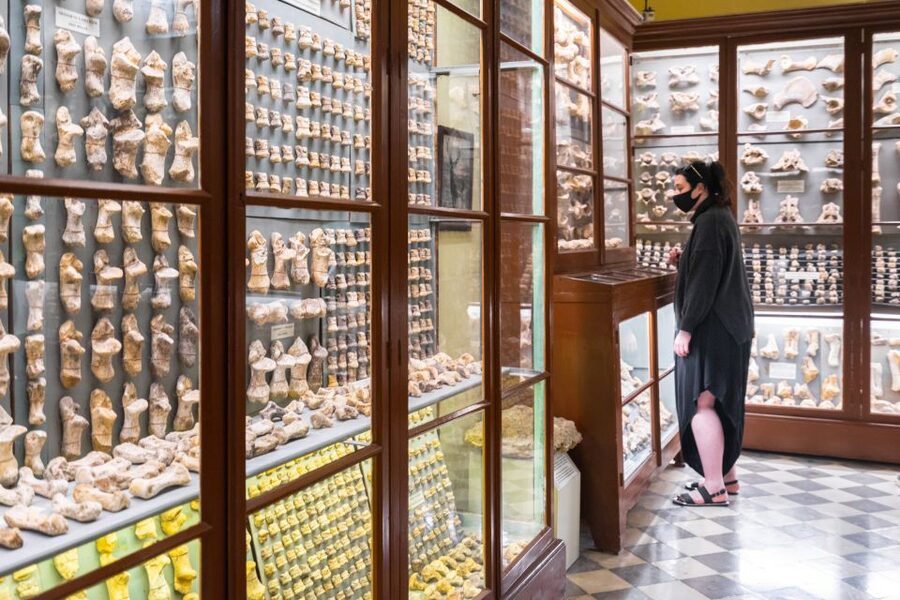
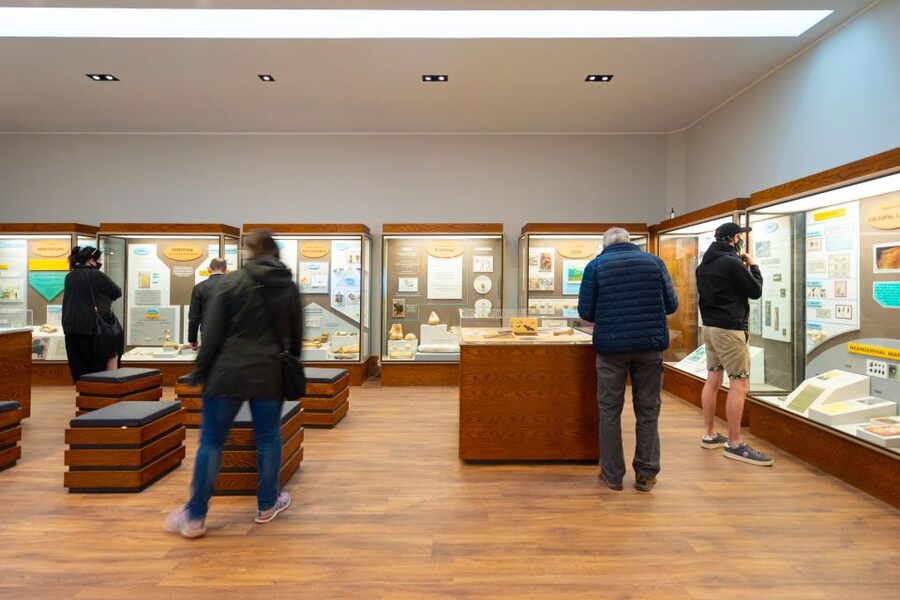
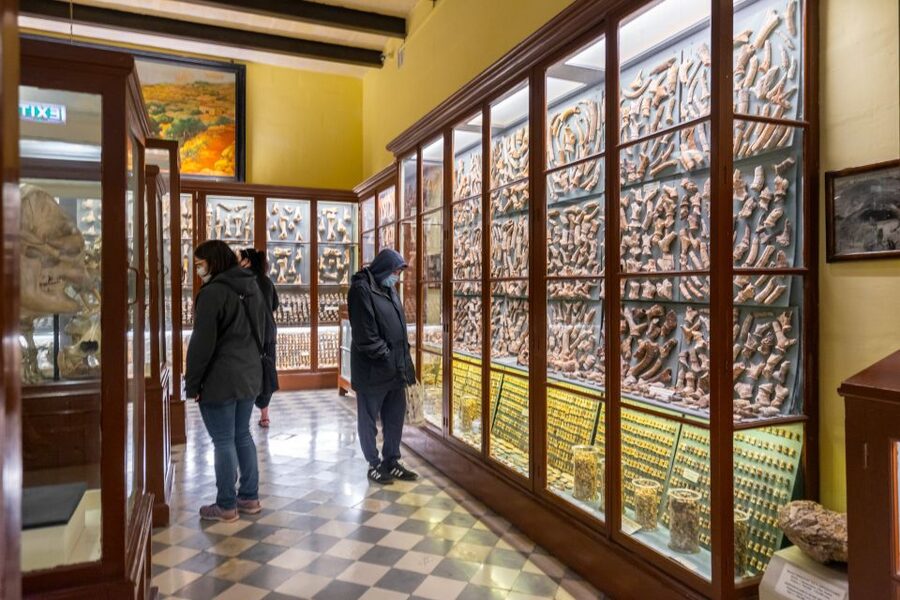
Ghar Dalam is an important first stop because it takes you farther back than the temple period. The cave and museum focus on Malta’s prehistoric animal life, with displays of bones and fossils from species that lived on the island.
The cave itself is not a show cave in the usual sense. Do not expect dramatic stalactites, underground lakes, or a long journey deep below ground. The main value is the archaeological story, especially the museum collection. I would give the displays your attention, since they help explain how Malta changed over time and what existed on the island before the temple builders.
You may have only a short time here, so keep your visit focused. Look at the fossil and bone displays, listen to the guide’s explanation, and avoid spending too long on any one label if the group is moving on. Some people have wished for more time with the museum exhibits, but the stop works well as an introduction to Malta’s much older past.
Ghar Dalam also helps you understand why the temple sites matter. The temples were not isolated monuments dropped onto an empty island. They formed part of a long sequence of human settlement, animal life, farming, belief, and changing use of the land.
Hagar Qim: huge stones on Malta’s southern ridge
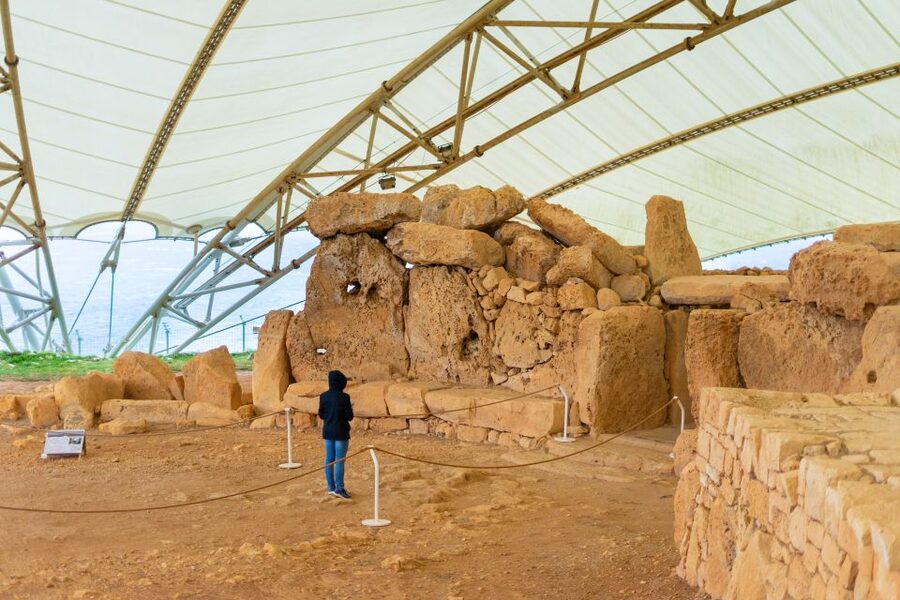
At Hagar Qim, the setting is part of the experience. The temple sits on a ridge capped with soft globigerina limestone on Malta’s southern edge. The surrounding garrigue is low, dry scrub, and the open position gives you wide views toward the sea.
The site’s stones are the immediate surprise. Even after centuries of weathering, the scale remains easy to grasp. You can see why visitors pause over the size of the blocks and wonder how prehistoric communities moved and placed them. Your guide will help you read the site rather than simply walk around it.
Look closely at the stonework. The carved details are not always obvious from a distance, and the pale limestone can look different depending on the sun. Some people have mistaken natural color and stone markings for paint, so listen carefully when the guide explains what you are seeing.
Hagar Qim is protected from the elements, but the shelter does not erase the outdoor conditions. Bring water, wear comfortable shoes, and expect sun exposure. The site has toilets and a gift shop, which is useful before you continue to Mnajdra.
The visit is rewarding for both specialists and first-time visitors. If you already know Malta’s archaeology, you may want more time to study individual features. If you are new to the subject, the guide’s explanations make the stones much easier to understand.
Mnajdra: the finest temple stop on the route
Mnajdra is only a short distance from Hagar Qim, but getting there involves a walk. The route can feel easy on the way out and more demanding on the return, especially in warm weather. One earlier visitor described the walk between the temples as decent but uphill on the way back, so I would not treat this as a quick stroll from one doorway to another.
The reward is a temple complex often considered the best surviving example of Maltese megalithic architecture. Its position, stone construction, and layout give you a strong sense of how carefully the builders planned the site.
This is the part of the excursion where I would resist rushing. The tour schedule has to keep moving, and several people have wanted a little more time at the temples. Still, the timing is generally enough to see both sites, hear the main explanation, and take in the setting without feeling hurried at every turn.
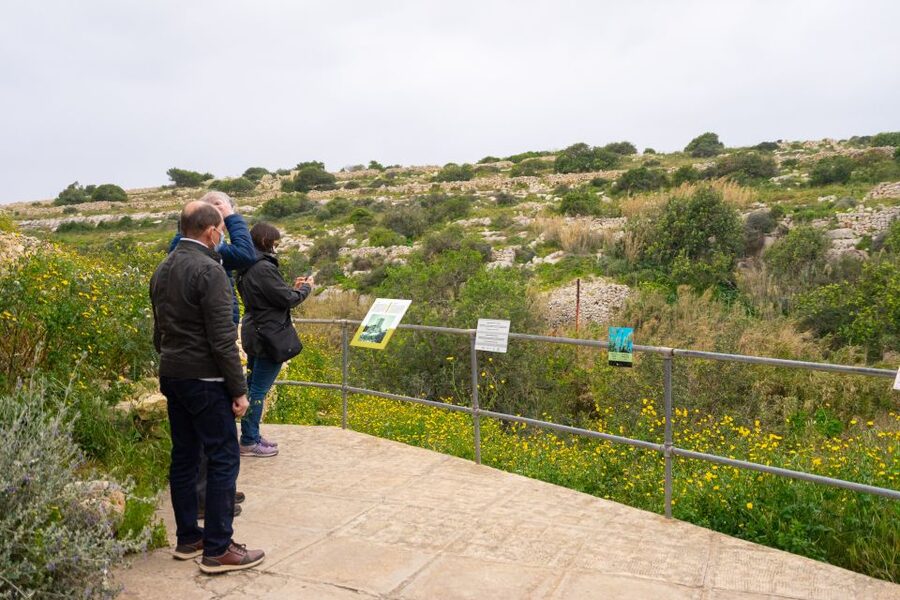
The coastal views are a major bonus. From the Heritage Park, you can look toward the Mediterranean and the small island of Filfla. The combination of ancient stone, open scrub, and sea makes Mnajdra feel different from an enclosed museum or a city monument.
A good guide adds real value here. Mark has been singled out for making visitors think about how the temples were found and understood. Mario and Marco have also been praised for explaining the sites in an engaging way, rather than simply reciting dates.
Same islands, a completely different kind of day:
- Malta: Gozo & Comino Islands, Blue Lagoon & Seacaves Tour
★ 4.5 · 15,672 reviews - Comino: Blue Lagoon, Crystal Lagoon, and Seacaves Tour
★ 4.6 · 5,673 reviews - Malta: Blue Lagoon, Beaches & Bays Trip by Catamaran
★ 4.7 · 5,496 reviews - Malta: Gozo, Comino, Blue & Crystal Lagoon, & Caves Cruise
★ 4.6 · 5,092 reviews
Hamrija Tower and the later history of Malta
A few hundred meters from the temples is Hamrija Tower, one of Malta’s 13 watchtowers built by Grand Master Martin de Redin. It belongs to a much later period than Hagar Qim and Mnajdra, but its presence adds another layer to the visit.
The tower reminds you that Malta’s strategic importance continued long after the temple builders disappeared. The excursion does not turn this into a separate military history tour, but the sight helps connect prehistoric Malta with the island shaped by the Knights of Malta.
I like this small addition because it prevents the morning from becoming a single-period archaeology lesson. You see how different societies used the same coastal position for very different purposes: ceremonial activity in prehistory and coastal defense in the era of the Knights.
What the guide adds to the experience
The guide is the most important variable in this tour. The temples are worth seeing on their own, but without context you may notice only large stones and partial walls. A strong guide explains the layout, discusses theories about the buildings, and points out details you might otherwise miss.
The most praised guides have been Mark, Mario, Marco, Marlon, Maria, Miriam, and Nick. Names and assignments can change, but the pattern is clear: the best sessions combine archaeology with practical help. Guides have warned the group about stairs, walking distances, heat, meeting points, and return arrangements.
Multilingual guiding is available in English, German, Italian, and French. A guide may need to repeat explanations in more than one language, which can make the commentary longer. That is useful for a mixed group, but it can also leave less time for quiet exploration.
English-language delivery has generally been well received, though one visitor found the explanation repetitive and preferred an audio guide. That is a fair limitation to keep in mind. If you want complete control over the pace and every museum label, an independent visit may suit you better.
Transport, pickup, and the shape of the morning
Hotel pickup is included from a long list of areas. Published pickup times include 8:30 at Cirkewwa and Attard, 8:40 in Mellieha and Valletta, 8:50 at Xemxija and Golden Bay, 9:00 in St. Paul’s Bay, 9:05 in Bugibba, 9:10 in Qawra and St. Julian’s, and 8:55 in Sliema.
One day before the tour, you receive the exact pickup point and time by email. Read that message carefully. In Valletta, the meeting point may be a short walk from your hotel rather than directly outside it. The pickup details have occasionally arrived late, so check your messages the evening before and contact the provider if anything is unclear.
The collection route is the chief logistical weakness. Several people have found that too much time goes into gathering passengers, and one suggested a smaller group. On the other hand, you avoid arranging buses, taxis, entrance tickets, and directions yourself.
Transport has usually been described as comfortable and air-conditioned. There have also been isolated complaints about an older return bus and one driver whose style felt unsettling. Most comments about drivers have been positive, but Malta’s roads can feel lively, so do not expect a silent luxury coach experience.
The total tour lasts about 4.5 hours. That makes it a useful morning activity if you want to combine the southern temples with Valletta or another part of Malta later in the day.
Walking, heat, and mobility
Comfortable shoes are essential. You walk around the temple grounds, travel between Hagar Qim and Mnajdra, and may cover more distance than the short itinerary suggests. One visitor described the day as a 10,000-step outing, which may be an exaggeration for some people but gives you the right idea.
The open setting can become hot, particularly in summer. Bring water, use sun protection, and do not rely on the bus to cool you down once you are outside. The dry scrub offers little shade.
If you have limited mobility, ask about the route and options before departure. Guides have been praised for explaining stairs, longer walks, and possible difficulties at the beginning of the visit. Some visitors with mobility limitations have been able to make informed choices, and small vehicles have been used at times near the ancient sites, though you should confirm current arrangements rather than assume they are guaranteed.
The tour is not a good match if you need a fully step-free experience or want to move at your own pace. It can work well if you are comfortable with moderate walking and appreciate having the physical demands explained in advance.
Is $59 a fair price?
At $59 per person, the tour is priced for convenience rather than absolute independence. The fee includes transport, hotel pickup and drop-off, a live guide, and entrance to Ghar Dalam Cave and Museum, Hagar Qim, and Mnajdra.
That bundle makes sense if you are staying outside the southern sites or do not want to work out Malta’s bus connections. The guide is also a major part of the value. You are paying to understand the monuments, not simply to reach them.
The price may feel high if you are already comfortable using public transport, prefer long museum visits, or want to spend several hours photographing the temples. A few people have called it pricey for the amount of time at each stop. For a first visit, though, the transport and interpretation save planning time and reduce the risk of missing one of Malta’s most important archaeological areas.
Free cancellation up to 24 hours before departure and reserve-now, pay-later booking add useful flexibility. Those policies are helpful if your Malta plans are still shifting.
Who should book this temple tour?
I would choose this excursion if you have limited time in Malta, want a clear introduction to prehistoric culture, or prefer a guide to put the stones into context. It is especially useful for a first visit, since the morning covers three different kinds of evidence: a prehistoric cave and museum, monumental temples, and a later defensive tower.
Families can enjoy it if children are happy with walking and archaeology. History fans will want to listen closely, and the National Museum of Archaeology in Valletta makes a good follow-up because it displays artifacts connected with Malta’s Neolithic sites.
I would look elsewhere if you want a private experience, dislike group pickups, need long periods for photography, or cannot manage outdoor walking and an uphill return. The tour covers a lot in a short time, and its success depends heavily on the guide and the day’s transport arrangements.
Should you book it?
Yes, if you want an efficient half-day introduction to Malta’s prehistoric temples and value transport, entry fees, and live explanation. Hagar Qim and Mnajdra are powerful sites, and Ghar Dalam adds useful context rather than feeling like a random extra stop.
Book with realistic expectations. You will walk, spend time in the sun, share transport, and occasionally wish the temple visits lasted longer. But for $59, this is a practical way to reach southern Malta’s major prehistoric sites without spending a day planning buses and tickets. Bring water, wear solid shoes, check your pickup email, and give the guide your full attention. That is how you get the most from a compact but worthwhile morning.
FAQ
How long does the Prehistoric Temples of Malta Tour last?
The tour lasts approximately 4.5 hours.
What sites are included?
The tour includes Ghar Dalam Cave and Museum, Hagar Qim Temples, Mnajdra Temples, and a view of Hamrija Tower near the temple area.
Is hotel pickup included?
Yes. Pickup and drop-off are included from listed areas including Valletta, Sliema, St. Julian’s, Bugibba, Qawra, St. Paul’s Bay, Mellieha, Cirkewwa, Attard, Xemxija, and Golden Bay.
What languages are available?
Live guiding is available in English, German, Italian, and French.
What should I bring?
Bring comfortable shoes and water. The tour includes walking between the temple sites, with an uphill section on the return route.
Are entrance fees included?
Yes. Entry to Ghar Dalam Cave and Museum, Hagar Qim Temples, and Mnajdra Temples is included.
Is the tour suitable for someone with limited mobility?
The tour includes walking, stairs, and some physical demands. Guides can explain the route and possible difficulties, so contact the provider in advance if you need specific information.
Can I cancel the tour?
You can cancel up to 24 hours in advance for a full refund.
Can I reserve now and pay later?
Yes. The reserve-now, pay-later option lets you book without paying at the time of reservation.
Just added around Malta
- Gozo: Wine Tasting and Paired Dinner Experience★ 4.9 · 43 reviews
- World War II Malta Full-Day Walking Tour★ 4.3 · 18 reviews
- Victoria, Gozo: Sunset Walking Food and Drink Tour★ 5.0 · 6 reviews
- Malta: 5 hr Vintage Bus Tour – Mdina & Blue Grotto inc. food★ 5.0 · 22 reviews
- Wakeboarding Adventure in Malta: Learn to Ride★ 5.0 · 4 reviews
- Valletta & Mdina: Private Tour★ 4.5 · 16 reviews
- Valletta: Private Maltese Cuisine Walking Tour★ 4.8 · 8 reviews
- Valletta: Private Massage from a world renowned masseuse★ 4.6 · 9 reviews
Prehistoric Temple Tours, compared.

Gozo Full-Day Tour with Guide, Temples, & Train
Read our review →
Prehistoric Temples, Limestone Heritage & Blue Grotto
Read our review →
Gozo Guided Day Trip Incl. Ggantija Temples and Lunch
Read our review →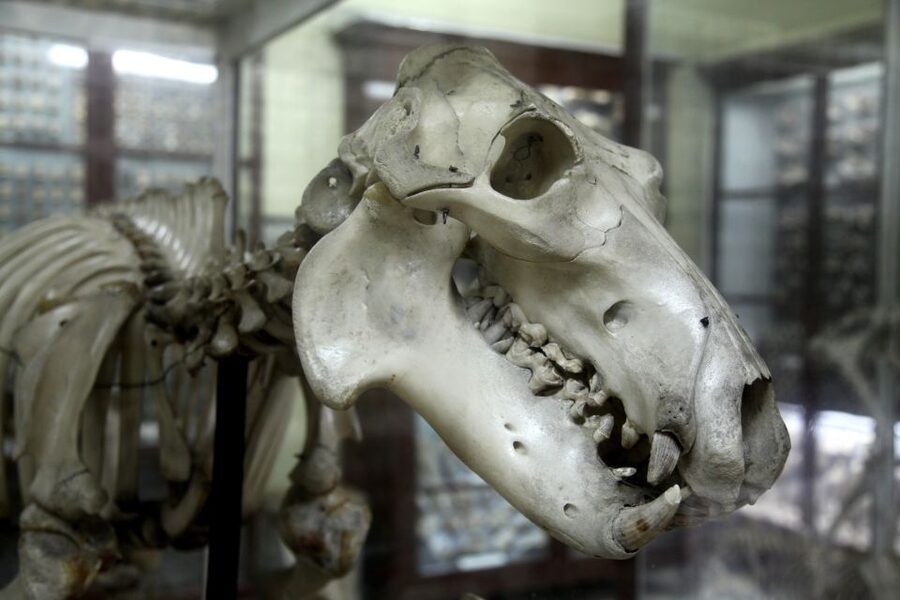
Prehistoric Temples and Highlights of the South
Read our review →
Gozo Full Day visiting Ggantija Temples, Salt Pans & Dwejra
Read our review →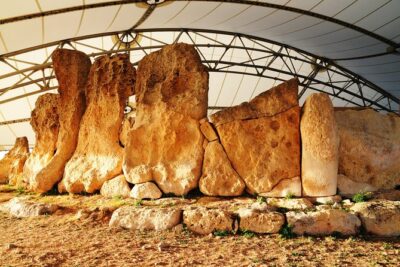
Gozo Full Day visiting Ggantija Temples, Salt Pans, Dwejra
Read our review →Browse the lists this tour appears in