
Reviewed · MALTA ATTRACTION PASSES
Malta Multi Pass
Malta’s best sights are spread across the island, and this pass ties many of them together: a Grand Harbour cruise, open top buses, Knights of St. John museums, prehistoric temples, and selected boat trips to Comino and Gozo. I like the way one purchase can cover both major sights and lesser known archaeological sites, and I like that you can choose a pass length instead of forcing your trip into one fixed schedule.
The catch is transport. The City Sightseeing buses can be slow, infrequent, and affected by Malta’s traffic. I also like the strong value of the 6 and 7 day options, but you need to activate the QR code correctly and check which attractions belong to your pass before setting out.
Key points before you buy
- The 90 minute harbour cruise gives you the best views of Valletta, the Three Cities, forts, and harbour walls.
- The 6 and 7 day passes include the widest range of Heritage Malta sites, including Ħaġar Qim, Mnajdra, Fort St. Angelo, and the National War Museum.
- The 4 and 7 day passes include one round trip to Comino’s Blue Lagoon and Gozo, with optional Gozo Heritage attractions.
- The buses are useful for sightseeing, not always for punctual transport. Allow extra time between stops.
- The pass is strongest for museum lovers and history fans who plan to visit several paid sites.
- Hal Saflieni Hypogeum is not included. It requires a separate ticket and advance planning.
What the Malta Multi Pass covers
The Malta Multi Pass is a consecutive day pass, offered in 3, 4, 6, or 7 day versions. It is not simply a public transport card. The product combines sightseeing buses, boat trips, and single entry to a long list of museums and heritage sites.
Every pass includes the City Sightseeing Malta north and south routes, plus Captain Morgan’s Grand Harbour cruise. The longer passes add more museums and archaeological sites. The 4 and 7 day versions also include one round trip by ferry to Comino and Gozo, while an optional Gozo Heritage Pass adds island buses and several sites.
At $88.72 per person, the pass only makes sense if you use it actively. Visit one museum and ride the bus once, and it is poor value. Visit several sites, take the harbour cruise, and use the island boat trip, and the numbers can work well. Individual museum admissions are often around $10, the City Sightseeing bus can cost about €20 for a day, and the two island boat trip can run around €50 when purchased separately.
The best value usually comes from the 6 or 7 day versions. They give you time to visit sites at a sensible pace instead of racing from one end of Malta to the other.
More Malta attraction passes:
- Malta Multi Pass
★ 3.6 · 164 reviews - Gozo Day Pass Ferry and Hop-on Hop-off buses with audio Tour
★ 3.0 · 19 reviews - From Sliema or Bugibba: Gozo Heritage Day Pass
★ 3.0 · 16 reviews
Start with the Grand Harbour cruise
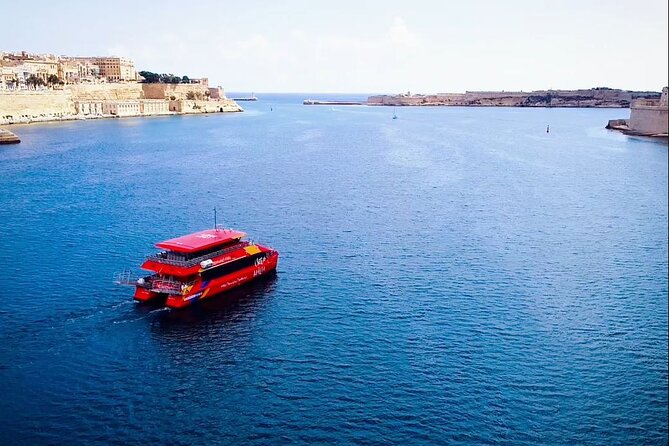
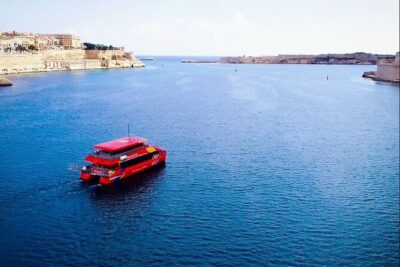
The 90 minute Captain Morgan cruise is the easiest part of the pass to recommend. The catamaran travels through the Grand Harbour and Marsamxett Harbour, the two waterways on either side of Valletta.
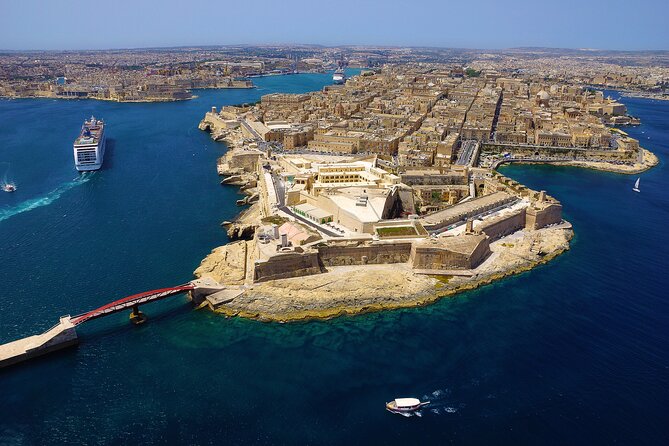
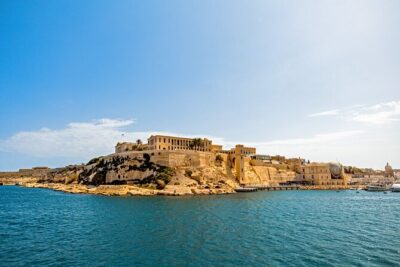
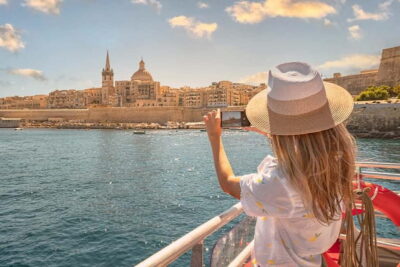
From the water, you get a clear view of Valletta’s bastions, Fort St. Angelo, the Three Cities, and the dense skyline of historic buildings. These sights make much more sense from the sea, where you can see how Malta’s forts controlled the harbour approaches.
Live commentary is provided in English and German. It covers the Great Siege of 1565 and the events of 1942, when Malta was heavily involved in the Second World War. You can sit outside for photographs or inside in air conditioned comfort. WiFi, toilets, and vending machines are available.
Several departure times are offered each day, but check the current timetable before building your day around it. I would take this cruise early in the pass period. It gives you a useful orientation to Valletta and the surrounding forts before you visit them on foot.
Using the City Sightseeing Malta buses
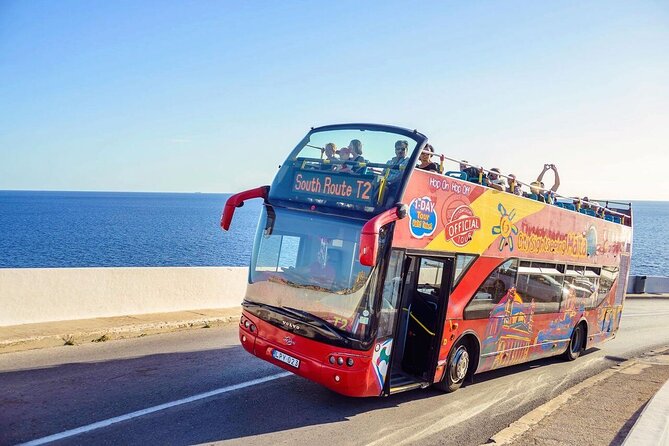
The north and south routes begin at Valletta Harbour and serve more than 30 stops. The routes reach Mdina, Mosta, San Anton Presidential Gardens, Ta’ Qali Crafts Village, the Three Cities, Marsaxlokk, and the Blue Grotto area.
The buses offer multilingual recorded commentary through more than 12 language channels. Used as a sightseeing loop, they can help you understand the shape of the island and reach places that would require several separate connections.
The practical weakness is speed. Traffic can be heavy, and buses may be about an hour apart. The last service may begin shortly after 4 p.m., which is too early if you treat the bus as your only way home from a distant stop. Some buses may also have faulty commentary systems.
I would use the red and blue sightseeing buses as a sightseeing tool, not as a dependable replacement for all local transport. If you are visiting a heritage site far from Valletta, leave a generous time cushion. It can be sensible to use the sightseeing bus to reach one attraction, then use Malta’s regular public transport for the next part of your day.
Keep the QR code as a screenshot on your phone. That is faster than searching through email each time you enter a site. Activation has caused confusion, so have the code ready and ask for help before beginning your first full sightseeing day.
The prehistoric temples on Malta’s southern coast
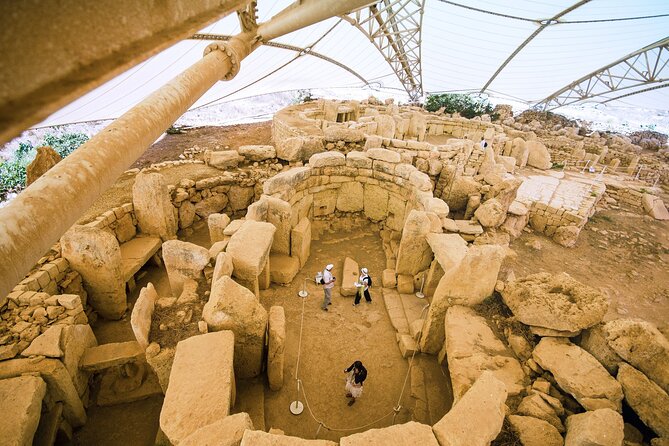
The pass opens the door to some of Malta’s most unusual sights: enormous stone temples built thousands of years before the pyramids.
At Ħaġar Qim, you walk through a central building with curved rooms called apses. One stone is about 5.2 metres high, and another weighs close to 20 tonnes. The site sits on a hill above the sea, with views toward the islet of Filfla.
Mnajdra is nearby and includes three temple buildings around an oval forecourt. Doorways and carved openings align with the solstices and equinoxes. Visitor centres at both sites explain the construction and astronomical connections through interactive displays.
These two sites are included with the 6 and 7 day passes. Do not confuse them with Hal Saflieni Hypogeum, which is not part of this pass and requires its own advance reservation.
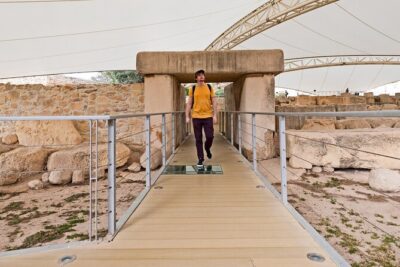
The longer pass also covers Tarxien Temples, where carved reliefs and the lower section of a large skirted statue remain. An elevated walkway lets you look down into the complex. Ta’ Ħaġrat and Skorba are smaller, quieter sites near Mġarr, while Borġ in-Nadur offers another look at the change from the Temple Period to the Bronze Age.
Għar Dalam is especially useful if you want the earliest human and animal story of Malta in one place. Its cave contains evidence of Ice Age animals, including small elephants and hippopotami, while the museum explains human settlement dating back about 7,400 years. Ta’ Bistra Catacombs provide another underground stop, with burial chambers outside the old city area.
Plan these sites by area. They are not good choices for a rushed afternoon from Valletta, especially if you depend on the sightseeing bus.
Same islands, a completely different kind of day:
- Malta: Gozo & Comino Islands, Blue Lagoon & Seacaves Tour
★ 4.5 · 15,672 reviews - Comino: Blue Lagoon, Crystal Lagoon, and Seacaves Tour
★ 4.6 · 5,673 reviews - Malta: Blue Lagoon, Beaches & Bays Trip by Catamaran
★ 4.7 · 5,496 reviews - Malta: Gozo, Comino, Blue & Crystal Lagoon, & Caves Cruise
★ 4.6 · 5,092 reviews
Valletta’s Knights, war, and art museums
Valletta is where the pass earns much of its value. The National Museum of Archaeology, housed in the Auberge de Provence, covers Malta from the Neolithic period to the Phoenicians. Look for the Sleeping Lady, the Venus of Malta, Bronze Age daggers, and Phoenician objects.
The Palace Armoury presents weapons and armour connected with the Knights of St. John. The collection shows armour as more than battlefield protection. It was also a public display of rank and wealth. Suits linked to Grand Masters Alof de Wignacourt and Jean de La Valette are among the important pieces.
The Palace State Rooms are temporarily closed, so do not count them when calculating the value of your pass. The closure removes some of Valletta’s most important interiors, including the Great Siege paintings, Gobelins tapestries, and ceremonial rooms.
The National War Museum at Fort St. Elmo combines military displays with wide harbour views. The collection includes armour from the Knights and Ottomans, Roosevelt’s Jeep Husky, the George Cross, and the Gloster Sea Gladiator known as Faith.
MUŻA offers a different kind of museum visit, mixing old masters, modern art, and objects linked to Malta’s place in the Mediterranean and the former British Empire. The restored building, once used by the Italian knights, is part of the experience.
The Malta Experience provides a 45 minute audio visual introduction to 7,000 years of Maltese history in 17 languages. It is a sensible first stop if Malta’s many eras begin to blur together.
Nearby, Reliving the Sacra Infermeria explains the hospital work of the Knights. The Great Ward once stretched 155 metres and could hold hundreds of patients. The guided visit is in English and lasts about 30 minutes.
The Fortress Builders Interpretation Centre is temporarily closed. Check current openings before counting it as one of your planned stops.
Mdina, Roman Malta, and the Three Cities
Outside Valletta, the pass continues the story in smaller museums.
Mdina’s Domvs Romana recreates aspects of a Roman aristocratic home through mosaics, household objects, and displays about family life, food, education, and entertainment. Its marble statues of Emperor Claudius and his family are a rare find for a private residence.
St. Paul’s Catacombs, on the edge of ancient Melite, form a large underground cemetery used from Punic and Roman times into the seventh century. The main complex contains connected passages, tombs, and circular stone tables once used for memorial meals.
Fort St. Angelo dominates the Grand Harbour from Birgu. Its position explains why control of the fort mattered so much to Malta’s rulers. The displays cover the Knights, the British Royal Navy, and the Second World War, while the upper levels provide some of the best harbour views.
The Inquisitor’s Palace is a more intimate historical stop. You can see domestic rooms, the tribunal, prison areas, and a torture chamber. Its National Museum of Ethnography section explains religious traditions shaped during the period of the Inquisition.
The Malta Maritime Museum occupies an old naval bakery and covers 7,000 years of seafaring. Its collection includes Roman anchors, cannons, ship models, boats, and a working marine steam engine. In the Three Cities, these sites work well together, but allow time for the bus routes and walking between stops.
Comino’s Blue Lagoon and the Gozo boat trip
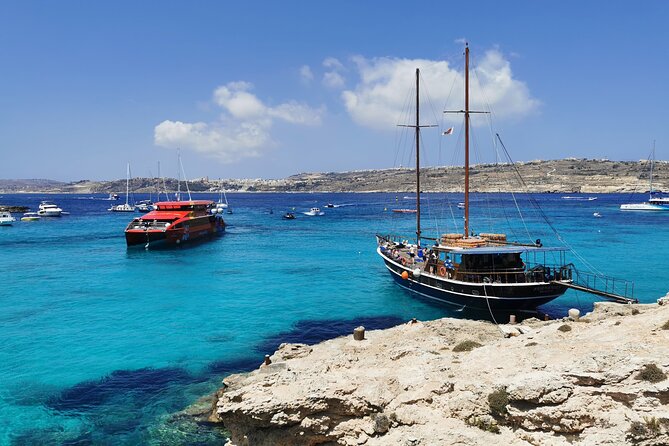
The 4 and 7 day passes include one round trip on Captain Morgan’s Two Islands ferry service. You can visit Comino and Gozo in one day, or spend about four hours on one island.
Comino’s Blue Lagoon is known for clear turquoise water. You get free time to swim, sunbathe, or walk around the island. The ferry has indoor and outdoor seating, toilets, and a cash bar for drinks and snacks.
You must return to the Comino boarding point at least 15 minutes before departure. The crew provides the afternoon ferry times and any changes to the return schedule, so take a photo of the information before leaving the boat.
Gozo offers a change of pace, but the standard boat trip gives you limited time. If you visit both islands, you may have roughly two hours on each. That is enough for a short look, not a full Gozo visit.
The optional Gozo Heritage Pass improves the day. It includes the purple and blue City Sightseeing Gozo routes, with stops at Victoria, Dwejra, Xlendi, Marsalforn, Ramla, and Ġgantija. It also includes the Gozo Museum of Archaeology, the Gozo Nature Museum, the Gran Castello Historic House, the Cittadella Visitors’ Centre, Ġgantija Archaeological Park, Ta’ Kola Windmill, and the Old Prison.
The boat day is attractive, but it is also the part most likely to go wrong if you confuse the operators or vessels. Confirm the correct Captain Morgan service, the departure point, and the return time before boarding.
Who gets the best value
I would choose the Malta Multi Pass if you enjoy museums, archaeology, forts, and structured sightseeing. It is especially useful for a 6 or 7 day visit, when you can spread the sites across several days and still have time for the harbour cruise and islands.
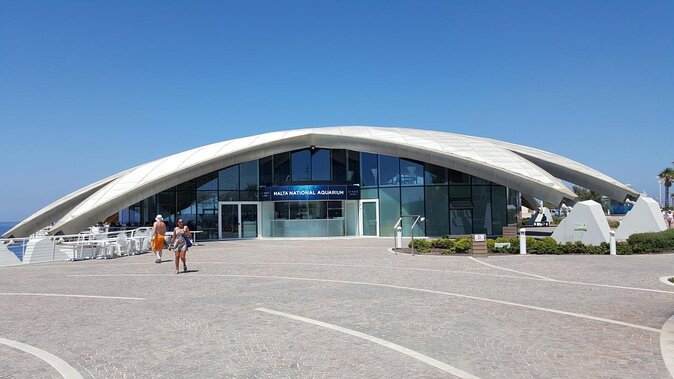
Families may like the aquarium and Esplora Interactive Science Centre. The aquarium has 41 tanks, a glass tunnel, Mediterranean species, sharks, rays, reptiles, and an outdoor play area. Esplora offers more than 200 hands on exhibits, workshops, science shows, and a planetarium.
The pass is less suitable if you mainly want beaches, restaurants, and independent wandering. It is also not ideal if you need punctual transport between every stop. Malta’s regular buses may be cheaper and more practical for some journeys.
You can cancel for a full refund up to 24 hours before the start time. The experience may also be rescheduled or refunded if poor weather causes cancellation.
Should you book the Malta Multi Pass?
Book it if you will visit at least four or five paid sites, take the Grand Harbour cruise, and use the included ferry or Gozo options. The 6 and 7 day versions give you the fairest chance to recover the $88.72 price.
Choose the 3 or 4 day version only if your schedule is tight and you have already marked the exact sites you want. Keep your QR code as a screenshot, allow extra time for buses, and confirm closures before leaving your hotel.
For a history focused visit, the pass can save money and encourage you to see places you might otherwise skip. For a beach focused trip, buy individual tickets instead and keep your plans simpler.
FAQ
How many days can I choose for the Malta Multi Pass?
The pass is available for 3, 4, 6, or 7 consecutive days. It becomes valid once activated.
Is the Grand Harbour cruise included?
Yes. Every pass includes Captain Morgan’s 90 minute Grand Harbour cruise through Grand Harbour and Marsamxett Harbour.
Does the pass include Comino and Gozo?
The 4 and 7 day passes include one round trip by Captain Morgan ferry to Comino’s Blue Lagoon and Gozo. You can visit both islands or spend more time on one.
Is public transport included?
The included transport is the City Sightseeing Malta north and south sightseeing routes. Regular city buses are not included as general public transport.
Is Hal Saflieni Hypogeum included?
No. Hal Saflieni Hypogeum requires a separate ticket and advance reservation.
Are all listed sites open?
No. Some attractions may close for refurbishment. The Palace State Rooms and the Fortress Builders Interpretation Centre are temporarily closed according to the supplied information, so check current opening details before planning your day.
Just added around Malta
- Gozo: Wine Tasting and Paired Dinner Experience★ 4.9 · 43 reviews
- World War II Malta Full-Day Walking Tour★ 4.3 · 18 reviews
- Victoria, Gozo: Sunset Walking Food and Drink Tour★ 5.0 · 6 reviews
- Malta: 5 hr Vintage Bus Tour – Mdina & Blue Grotto inc. food★ 5.0 · 22 reviews
- Wakeboarding Adventure in Malta: Learn to Ride★ 5.0 · 4 reviews
- Valletta & Mdina: Private Tour★ 4.5 · 16 reviews
- Valletta: Private Maltese Cuisine Walking Tour★ 4.8 · 8 reviews
- Valletta: Private Massage from a world renowned masseuse★ 4.6 · 9 reviews
Malta Attraction Passes, compared.
Gozo Day Pass Ferry and Hop-on Hop-off buses with audio Tour
Read our review →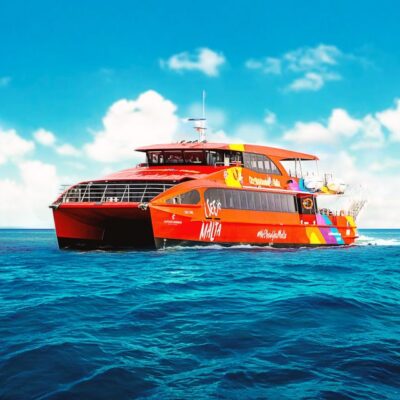
COMBO: Heritage Pass with Hop-On Hop-Off Bus (CMO)
Read our review →Browse the lists this tour appears in