

Reviewed · MALTA ATTRACTION PASSES
COMBO: Heritage Pass with Hop-On Hop-Off Bus (CMO)
Malta’s past is packed into a small island, and this pass gives you several ways to reach it: by road, by sea, and on foot. You can tour the National War Museum, cruise both harbors, and visit more than 20 sites during six days.
I like the freedom to build your own schedule, and I like that many museums and monuments sit within walking distance of the bus stops. The main caution is practical: activation and QR code problems have caused confusion, and bus service can be limited outside peak season.
Key points at a glance
- Six days of unlimited bus travel: Use both the City Sightseeing Malta North and South Routes for the full validity period.
- A 90-minute view from the water: Cruise Marsamxetto Harbour and the Grand Harbour with live commentary in English and German.
- More than 20 one-time admissions: Visit museums, forts, temples, catacombs, palaces, and archaeological sites.
- A strong Valletta and Three Cities focus: See battlements, creeks, and military monuments that make more sense from the harbor.
- Useful for a spread-out sightseeing plan: Most included sites are reachable on foot from City Sightseeing stops.
- Plan around activation: Keep your QR codes handy and confirm the pass is active before starting your first visit.
Why this pass works well for Malta

Malta can feel compact on a map, but its sights are scattered across Valletta, the Three Cities, the southern coast, and inland archaeological areas. A standard sightseeing ticket would only solve the transport problem. This combination adds museums and historic sites, so you can use the bus as your moving base and get off whenever something catches your eye.
The pass lasts six days from activation. That is generous if you are staying in Malta for nearly a week, and it also gives you room to slow down. You do not need to rush through five museums in one afternoon just to make the price work.
At $91 per person, the value depends on how much you use. The pass includes unlimited bus travel for six days, one harbor cruise, and one-time admission to more than 20 places. If you visit several museums, forts, temples, and catacombs, the total can make good financial sense. If you mainly want the bus and only visit one or two sites, a shorter or simpler transport option may suit you better.
The pass is best seen as a sightseeing framework, not a guided tour with a fixed timetable. You choose the order, the length of each stop, and the days you want to focus on Valletta, the harbor, or Malta’s older archaeological remains.
More Malta attraction passes:
- Malta Multi Pass
★ 3.6 · 164 reviews - Gozo Day Pass Ferry and Hop-on Hop-off buses with audio Tour
★ 3.0 · 19 reviews - From Sliema or Bugibba: Gozo Heritage Day Pass
★ 3.0 · 16 reviews
Valletta begins with forts and museums
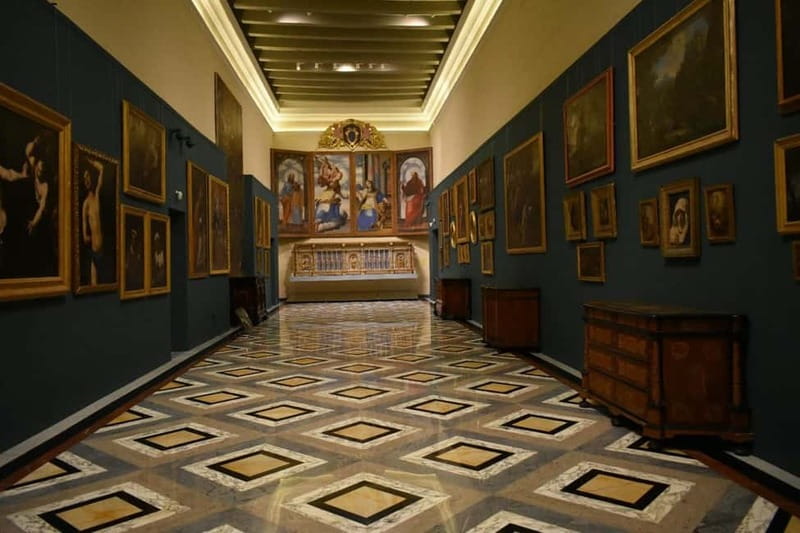
Start with Valletta’s military story at the National War Museum inside Fort St. Elmo. The fort occupies a strategic point at the end of the peninsula, and its position helps explain why Malta mattered to competing powers for centuries. The museum also connects Malta’s wartime past with the fortifications you see around you.
The Fortification Interpretation Centre, also called The Fortress Builders, is a useful companion stop. Instead of only looking at thick walls and steep bastions, you can learn how Malta’s defensive system was planned and built. I would visit this early in your time in Valletta because it gives the rest of the city’s walls more meaning.
At MUŻA, the Malta National Community Art Museum, the focus shifts from defense to art. This is a good change of pace after forts, cannons, and military displays. The pass includes one entry, so check the opening hours before you go and avoid using your first day on a rushed visit.
The National Museum of Archaeology offers another essential piece of Malta’s story. It helps connect the island’s prehistoric temples with the objects and cultures that produced them. The visit pairs naturally with the temple sites included elsewhere in the pass.
The Palace Armoury and Palace State Rooms bring you into Malta’s grand civic and military world. These are different from the fort museums because they show the formal side of power, with weapons, ceremony, and rooms designed to impress. Since both are in Valletta, you can combine them with the National Museum of Archaeology and MUŻA without spending a full day on transport.
The harbor cruise explains the Three Cities

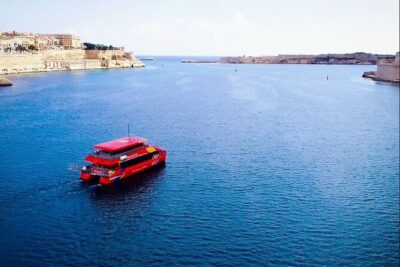
The 90-minute traditional harbor cruise is one of the pass’s most useful parts. From the water, you see Valletta and the Three Cities from the angle that made their natural harbors so important.
The boat travels around Marsamxetto Harbour and the Grand Harbour. You will see forts, battlements, narrow creeks, and waterfront defenses that can be hard to understand from street level. The cruise also shows parts of the fortifications that you cannot inspect closely on foot.
Live commentary is provided in English and German. The commentary covers the two Great Sieges of 1565 and 1942, along with other sights visible only from the boat. That makes the cruise more than a scenic ride. It supplies the basic military and political context for the stone walls you have been walking past.
I would schedule the cruise early in your six-day period. It helps you get your bearings, and it may influence which parts of Valletta and the Three Cities you want to explore later. The activity details do not specify a fixed departure time, so check availability and confirm the practical arrangements when you activate the pass.
Fort St. Angelo and maritime Malta
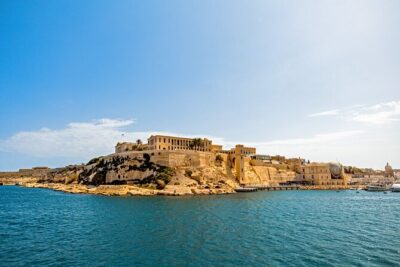
Across the Grand Harbour, Fort St. Angelo gives you another view of Malta’s defenses. Its location in the Three Cities makes it a natural follow-up to the harbor cruise and the National War Museum.
The Malta Maritime Museum continues the story from the water. It works well on a day when you want to stay close to the harbor instead of crossing the island for archaeological sites. Together, Fort St. Angelo and the museum show how Malta’s position shaped both military planning and seafaring life.
The Inquisitor’s Palace adds a different kind of historical stop. It is not simply another fort or museum of weapons. Here, you get a look at the institutions that operated within Malta’s old society. The pass includes one-time entry, so allow enough time to see it properly rather than squeezing it between bus connections.
Because several Three Cities sites are connected by the South Route and nearby bus stops, this part of the pass can give you a full day of sightseeing without excessive backtracking. Still, your exact walking distances will vary, and the bus schedule matters.
More Hop-On Hop-Off Tours in Malta:
- Malta: Hop-On Hop-Off Bus Tours
★ 4.0 · 2,041 reviews - Gozo: City Sightseeing Hop-On Hop-Off Bus Tour
★ 4.2 · 1,117 reviews - Malta: City Sightseeing HOHO Bus Tour & Optional Boat Tour
★ 3.4 · 1,021 reviews - City Sightseeing Gozo Hop-On Hop-Off Bus Tour
★ 3.0 · 315 reviews
Prehistoric temples at Ħaġar Qim and Mnajdra
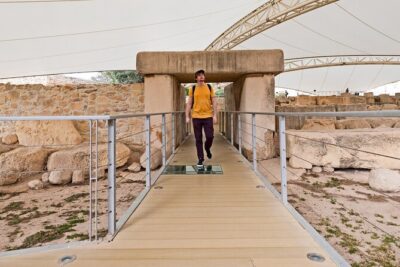
Malta’s prehistoric sites are among the most distinctive stops included in the pass. Ħaġar Qim and Mnajdra Temples sit on the southern part of the island, and visiting them gives you a strong sense of Malta’s age long before the medieval and modern fortifications.
The two temple sites should be treated as a pair. They are close enough to connect in one outing, and visiting only one would leave the prehistoric story incomplete. The remains are impressive, but the setting also matters. You are looking at stone structures created thousands of years before the Knights, the British period, or the Second World War.
Ta’ Ħaġrat Temples and Ta’ Skorba Temples offer a quieter archaeological experience. They may appeal most if you want to see more than Malta’s best-known monuments. These smaller sites help show that prehistoric activity was spread across the island rather than confined to one famous complex.
The pass also includes Tarxien Temples, another important prehistoric stop. Add Borġ in-Nadur if you want to continue following Malta’s early settlements and defensive development. These sites are not interchangeable, and each takes time to reach and inspect, so use the six-day period to space them out.
Catacombs and Malta’s earliest stories
Malta’s underground sites change the pace again. St. Paul’s Catacombs and Ta’ Bistra Catacombs show how burial spaces were cut and organized beneath the surface. They are a useful reminder that Malta’s story is not only about monumental forts above ground.
Għar Dalam takes you further back into Malta’s natural and human past. The National Museum of National History provides another setting for understanding the island’s development. These stops make sense on a day devoted to the island’s earliest periods, rather than on a crowded Valletta museum day.
Domvs Romana gives you a Roman-era perspective. Its remains and displays add a layer between Malta’s prehistoric temples and its later Christian and military history. I like the way the pass lets you place these eras side by side: temples, Roman domestic life, catacombs, medieval institutions, and fortified harbors.
The challenge is not a lack of things to see. It is choosing a sensible order. Try grouping sites by area instead of following the list from top to bottom. The hop-on hop-off bus makes that easier, but it does not remove the need to watch the route and service times.
Making the bus work for your schedule
The City Sightseeing Malta bus includes both the North and South Routes, with unlimited use for six days. That matters because the pass is not limited to a single sightseeing ride. You can use the buses for repeated trips between major stops and your chosen heritage sites.
Most included places are within walking distance of a bus stop. That is helpful, but walking distance does not mean every visit is a quick step off the bus. Some sites still require a longer walk, and you should wear comfortable shoes, especially on days that combine fortifications, archaeological grounds, and city streets.
The bus is also useful when you want an overview before committing to a museum. Ride part of a route, note the places that interest you, then return later. This approach keeps the pass from turning into a race.
Service can be limited outside peak season. That is the main transport warning. If your visit falls in a quieter period, do not plan a tightly packed chain of sites with no spare time. A missed or infrequent bus can affect more than one appointment.
No hotel pickup or drop-off is included. You make your own way to the sightseeing network and the cruise arrangements. That is normal for a city pass, but it means you should be comfortable organizing your own days.
Activation and QR code advice
The biggest weakness is not the attractions. It is the ticket handling.
Keep the QR codes available on your phone, but do not assume everything will work automatically at the first museum. Activation confusion has occurred at museum desks, and codes have occasionally failed near the end of the validity period. Helpful staff at Sliema Harbour and on the boat have been able to sort out problems, but you should not build a tight schedule around an untested pass.
I would activate it early enough to resolve any issue while you still have several days left. At your first stop, ask staff to confirm the pass is active and that the QR code is recognized. Save any confirmation message, and carry some cash as recommended.
This is also why the pass is easier for flexible planners than for people making nonrefundable, hour-by-hour plans. The attraction value is strong, but the administration needs a little attention.
Who gets the best value from $91
You should consider this pass if you plan to visit at least several of the included sites and want the bus for repeated sightseeing trips. It is especially useful for a six-day stay, for first-time visitors who want broad coverage, and for anyone interested in Malta’s military, archaeological, artistic, and maritime sides.
It is less convincing if you are in Malta for only a day or two. You may not have enough time to use six days of bus travel, and many admissions would go unused. It may also be a poor match if you prefer to explore one neighborhood slowly without scheduled bus movement.
Families and mixed-interest groups may find the combination practical. One person can spend longer in a museum while another takes a shorter look, then you can continue to the next stop. The range also prevents every day from becoming another fort visit.
The wheelchair-accessible designation is useful, but the information provided does not give site-by-site access details. If you need specific arrangements at individual museums or archaeological areas, confirm them before booking.
Should you book the Heritage Pass?
Book it if you want to see Malta broadly and will use the included attractions, not just the bus. The harbor cruise, Valletta museums, Three Cities forts, temples, catacombs, and Roman remains form a solid six-day plan, and the pass can save money when you visit several sites.
Skip it if your itinerary is short, your main goal is a single area, or you dislike managing activation and route schedules. If you do book, activate early, confirm the QR code at your first stop, keep your days flexible, and leave extra time between bus connections.
For most visitors with nearly a week in Malta, this is a practical way to connect the island’s major eras without buying separate tickets at every door.
FAQ
How long is the Heritage Pass valid?
The pass is valid for six days from activation.
What transport is included?
You receive unlimited use of the City Sightseeing Malta Hop-On Hop-Off bus on both the North and South Routes for six days.
Is a harbor cruise included?
Yes. The pass includes one 90-minute traditional harbor cruise with live commentary.
Which languages are available on the harbor cruise?
The live commentary is available in English and German.
How many heritage sites are included?
The pass includes free one-time entry to more than 20 heritage sites in Malta.
Can I visit the same heritage site more than once?
No. Entry to the included heritage sites is provided one time per site.
Are hotel transfers included?
No. Hotel pickup and drop-off are not included.
Is the activity wheelchair accessible?
Yes, the activity is listed as wheelchair accessible.
Can I cancel for a refund?
Yes. You can cancel up to 24 hours in advance for a full refund. You can also reserve now and pay later.
More History Tours in Malta
- Malta: Prehistoric Temples, Limestone Heritage & Blue Grotto
★ 4.2 · 412 reviews - Maltese Islands History Audio-Visual Show and La Sacra Infermeria Tour
★ 4.0 · 344 reviews - Valletta: Self-Guided Historical Walking Tour (Audio Guide)
★ 3.7 · 251 reviews - Wonderful Valletta, gastronomy, art, and history in the Mediterranean
★ 4.5 · 72 reviews
Just added around Malta
- Gozo: Wine Tasting and Paired Dinner Experience★ 4.9 · 43 reviews
- World War II Malta Full-Day Walking Tour★ 4.3 · 18 reviews
- Victoria, Gozo: Sunset Walking Food and Drink Tour★ 5.0 · 6 reviews
- Malta: 5 hr Vintage Bus Tour – Mdina & Blue Grotto inc. food★ 5.0 · 22 reviews
- Wakeboarding Adventure in Malta: Learn to Ride★ 5.0 · 4 reviews
- Valletta & Mdina: Private Tour★ 4.5 · 16 reviews
- Valletta: Private Maltese Cuisine Walking Tour★ 4.8 · 8 reviews
- Valletta: Private Massage from a world renowned masseuse★ 4.6 · 9 reviews
Malta Attraction Passes, compared.

Gozo Day Pass Ferry and Hop-on Hop-off buses with audio Tour
Read our review →
Browse the lists this tour appears in